
Last updated November 2, 2026
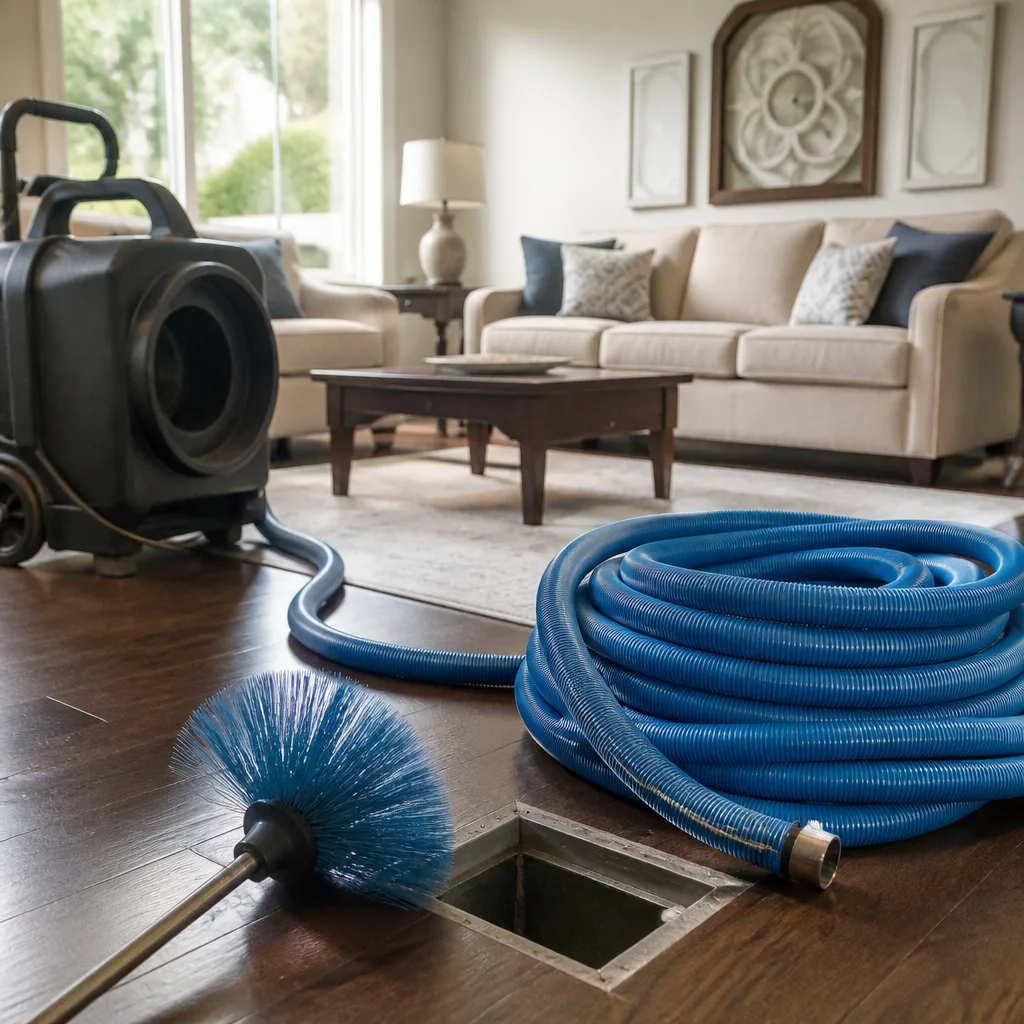 Whole-home duct cleaning
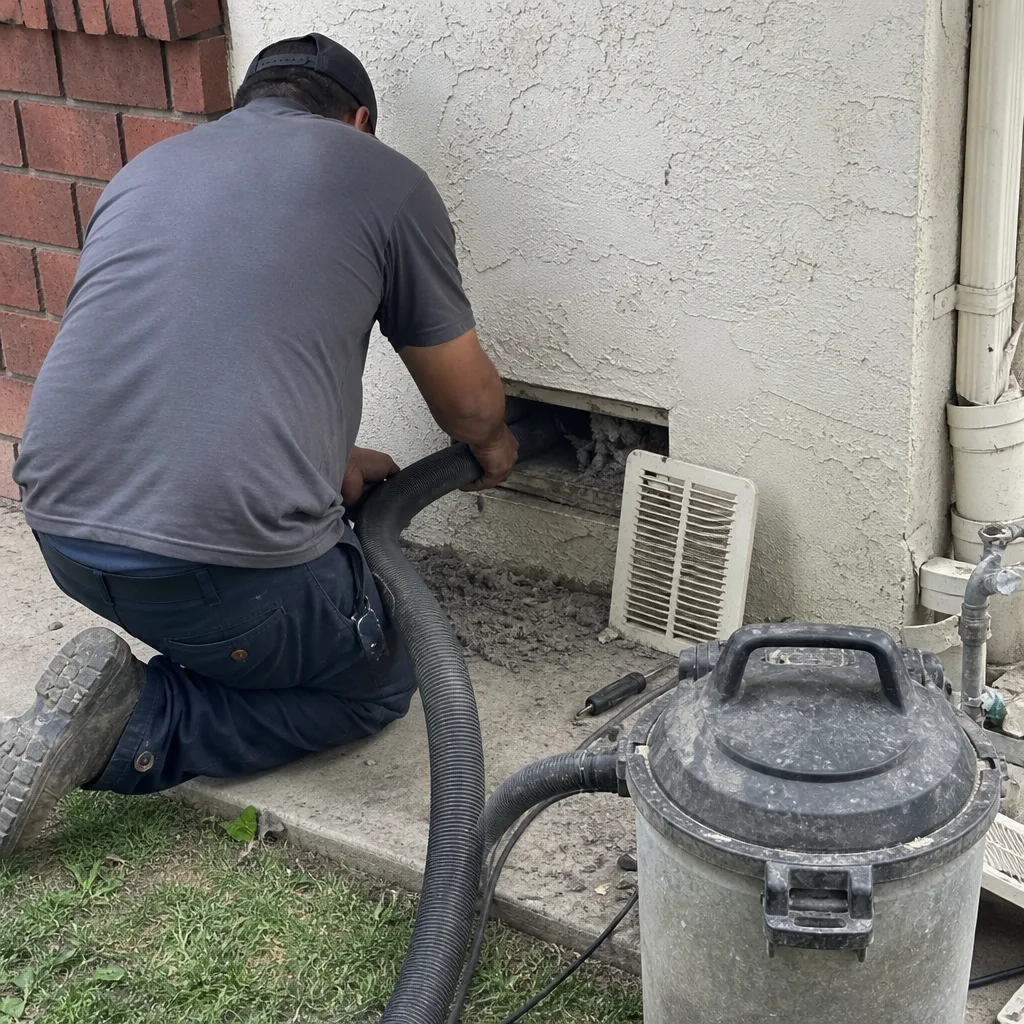
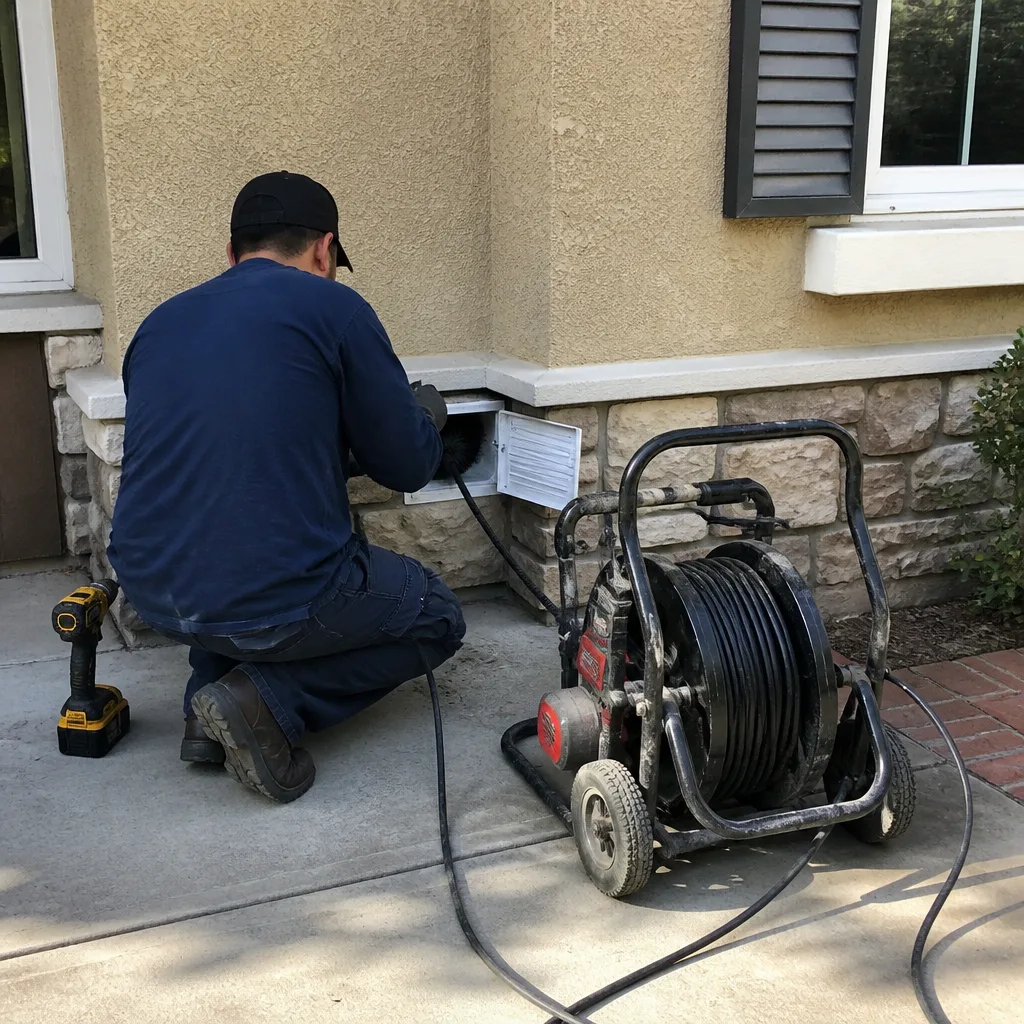
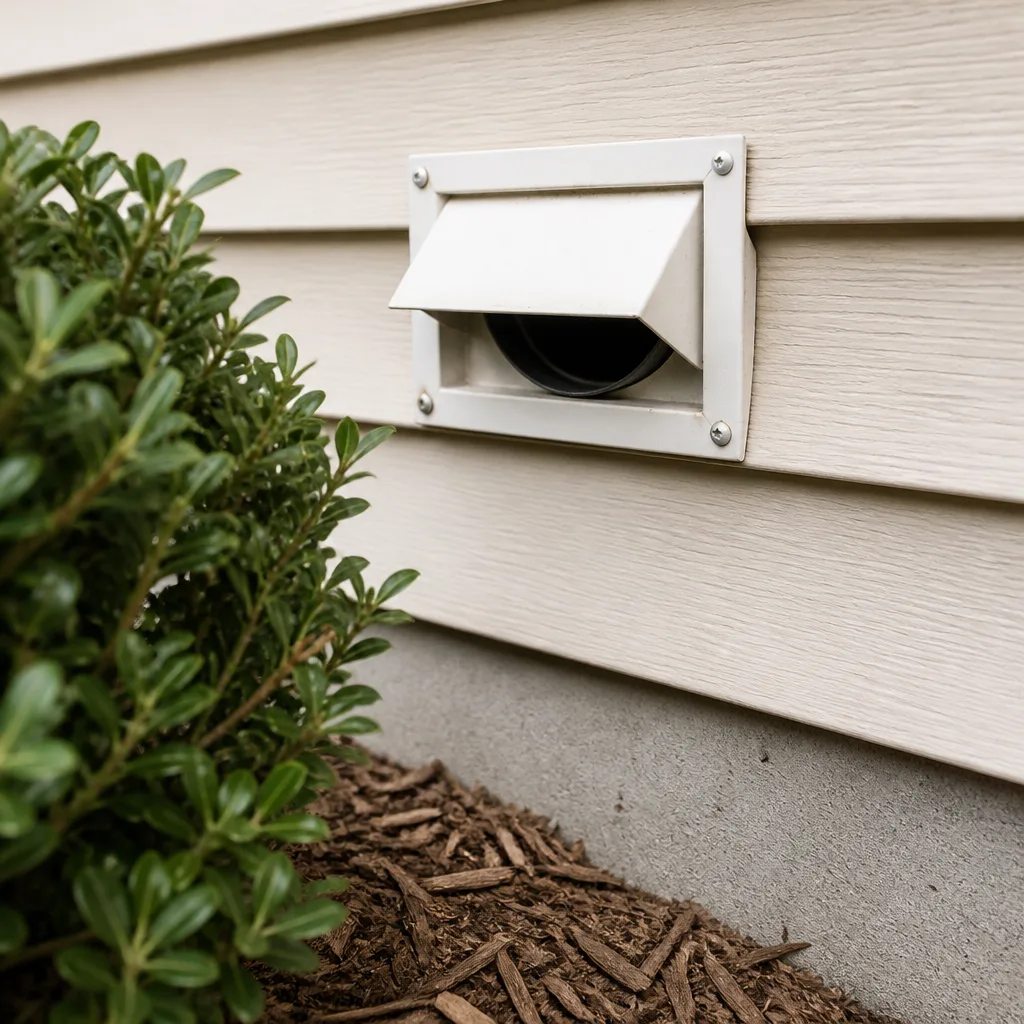 Dryer vent cleaning
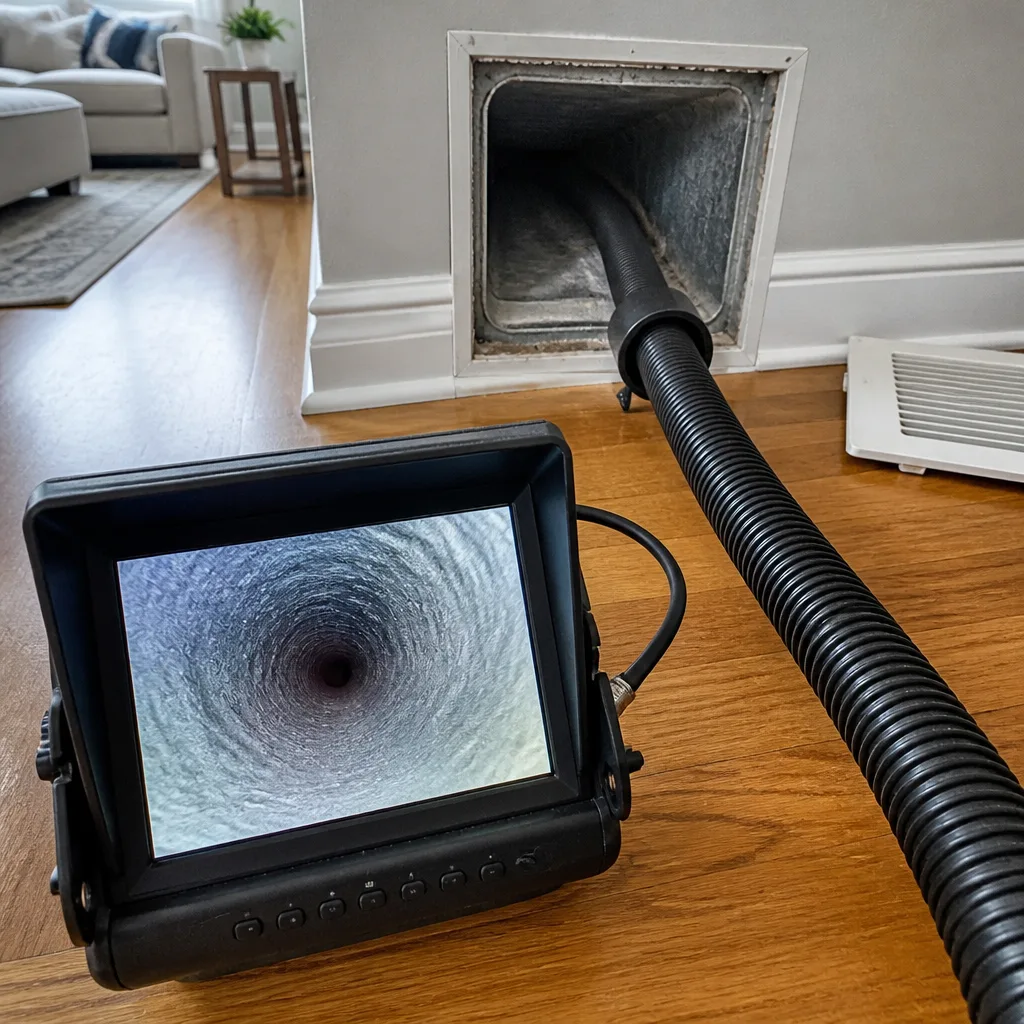 Camera inspection
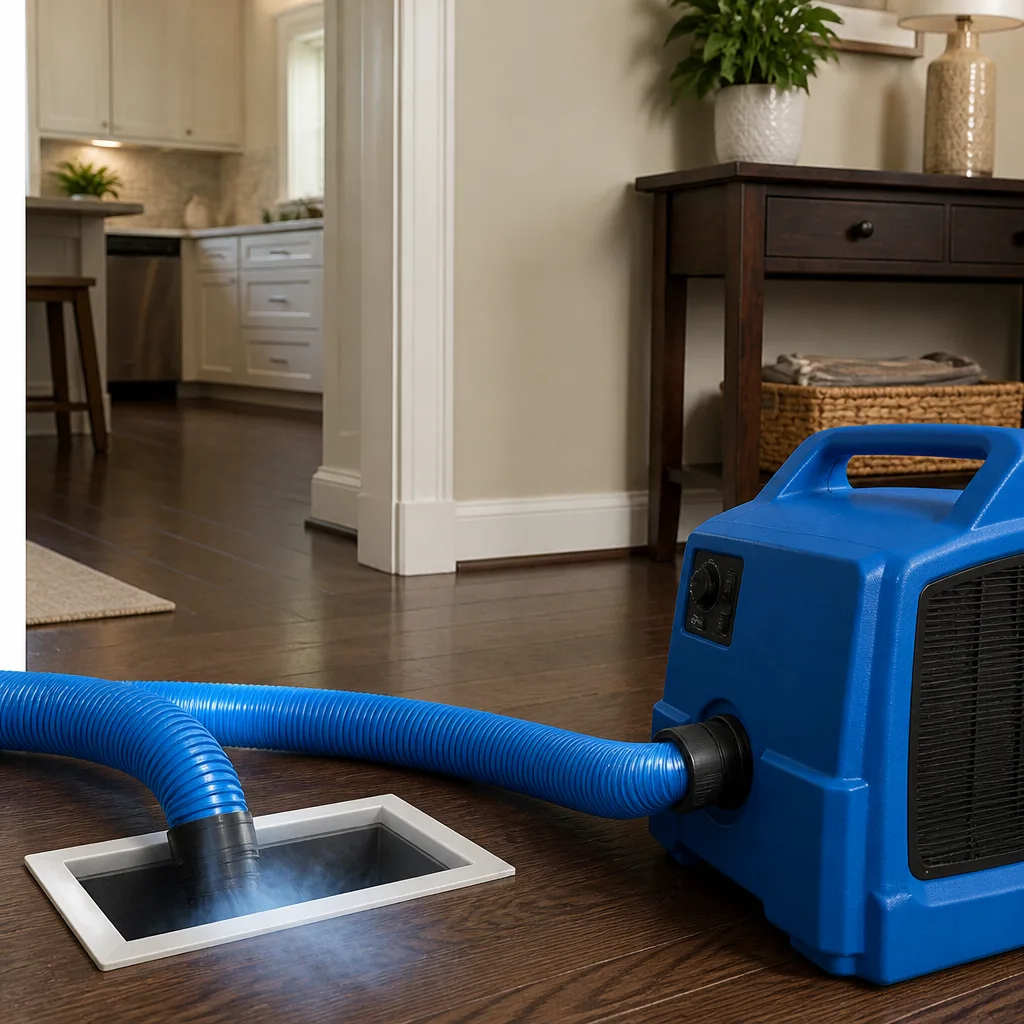 Sanitizing & deodorizing
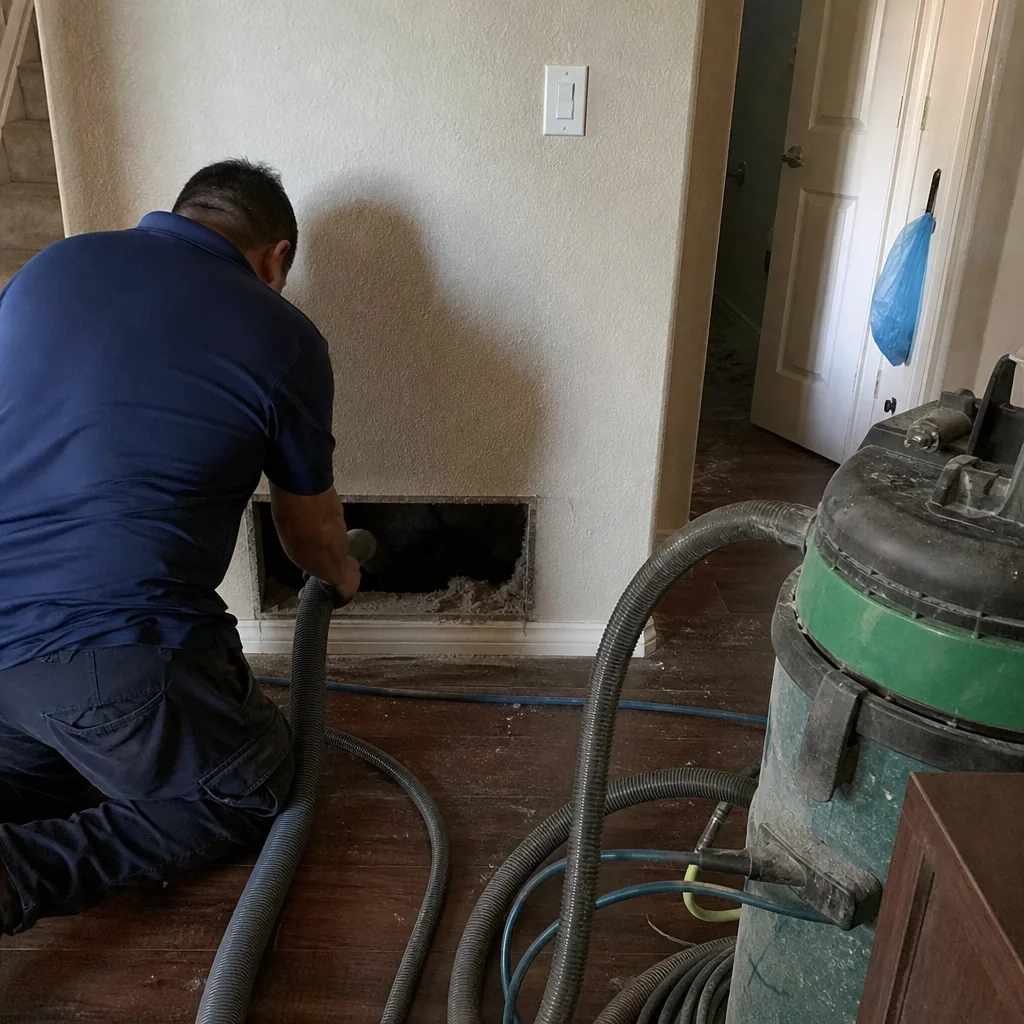
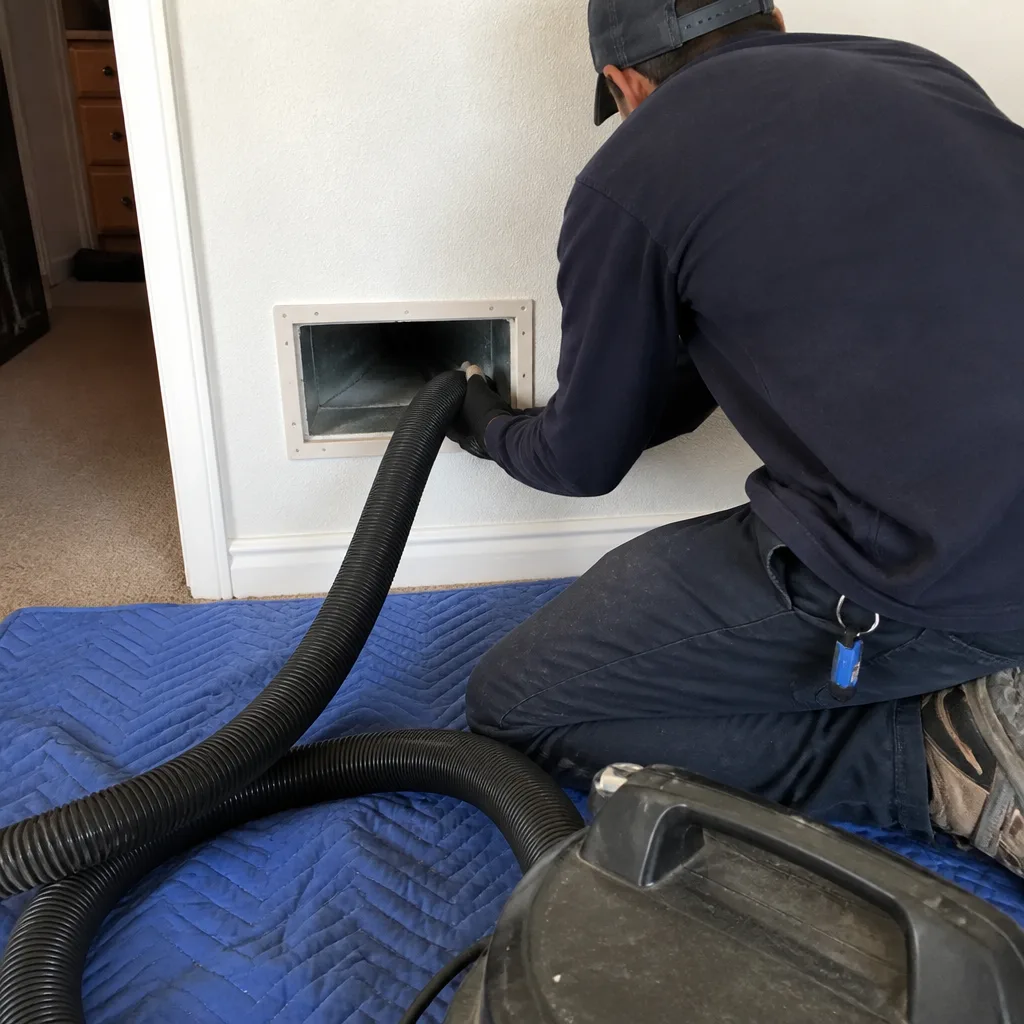
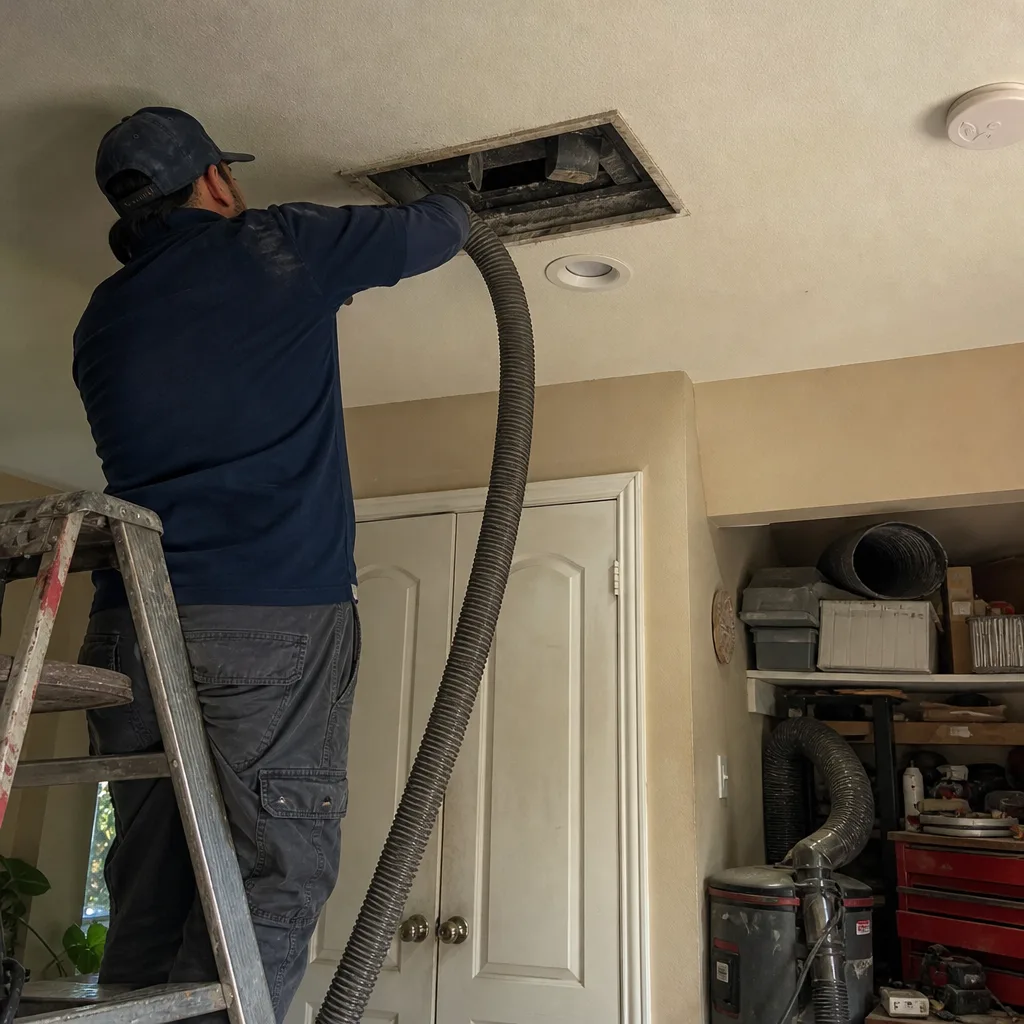
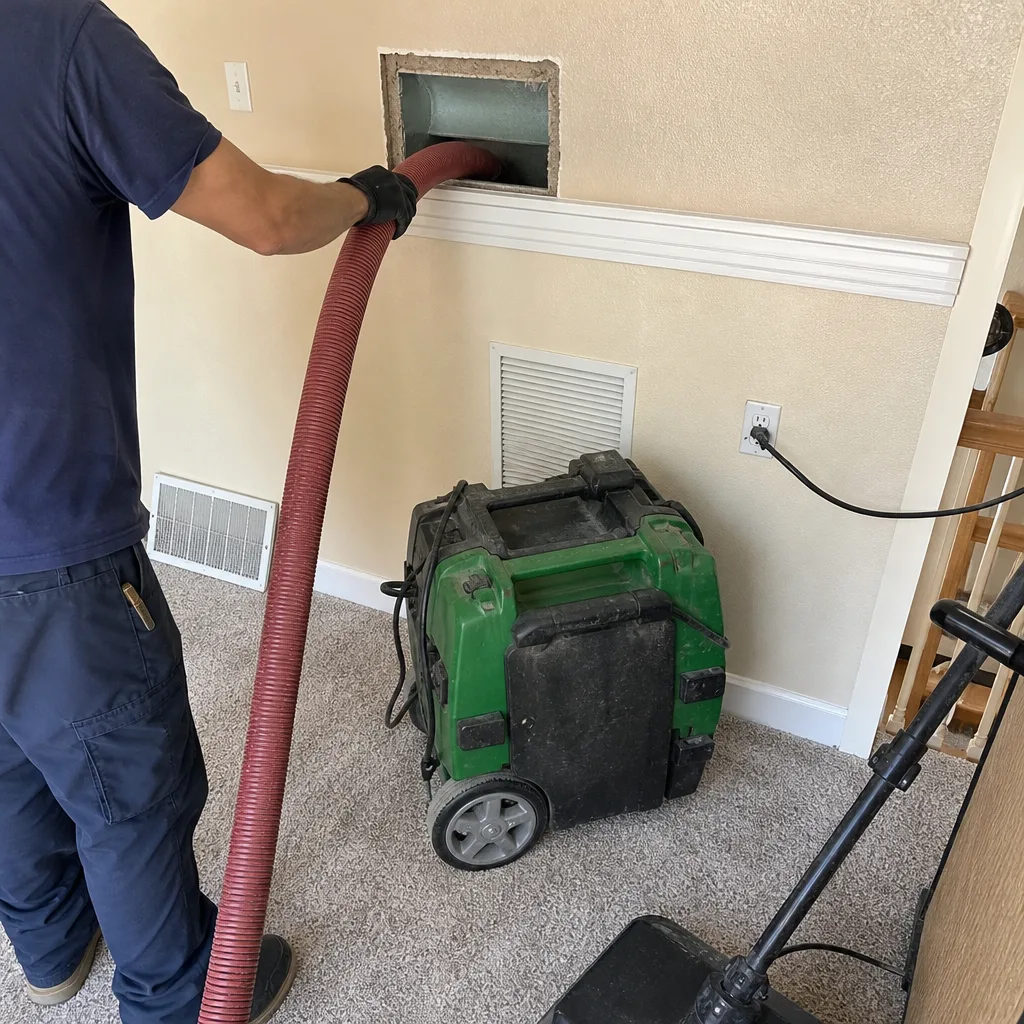
Whole-system duct and dryer vent check with before-and-after photos - you see exactly what came out of your vents
That "$99 whole-house special" is a bait ad - the real number appears once they are in your hallway, or the "clean" is a shop-vac at the register. We photograph the inside of your ducts before and after instead.
Air Duct Cleaning Emergency Preparedness Guide for Yorba Linda Homes
During the 2020 Silverado Fire, thousands of Yorba Linda and Chino Hills homes sat in smoke for over a week. What most homeowners didn’t realize until winter arrived is that their HVAC systems had been pulling that particulate into ductwork the entire time. The air outside cleared within days. The air inside stayed contaminated for months. This guide covers what to do before, during, and after wildfire smoke events, floods, and earthquakes, because in Yorba Linda, your duct system is either your best defense or your biggest liability when disaster hits.
Styles & brands we work with
- Whole-home duct cleaning
- Dryer vent cleaning
- Camera inspection
- Sanitizing & deodorizing
Quick Answer
Air Duct Cleaning emergency preparedness for Yorba Linda homes means three things: knowing when to shut down your HVAC during a smoke event (immediately, if you smell smoke indoors), understanding what to inspect after floods or earthquakes before restarting the system, and having a documented recent cleaning record so post-event assessment and insurance claims move faster. The duct system in a Yorba Linda home can harbor wildfire particulate, moisture-driven contamination, and structural damage that invisible to the naked eye but measurable in air quality. A professional post-event inspection with HEPA-filtration equipment can determine whether cleaning, repair, or both are warranted before the system recirculates contaminated air through the house.
Table of Contents
- Wildfire Smoke Protocol for Yorba Linda Homes
- MERV Ratings and What Actually Works During Smoke Events
- Post-Flood and Moisture Intrusion: What Crawlspace Water Does to Ducts
- Earthquake Response: Checking Flex Duct Connections After Seismic Events
- Pre-Emergency Preparation: Documenting Your Duct System Before Disaster
- Post-Event Remediation Equipment: How HEPA Air Scrubbers Differ from Standard Cleaning
- What Post-Emergency Duct Work Costs in Yorba Linda
- Common Mistakes to Avoid
- When to Call a Professional
- Frequently Asked Questions
- The Bottom Line
Wildfire Smoke Protocol for Yorba Linda Homes
Yorba Linda sits directly in the path of Santa Ana wind-driven fire events. The 2008 Freeway Complex Fire burned over 30,000 acres across Yorba Linda, Anaheim Hills, and Corona, destroying 118 homes in Yorba Linda alone. The Silverado Fire in 2020 and the Blue Ridge Fire that same week put the city under mandatory evacuation orders. If you’ve lived here through any of these events, you know the drill. What fewer people understand is what happens inside the HVAC system when smoke lingers for days. A running air handler creates negative pressure in return ducts, actively pulling smoke particulate from outside through any gap, crack, or imperfect seal in the ductwork. The blower then distributes those particles through every supply register in the house. The system becomes a particulate pump.
Here is the protocol we recommend to every Yorba Linda homeowner during a prolonged smoke event:
- Shut the system down the moment you smell smoke indoors. If smoke odor is detectable inside the home, the HVAC system is already pulling outdoor air. Continuing to run it worsens contamination.
- Close all registers and returns. This reduces passive air movement through the ductwork. Duct tape over supply registers provides a temporary seal that helps during multi-day smoke events.
- Run standalone HEPA filtration units in occupied rooms. A portable HEPA unit with activated carbon handles particulate and odor without pulling outdoor air into the duct system. This is different from the HVAC filter, which we’ll cover below.
- After the air quality clears outdoors, do not restart the system immediately. The ducts likely contain smoke particulate that settled during the shutdown. Restarting the blower will aerosolize it back into the living space.
- Have a post-event inspection performed before normal operation resumes. This is particularly important for homes within two miles of burn zones, where the particulate load was highest. A visual camera inspection through the supply and return registers will show whether smoke residue accumulated on duct walls.
We’ve walked into Yorba Linda homes weeks after a smoke event where the air outside was back to baseline, but the HVAC system pushed a dry, acrid smell through every room the moment the fan kicked on. The homeowners thought the smell would fade. It didn’t. It was sitting in the ductwork.
MERV Ratings and What Actually Works During Smoke Events
MERV stands for Minimum Efficiency Reporting Value. The scale runs from 1 to 16 (with HEPA sitting above the MERV scale for residential purposes). For wildfire smoke specifically, a MERV 13 filter is the minimum meaningful filtration for fine particulate. MERV 8 and MERV 11 filters, which are common in standard 1-inch filter slots, capture larger dust and pollen but let the majority of smoke particulate pass straight through. Smoke particles run between 0.4 and 0.7 microns. MERV 13 captures 50-85% of particles in that size range depending on airflow speed.
But there’s a catch that most filter marketing doesn’t mention: a MERV 13 filter only helps if your system can actually accommodate it. Many older Yorba Linda homes built in the 1960s, 70s, and 80s have furnace and air handler cabinets designed for 1-inch filters that max out at MERV 11. Forcing a high-density MERV 13 into that slot restricts airflow, reduces system efficiency, and can cause the blower motor to overheat over prolonged use. Before dropping in a higher-MERV filter, check the system’s static pressure specification or have a technician verify compatibility.
What does work during an active fire event is layered filtration:
- MERV 13 in the HVAC filter slot if the system supports it, changed weekly during active smoke conditions because it loads up fast.
- Portable HEPA units in bedrooms and the main living area, running continuously. HEPA captures 99.97% of particles at 0.3 microns, which includes the entire wildfire smoke spectrum.
- Activated carbon pre-filters on the portable units for smoke odor. HEPA handles particulate but not gases, and smoke odor is largely volatile organic compounds. Carbon adsorbs those.
Fresh air intakes on some newer Yorba Linda homes add another pathway for smoke infiltration. If your home has a dedicated outside air intake (common in tighter, newer construction), that damper should be closed during fire events and reopened only after outdoor air quality stabilizes.
Post-Flood and Moisture Intrusion: What Crawlspace Water Does to Ducts
Yorba Linda doesn’t flood the way coastal or river-adjacent communities do, but the city has a different moisture problem: hillside drainage, clay-heavy soils, and winter storms that push water through crawlspaces and under-slab utility chases. When standing water accumulates in a crawlspace, the humidity in that space climbs toward 100%. Duct systems running through that environment, especially older metal ducts with failing insulation or flex ducts with pinhole tears, absorb that moisture directly.
Here’s the sequence we see too often: water enters the crawlspace during a heavy storm. The homeowner’s sump pump or gravity drainage eventually clears it. The HVAC system keeps running the whole time, because the unit is in the garage or a closet, and nobody thinks to check the crawlspace. Within weeks, the ducts in that environment develop condensation on the exterior. The condensation soaks into insulation wrap. Biological growth starts on the wet insulation surface. The system then pulls that contaminated air into the living space through any breach in the duct wall. The homeowner notices a musty smell when the heat kicks on in December, but the flood happened in October, and the connection is rarely made.
If your Yorba Linda home has crawlspace ducts and you’ve had water under the house, do this:
- Map the duct runs through the affected area. Identify which rooms’ supply and return ducts pass through the flooded zone.
- Inspect visible insulation wrap for water staining, sagging, or delamination. Wet fiberglass insulation loses its R-value and becomes a growth medium.
- Check flex duct connections at boots and trunk lines for moisture-related failures. Duct tape and old mastic fail faster in sustained humidity.
- Run the system in fan-only mode for 15 minutes and smell each register. A musty odor localized to specific rooms points to duct contamination in that branch line, not a system-wide problem.
- Call for a camera inspection if any register smells off. Moisture-related duct contamination is almost never visible from the register opening alone.
Ducts above the water line are still compromised by this scenario. Condensation doesn’t require direct water contact. A 90% relative humidity crawlspace in January will produce condensation on metal duct walls that sit in the 60-degree range. That’s physics, not flooding, and it’s why Air Duct Cleaning in Yorba Linda should always include a look at the environment the ducts live in, not just the ducts themselves.
Earthquake Response: Checking Flex Duct Connections After Seismic Events
The Whittier Fault runs directly through the northern edge of Yorba Linda, and the Chino Hills Fault sits just to the north. The 1987 Whittier Narrows quake and the 2008 Chino Hills quake both produced significant shaking in Yorba Linda neighborhoods. When a 4.0 or larger event hits, flex duct runs in attic spaces absorb lateral motion differently than the rigid trunks they connect to. The result is often displacement at the connection points: a flex duct pulls partially off a boot, a collar clamp loosens, or a section that was hanging from a strap slips and kinks.
The air handler and furnace will keep running after a quake. A displaced duct connection translates to conditioned air dumping into the attic instead of the room it serves. That’s an efficiency loss and a direct contamination pathway, since attic air gets pulled into the positive-pressure side of the system through that same gap when the fan cycles off.
After a significant seismic event in Yorba Linda, check for these specific failure points before running the system normally:
- Visible gaps at supply boots in rooms furthest from the air handler. Long flex runs have the most mass and move the most during shaking.
- Drooping or kinked flex sections in the attic where hanger straps broke or slid. A sharp kink reduces airflow by 50% or more depending on the angle.
- Detached return air connections at the plenum. Return ductwork is under negative pressure, so a partial disconnect will pull attic insulation and dust into the system continuously.
- Mastic cracking at rigid duct joints. Older sheet metal systems with mastic seals will show hairline cracks after shaking that compromise the seal.
- Any new vibration noise or rattling when the blower runs. New noise after a quake almost always means something physically moved.
If any of these conditions are present, Air Duct Repair in Yorba Linda becomes the priority. Cleaning a system with displaced connections is a waste of time and money. The structural problem must be addressed first so the cleaned system stays clean.
Pre-Emergency Preparation: Documenting Your Duct System Before Disaster
Insurance claims after wildfire, flood, or earthquake events move faster when the homeowner can prove the pre-event condition of their property. A duct system has no photo album, no receipts, no maintenance log unless the homeowner creates one. And in our experience, the homeowners who keep this documentation get better claim outcomes for one simple reason: they can demonstrate that the contamination or damage occurred during the event, not through years of neglect.
Here’s what a pre-emergency duct documentation package should include:
- A duct map of your home. One sheet showing where the main trunk lines run, where branch lines split off, where the returns are located, and what type of duct material each section uses. This takes 20 minutes to sketch and saves hours of assessment time after an event.
- A recent cleaning record. A dated invoice or report from a professional Duct Cleaning Yorba Linda home service showing the system was cleaned and inspected within the last 24 months. This is the baseline that proves pre-event condition.
- Photos of the air handler, filter slot, and accessible duct sections. Date-stamped photos show the system’s condition before anything happened. Keep them in a cloud folder with the rest of your home documentation.
- The location of the filter, its size, and its last change date. Adjusters look at maintenance history to determine whether the homeowner actively maintained the system.
- Any prior repair records. If a duct section was patched, a boot replaced, or a connection re-sealed, keep the invoice. It proves the system had addressed known issues before the event.
Yorba Linda homes built in the 1990s and 2000s, particularly in the Eastlake Village and Bryant Ranch areas, often have duct systems that have never been mapped. The original construction plans show intended locations, but decades of remodels and HVAC adjustments mean the as-built system rarely matches the blueprints. Creating a duct map now, before an emergency, is one of the most useful preparedness tasks most homeowners never think to do. For more details, see our Air Duct Cleaning Maintenance Checklist for Yorba Linda Homeowners.
Post-Event Remediation Equipment: How HEPA Air Scrubbers Differ from Standard Cleaning
Standard air duct cleaning uses a combination of agitation tools and a high-powered vacuum to remove debris from duct walls. The Rotobrush system does this by running a rotating brush through each duct run while a vacuum pulls the dislodged material out of the system. That’s appropriate and effective for routine cleaning. Post-event remediation is a different job with a different contamination profile, particularly after wildfire smoke events.
In remediation contexts, the priority shifts from debris removal to particulate capture. Smoke particulate is sub-micron and tends to stay suspended in the air rather than settle on duct walls. A standard vacuum system captures larger particles efficiently but allows the finest particulate to pass through the filtration media and exhaust back out. That’s where Abatement Technologies HEPA air scrubbers come in. These units run a multi-stage filtration system: pre-filter for large particulate, HEPA for sub-micron capture, and activated carbon for odor-causing gases. They’re placed in the return side of the system and run continuously during and after cleaning to capture particulate that the agitation process releases into the air column.
The difference matters. A standard cleaning under normal conditions removes dust, pet hair, and construction debris. A post-smoke-event cleaning has to capture particles small enough to have penetrated deep into the bronchial tree. The Nikro HEPA units we run during these jobs are the same class of equipment used in mold remediation and water damage restoration, because the particulate behavior is similar: small, persistent, and invisible.
For homeowners in Yorba Linda who experienced heavy smoke days during the 2020 events, a standard cleaning performed in the months after would have removed visible debris but left sub-micron particulate in the system unless HEPA filtration was in the loop. The system would have looked clean and smelled faintly of smoke during heating season. That’s the tell.
What Post-Emergency Duct Work Costs in Yorba Linda
Post-event duct work in Yorba Linda runs at a premium over routine cleaning because the job scope is different. Routine cleaning on a typical 2,000-2,500 square foot Yorba Linda home with 8-14 runs costs between $350 and $650 depending on system size, number of returns, and accessibility. Post-emergency work adds inspection time, HEPA filtration time, and often repair or sealing work on top of the cleaning itself. A comprehensive post-smoke-event cleaning with HEPA air scrubbing on that same home runs $800-$1,500. Add duct repairs and the total climbs from there.
Here’s a realistic breakdown:
- Pre-event professional inspection: $100-$200. Camera inspection of all accessible runs plus a written condition report. This is the documentation piece we discussed earlier.
- Post-smoke-event HEPA cleaning: $800-$1,500 for a standard Yorba Linda home. Higher if the home has multiple systems or extensive flex runs.
- Duct repair or reconnection: $150-$450 per affected connection depending on whether it requires a new collar, re-mastic, or full section replacement.
- Moisture-related duct replacement: $500-$1,200 for a typical crawlspace duct section if insulation wrap is saturated and contaminated.
- Portable HEPA unit for ongoing filtration: $200-$600. These are separate from the HVAC system and run independently during future smoke events.
Every home is different. An older Eastlake Village home with original 1970s flex duct may need full replacement after a flood event, where a newer Bryant Ranch home may only need cleaning and seal verification. The numbers above are ranges that reflect what we see across Yorba Linda specifically, not national averages that may or may not apply to this market.
Common Mistakes to Avoid
- Running the HVAC system during a smoke event because “the filter will catch it.” The filter catches some particulate, but the system still pulls smoke in through every seam, gap, and imperfect seal in the ductwork. Shut it down.
- Restarting the system immediately after outdoor air quality clears without inspecting the ducts first. This aerosolizes settled particulate back into the living space and distributes it evenly through the house.
- Assuming a flood that didn’t reach the living space didn’t affect the ducts. Crawlspace humidity alone can compromise duct insulation and create a contamination pathway. Water doesn’t need to touch the duct directly.
- Ignoring a musty smell that only appears during heating season. This is the classic signature of moisture-related duct contamination from a winter storm months earlier. It won’t resolve on its own.
- Not checking duct connections after a quake because the house looks fine. Attic flex ducts move independently of the structure and can disconnect while the drywall shows zero damage.
- Paying for a cleaning without addressing damaged duct connections first. Cleaning a system with disconnected flex runs or failed mastic seals is wasted money. Repair first, then clean.
- Using a budget cleaning service with truck-mounted vacuum only, no HEPA capture, after a smoke event. The fine particulate gets stirred up and redistributed. You’re paying to make the problem worse.
When to Call a Professional
Call a professional when the situation involves sub-micron particulate contamination, moisture-related growth, or structural displacement. For regulatory context, see Air Duct Cleaning Permits, Codes & Inspections in CA: What You Need to Know. Those three scenarios all require equipment and inspection capability that homeowners don’t have. A camera inspection confirms what’s actually inside the runs. HEPA filtration captures what standard vacuums release. A trained eye spots flex duct displacement before you waste a season heating your attic. If your Yorba Linda home has been through a significant smoke event, flood, or earthquake in the past 24 months, a professional assessment is warranted even if the system seems to be running normally. Duct Cleaning Yorba Linda offers free estimates in Yorba Linda, call (877) 600-3906.
Frequently Asked Questions
Run the system in fan-only mode for 10 minutes and smell each supply register individually. A dry, acrid odor present at multiple registers indicates smoke particulate settled in the ductwork during the fire event. A single register that smells points to contamination in that specific branch line. Either way, the system needs cleaning before normal operation resumes. Call (877) 600-3906 for a camera inspection to confirm.
Wait until outdoor air quality in Yorba Linda has returned to normal for at least 3-5 consecutive days before scheduling a cleaning. This prevents re-contamination of a freshly cleaned system from ongoing outdoor particulate. The cleaning itself should be followed by a filter change and a system run in fan-only mode for 30 minutes.
Coverage depends on the policy and the specific event. Homeowners who can produce a recent cleaning record and a duct map documenting pre-event condition have a much stronger case for coverage than those who can’t. Your adjuster will ask what the system’s condition was before the event. Documentation answers that question.
Not reliably. Smoke odor comes from sub-micron particulate and volatile organic compounds that standard vacuum filtration doesn’t capture. A HEPA air scrubber with activated carbon in the filtration train addresses both the particulate and the odor-causing gases. Ask your provider whether HEPA capture equipment is part of the job before scheduling.
Yes, though the risk profile is different. Slab-on-grade construction with attic duct runs is less vulnerable to crawlspace humidity, but attic ducts can still absorb moisture from roof leaks and storm-driven rain through vent openings. Check for water staining on attic insulation and flex duct wrap after any major storm.
A clogged dryer vent is a fire hazard independent of any natural disaster. During wildfire season, a home with a blocked dryer vent adds an ignition risk inside the house at exactly the wrong time. Dryer Vent Cleaning in Yorba Linda should be part of any emergency preparedness plan, not an afterthought. The lint that builds up in the vent line burns fast and hot, and in fire season, the last thing you want is an avoidable ignition source inside the home.
The Bottom Line
Yorba Linda’s disaster profile is unique: wildfire smoke driven by Santa Ana winds, storm-driven moisture in hillside crawlspaces, and seismic activity from the Whittier Fault. Each of these events affects the duct system differently, and each requires a specific response. The homeowners who fare best after any of these events are the ones who prepared before them: duct map in the drawer, cleaning record in the file, and a plan for shutting the system down when conditions go bad. Explore more guides & resources on our blog to stay prepared. The duct system is either a passageway for contamination or a barrier against it. The difference comes down to what you do before, during, and after the event. After any significant event in Yorba Linda, a professional inspection is cheap insurance compared to breathing months of recirculated particulate. Call (877) 600-3906 for a free estimate.
Written by the team at Duct Cleaning Yorba Linda, serving Yorba Linda since 2011.
See the difference
 Before
 After
 Before
 After
 Before
 After