
Last updated November 2, 2026
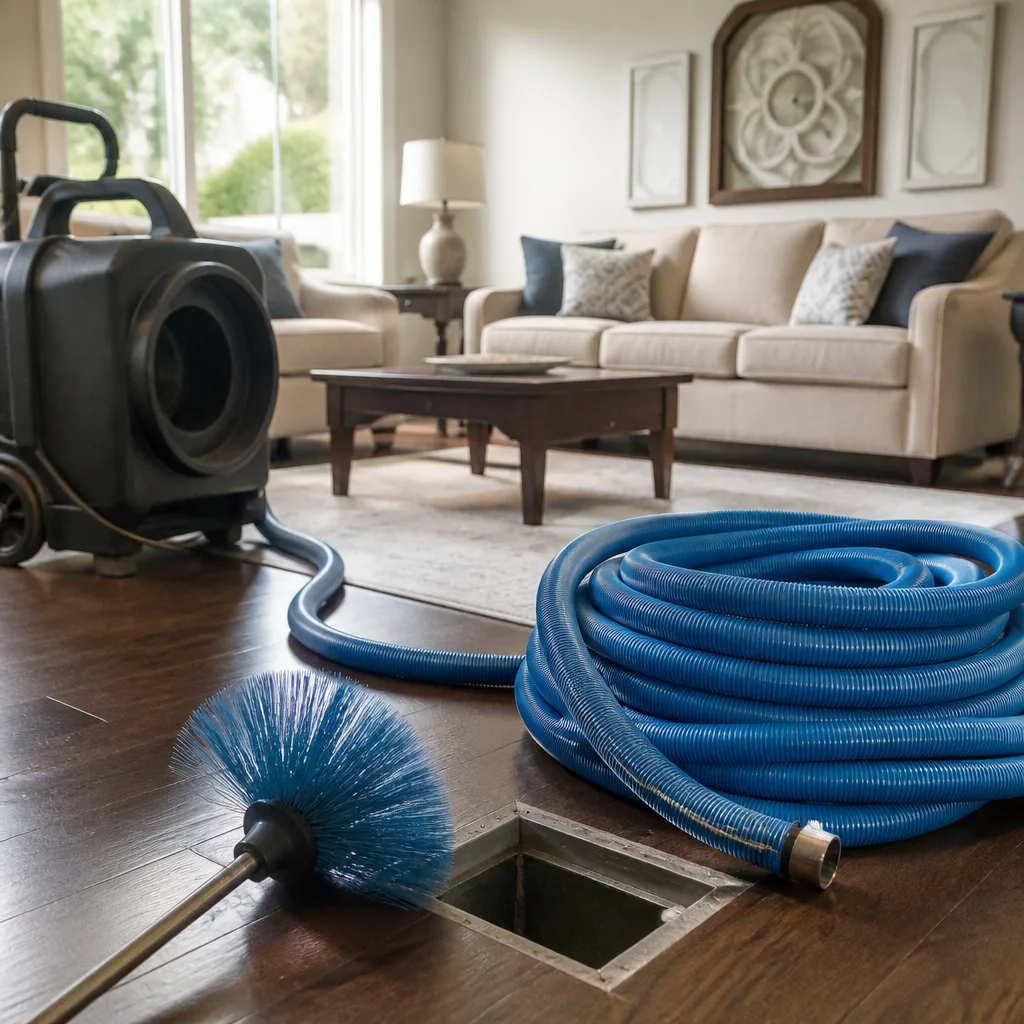 Whole-home duct cleaning
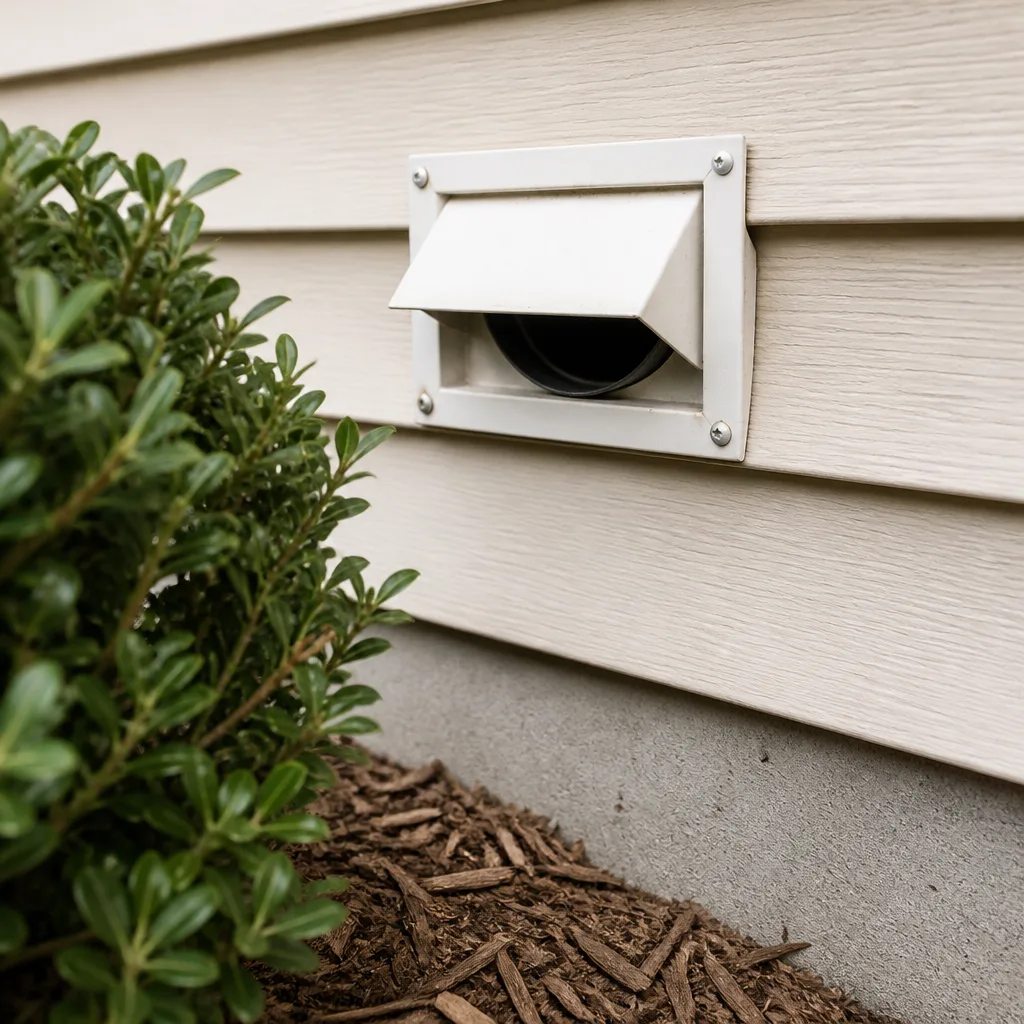 Dryer vent cleaning
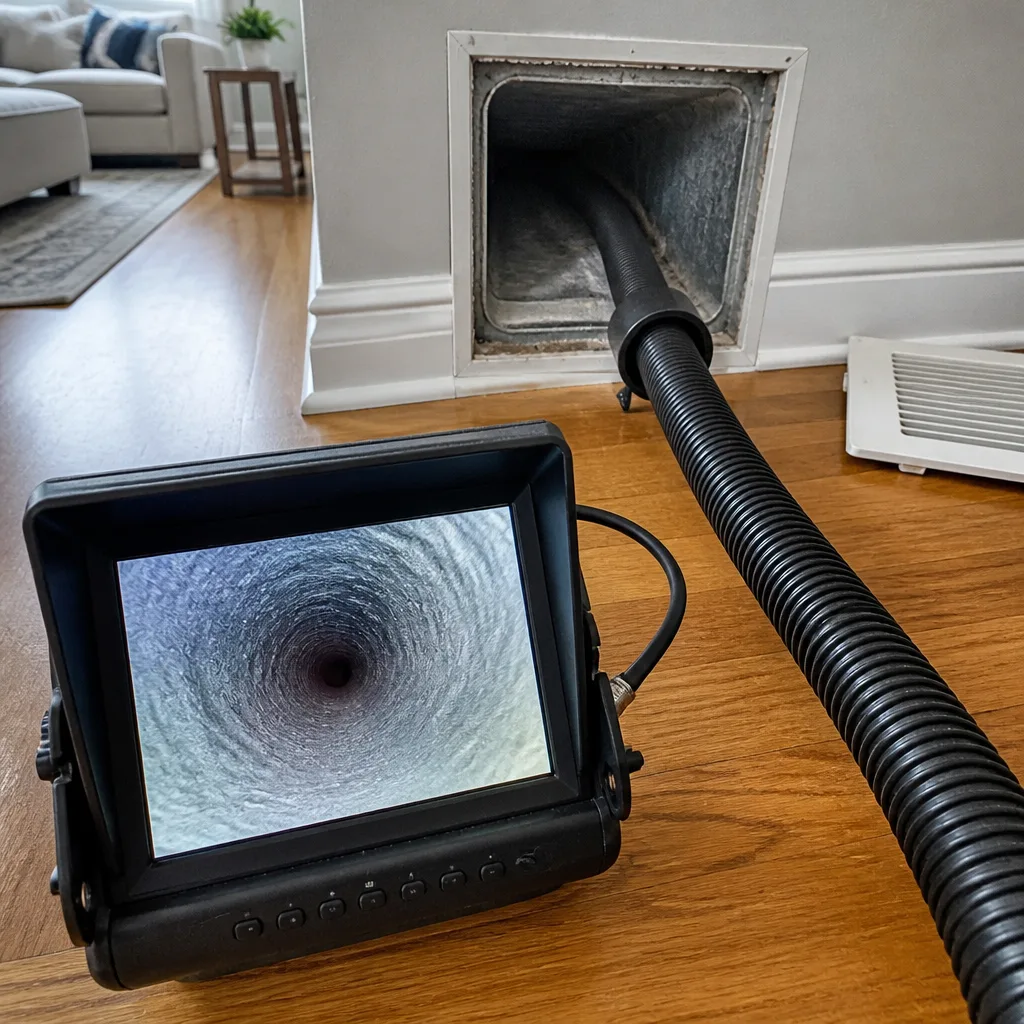 Camera inspection
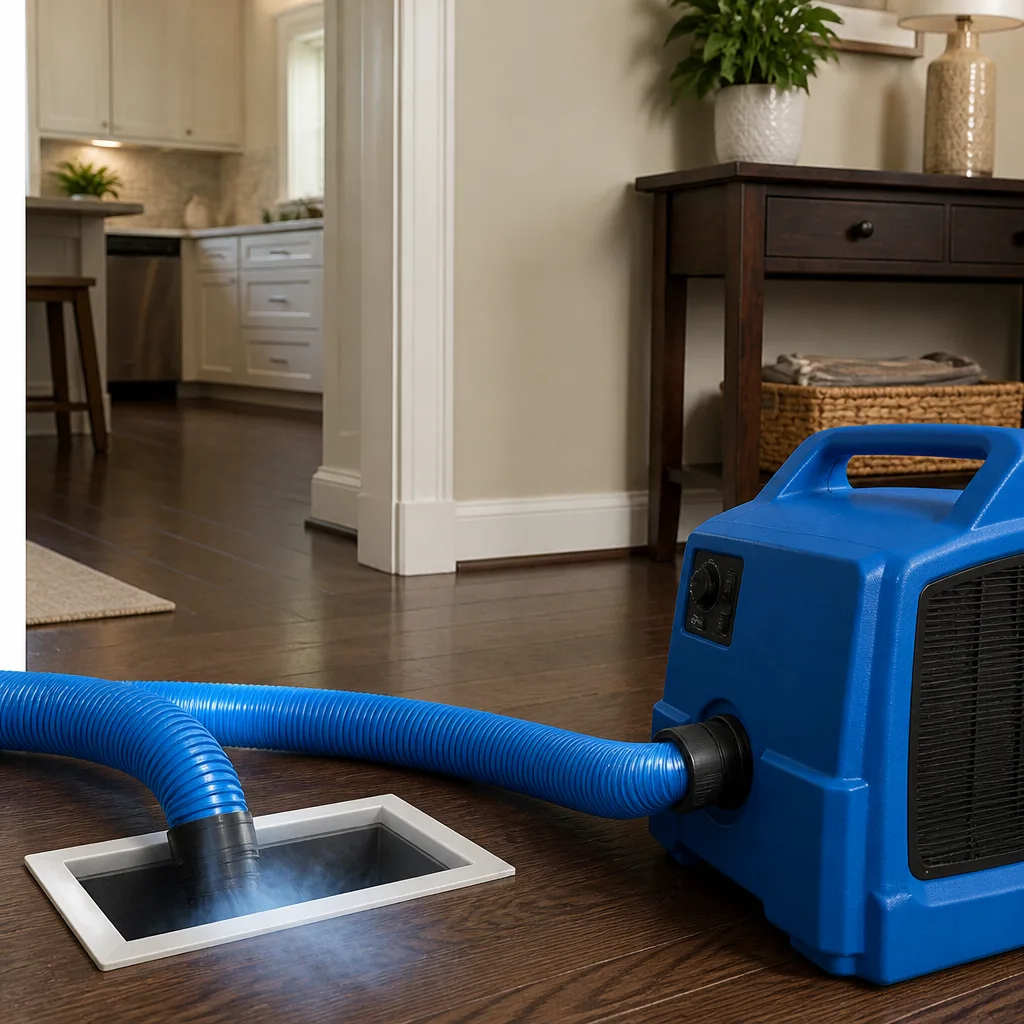 Sanitizing & deodorizing
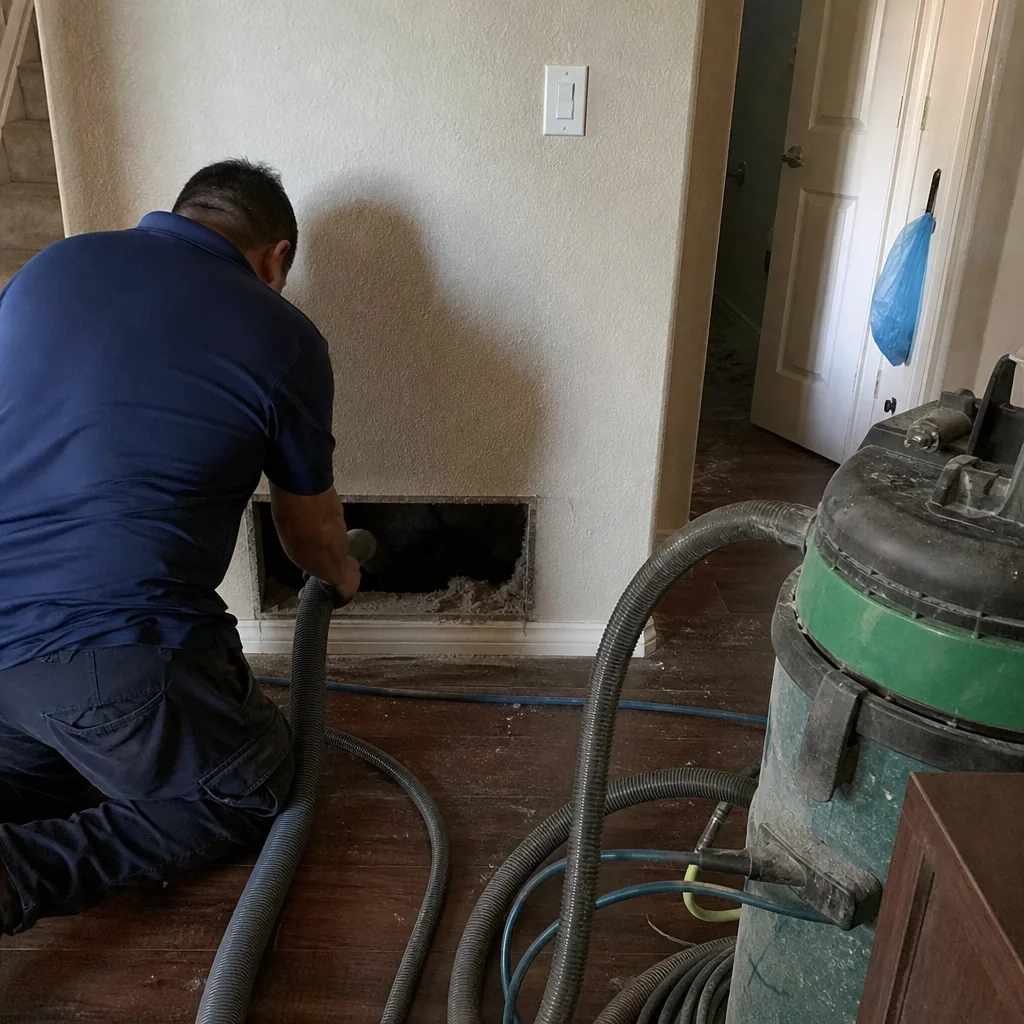
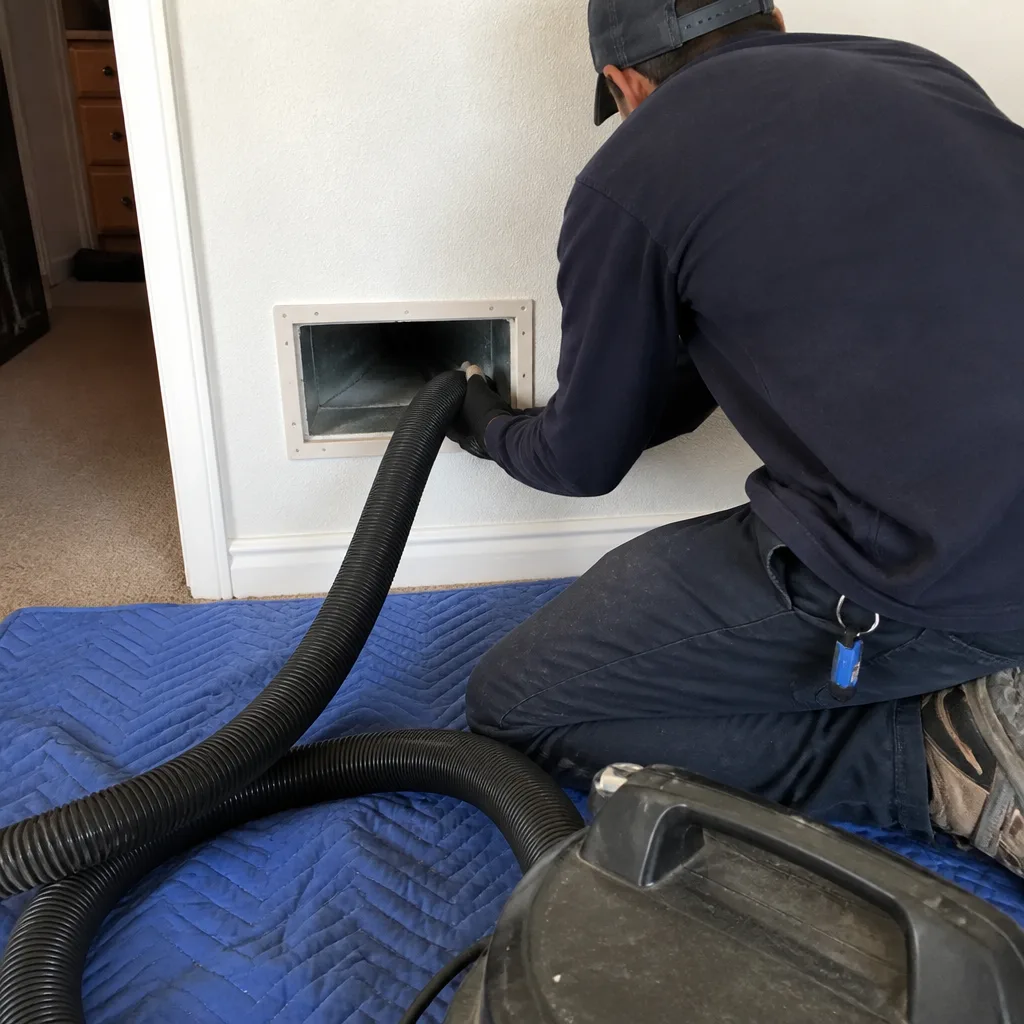
Whole-system duct and dryer vent check with before-and-after photos - you see exactly what came out of your vents
That "$99 whole-house special" is a bait ad - the real number appears once they are in your hallway, or the "clean" is a shop-vac at the register. We photograph the inside of your ducts before and after instead.
Air Duct Cleaning Permits, Codes & Inspections in CA: What You Need to Know
No permit is required to clean your ducts in California. That single sentence is where most homeowners stop their research, and it’s also where most of the confusion starts. Because while the cleaning itself sits outside the permit system, the discoveries made during a cleaning, or the work that often gets bundled alongside it, can pull you straight into California’s building-code machinery. Disconnected duct sections, missing insulation, asbestos wrap on old trunk lines, mold colonies inside the supply plenum. Each of those moves the job from maintenance into repair or remediation territory, where rules change fast. If you live in Yorba Linda, where homes range from 1960s ranches to 1990s tract builds, knowing where that line sits – and recognizing Air Duct Cleaning Warning Signs: A Yorba Linda Homeowner’s Reference Guide – will save you from an expensive surprise mid-project.
Quick Answer
Air Duct Cleaning services do not require a permit anywhere in California, including Yorba Linda. However, duct repair, duct replacement, air handler modification, or mold remediation performed alongside a cleaning often does require a permit, inspection, or a certified specialist. Before any work begins, ask your contractor in writing to confirm whether their scope triggers California Building Code, Title 24, or CDPH mold requirements.
Styles & brands we work with
- Whole-home duct cleaning
- Dryer vent cleaning
- Camera inspection
- Sanitizing & deodorizing
Table of Contents
- The Permit Reality: Where Cleaning Ends and Construction Begins
- Title 24 Energy Code: The Hidden Trigger Most Homeowners Miss
- CDPH Mold Guidelines: When a Cleaning Job Becomes Remediation
- Orange County AQMD and Wildfire Particulate: Why Timing Matters in Yorba Linda
- What to Request in Writing Before Any Job Approaches Permit Territory
- Inspections: What a Real Duct Inspection Covers (and What It Doesn’t)
- Why Equipment Matters for Code-Compliant Cleaning Outcomes
- Common Mistakes to Avoid
- When to Call a Professional
- Frequently Asked Questions
The Permit Reality: Where Cleaning Ends and Construction Begins
Under the California Building Code (CBC), air duct cleaning is classified as maintenance, not construction. No permit is required, no plan check, no inspection. The California Mechanical Code draws the same line: cleaning the interior surfaces of an existing duct system is not an alteration to the system’s structure, routing, or capacity.
But here’s where the line bends. In our experience running air duct cleaning in Yorba Linda, we regularly open up systems and find conditions that are very much construction issues. A 20-foot supply branch that collapsed under its own insulation weight. A return plenum that separated at the seam and has been pulling attic air for years. A boot at the floor register that rusted through and disconnected entirely.
Those are repairs. And once you’re repairing or reconnecting ductwork, the scope changes:
- Reconnecting a separated duct section: Generally classified as repair. Most cities in Orange County, including Yorba Linda, do not require a permit for minor reconnection work under their local amendments to the California Mechanical Code. But some do require it if the repair involves cutting into a wall, ceiling, or floor assembly.
- Replacing a duct run longer than six feet: This is almost always treated as duct replacement, which requires a mechanical permit in most Orange County jurisdictions.
- Modifying the air handler or plenum: Any change to the air handler cabinet, coil box, or supply plenum requires a permit and potentially a Title 24 energy compliance check.
- Adding new supply or return branches: This is system modification, which triggers permits and, in most cases, a HERS rater verification.
Yorba Linda is incorporated and issues its own building permits through the City of Yorba Linda Building Division. The city adopts the California Building Standards Code without major technical amendments to mechanical work, which means if your contractor tells you they’ll “just patch that duct” as part of the cleaning, they’re probably right. If they tell you they’ll “rerun that entire branch,” ask whether they’re pulling a permit.
Title 24 Energy Code: The Hidden Trigger Most Homeowners Miss
California’s Title 24, Part 6, the state’s Building Energy Efficiency Standards, has more to do with your duct cleaning than you’d expect. Not in the cleaning itself, but in what the cleaning reveals and what happens next.
Title 24 mandates minimum performance standards for duct systems in residential buildings. The rules that matter for duct work break down like this:
- Duct leakage limits: New and replacement ducts in climate zone 8 (which includes Yorba Linda and most of coastal Orange County) must meet a maximum 5% total duct leakage rate when measured by a HERS rater using a duct blaster test.
- Duct sealing requirements: When ducts are replaced or substantially modified, all transverse joints, longitudinal seams, and connections must be sealed with mastic, UL 181-approved tape, or an aerosol sealant. Duct tape (the gray fabric product) does not meet Title 24 requirements. Ever.
- R-8 insulation minimum: In climate zone 8, ducts installed in unconditioned attics must carry a minimum of R-8 insulation. If your Yorba Linda home was built before approximately 2008 and the attic ducts were touched or replaced, there’s a good chance they don’t meet that standard.
- HERS verification: When duct replacement triggers a mechanical permit, Title 24 requires a certified HERS rater to verify duct leakage and insulation levels before the permit can be finalized.
Here’s the scenario we see frequently in Yorba Linda: a homeowner calls us for a Duct Cleaning Yorba Linda home service, we open the attic access, and find ducts that are crushed, disconnected, or literally resting on the ceiling joists with no hanger support. The homeowner asks if we can fix the worst section while we’re up there. That fix, if it involves replacing more than a few feet of duct, places the homeowner inside the Title 24 system. You now need a permit, a HERS rater, and sealed-and-insulated to current code. It’s not optional, and a contractor who says otherwise is putting you at risk when the home is later sold or re-appraised.
We tell our clients before any work starts: if the cleaning becomes a repair that triggers Title 24, we’ll stop, explain exactly what the scope change means, and connect you with the right mechanical contractor or HERS rater. For Air Duct Cleaning Troubleshooting: Common Problems and How to Fix Them, see our detailed guide. We don’t pull mechanical permits ourselves. We’d rather tell you that upfront than let you discover you’ve got an unpermitted duct replacement on your record.
CDPH Mold Guidelines: When a Cleaning Job Becomes Remediation
The California Department of Public Health (CDPH) publishes clear guidance on mold in indoor environments. The short version: mold growing on the interior surfaces of HVAC ductwork is not something you clean twice and move on from. It’s a source contamination problem, and CDPH’s 2011 Statement on Building Dampness, Mold, and Health recommends removal of the contaminated material, not surface spraying.
Where this intersects with duct cleaning is specific and worth underlining. Our Nikro and Abatement Technologies HEPA-filtered negative air equipment captures particulates at the source during a standard cleaning. That’s the right tool for dust, pollen, dander, and the fine silt that accumulates in Yorba Linda ducts after years of Santa Ana winds. But mold colonization in ductwork is a different animal.
Here’s the distinction that matters for permits and certification:
- Surface dust and debris: No permit. No special certification. Standard HEPA-filtered duct cleaning using a Rotobrush mechanical agitation and extraction system is appropriate.
- Visible mold growth less than 10 square feet total surface area: CDPH does not require a specific license, but their guidance states the affected porous material (like fiberglass duct liner) should be removed and replaced, not cleaned in place. If the contaminated material is metal duct surface, professional cleaning with containment and HEPA filtration is generally acceptable.
- Visible mold growth exceeding 10 square feet, or mold inside the air handler or coil: This crosses into the California Code of Regulations and Cal/OSHA remediation territory. A licensed mold remediation contractor, certified by organizations like IICRC, should perform the work. This is a different scope than cleaning, it requires containment, and it often requires a permit through the local building department because of the waste handling requirements.
- Mold caused by an unresolved moisture source: CDPH is explicit: if the moisture source isn’t fixed, remediation fails. For ducts, that means identifying whether the moisture is coming from a leaking roof above the attic return, condensation on an undersized supply run, or a failed bathroom exhaust fan dumping humidity into the system.
In Yorba Linda, we see mold in ducts most often in two specific circumstances: older homes with original single-pane windows and poor attic ventilation where condensation forms on metal trunks overnight, and homes where a bathroom exhaust fan was vented into the attic or directly into the return plenum by a prior contractor. Both are moisture problems first, microbial problems second. A competent cleaning company should be able to identify the difference and tell you when they’re out of their depth.
Orange County AQMD and Wildfire Particulate: Why Timing Matters in Yorba Linda
Yorba Linda sits in the South Coast Air Quality Management District (SCAQMD), not the Orange County AQMD you might assume from the county name. The SCAQMD governs air quality standards across Orange, Los Angeles, Riverside, and San Bernardino counties. Their role in your duct cleaning decision is indirect but meaningful, particularly during wildfire season.
Here’s what we mean. When the 2020 Blue Ridge Fire burned through parts of Yorba Linda and the 2024 Airport Fire dropped ash over the city, a lot of homeowners called us the week after asking for duct cleaning. The instinct is sound: fine particulate from wildfire smoke finds its way into homes through attic vents, open windows, and the HVAC system’s outdoor condenser if the system was running during the event. But the fine ash is not a reason to schedule a duct cleaning for tomorrow morning. The SCAQMD air quality advisories during those events made a specific point: minimize indoor and outdoor activity during high-particulate days until the advisory lifts. Running a high-powered negative air system inside a home while the outdoor air quality index is over 150 can pull contaminated outdoor air in through every crack in the building envelope. You can end up worse off than when you started.
The better sequence is this:
- Replace the HVAC filter with the highest MERV rating your system can handle (ideally MERV 13) during and immediately after the smoke event.
- Wait until SCAQMD’s air quality index in Yorba Linda drops below 100 and ideally below 50 for a few days.
- Then schedule the duct cleaning, so the system isn’t being contaminated mid-clean.
This matters for code compliance in a specific way. Title 24 ventilation requirements assume a supply of reasonably clean outdoor air. Clean that system during a red-flag day and you are likely re-contaminating it faster than the Rotobrush can pull debris out. No inspector is going to flag you for it, but it’s the kind of practical, local-knowledge advice that prevents a second cleaning twelve months later.
What to Request in Writing Before Any Job Approaches Permit Territory
Here is the single most valuable half-hour you’ll spend in the entire duct cleaning process: getting a written scope of work. Not a verbal conversation. Not a text message. A written scope, on company letterhead or a formal estimate, that says exactly what will be done, what equipment will be used, and what happens if conditions are discovered that fall outside the cleaning scope.
Why this specific demand? Because the difference between a $600 duct cleaning and a $6,000 duct replacement is often discovered in the attic at hour two of the job. When you’re standing in the driveway with a contractor who says, “Your return trunk is collapsed, we need to rebuild it,” you have no leverage. A written scope gives you leverage. It forces the contractor to define, before money changes hands, where cleaning ends and repair begins.
Here’s what to ask for, and why each item protects you:
- Line-item description of all included services. “Clean supply ducts, return ducts, main trunk, register fronts.” If the list doesn’t say it, assume it’s not included. If the contractor later claims a disconnected boot “needs repair,” the work was not in the written scope.
- Specific equipment brands and process description. If the scope says “HEPA-filtered negative air system” but the crew shows up with a portable shop-vac and a brush, you have a written basis for stopping the job.
- A written protocol for discovered conditions. This is the permit-trigger conversation, documented upfront. The clause should read approximately like: “If conditions requiring repair, replacement, or remediation are discovered during cleaning, all work will stop and a written change order will be provided for homeowner approval before further work proceeds.” If a contractor won’t put this in writing, find a different contractor.
- Insurance certificate. The contractor should provide a certificate of insurance naming you as an additional insured for the duration of the job. A contractor who is not insured has no business being in your attic, where you cannot see what they’re doing to the structural members and wiring.
- Before-and-after photo commitment. In writing. You want to see photos of the interior of the main supply trunk before cleaning begins and after it’s complete. This is the single best protection against the pay-for-a-cleaning-and-get-nothing-or-worse-get-a-reinfection scenario. We include this as a standard part of our air duct repair in Yorba Linda and cleaning process. If the contractor balks at photos, ask yourself what they don’t want you to see.
One more thing worth putting on paper: confirmation that the contractor’s tools are what they say they are. Abatement Technologies and Nikro HEPA units have model numbers on them. Rotobrush systems are branded. Any contractor can say “yes, we use commercial HEPA equipment.” Ask them to include the make and model on the estimate. The answer you want is a model number, not a vague “we’ve got the good stuff.”
Inspections: What a Real Duct Inspection Covers (and What It Doesn’t)
A professional duct inspection is not a camera-on-a-stick pointed vaguely down one register. A thorough inspection, the kind that surfaces conditions a cleaning alone won’t fix, should cover the following specifically:
- Visual inspection of the return plenum and main supply trunk at the air handler, looking for separation, rust-through, missing mastic, and evidence of condensation drip marks on the cabinet or platform.
- Register-level inspection of every supply and return opening, checking for disconnected boots, debris blocking the grille, and dampers that are jammed open or closed.
- Attic inspection of visible duct runs, checking for crushed flex duct, missing hangers, insulation compression from foot traffic, and condensation stains on the insulation surface.
- Measurement of static pressure at a minimum into the supply plenum and out of the return plenum. High static pressure indicates a restriction somewhere; it’s the HVAC equivalent of high blood pressure. You can’t fix a root cause you never measured.
- Leakage assessment at visible joints and connections. A contractor who does not inspect the joints is not in a position to tell you whether your air loss is normal or worth repairing.
What a visual inspection does not do: determine mold species (requires lab sampling), quantify total duct leakage (requires a HERS rater and duct blaster), or determine if asbestos-containing tape is present (requires a certified asbestos inspector if disturbed material is suspected). If your Yorba Linda home was built before 1978, there’s a non-zero chance the duct joints were sealed with tape containing asbestos. Disturbing that material, even during a cleaning, can create a serious exposure issue. A contractor should know how to identify suspect material and stop work before making it airborne.
Why Equipment Matters for Code-Compliant Cleaning Outcomes
Here is the part where we talk about the distinction that matters in a saturdated market: the difference between a cleaning that meets the spirit of California’s air quality expectations and a cleaning that simply moves dust around. The equipment is not a marketing detail. It’s the difference between a system that’s actually clean and one that’s just evenly redistributed.
Airflow-only methods, the ones you see advertised for low whole-house prices with a coupon attached, push air through the system. That removes loose particulate from the center of the duct but does not dislodge the caked-on film that builds over years along the duct walls. The problem is that California’s Title 24 ventilation standards assume the ducts themselves are clean surfaces. A system with buildup is moving air across that buildup continuously. You’re not cleaning that system by pushing air past it.
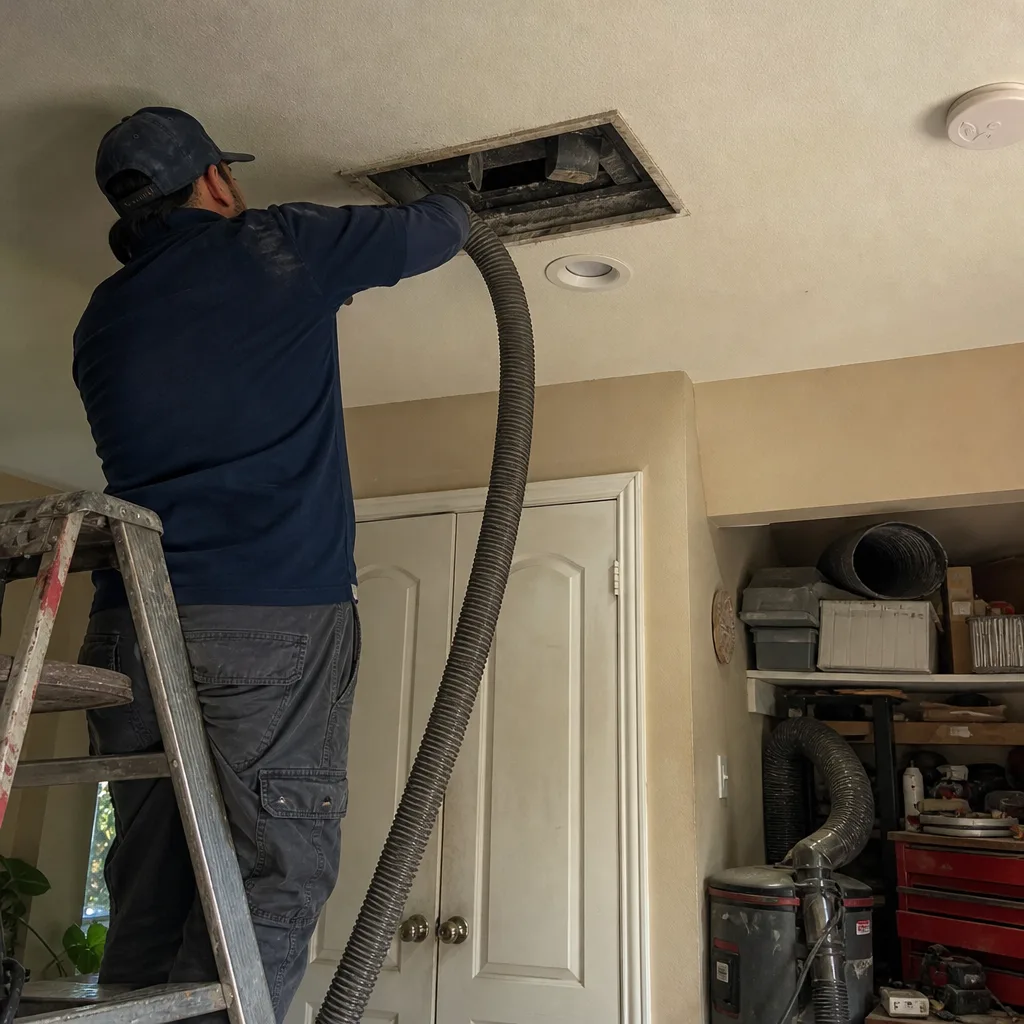
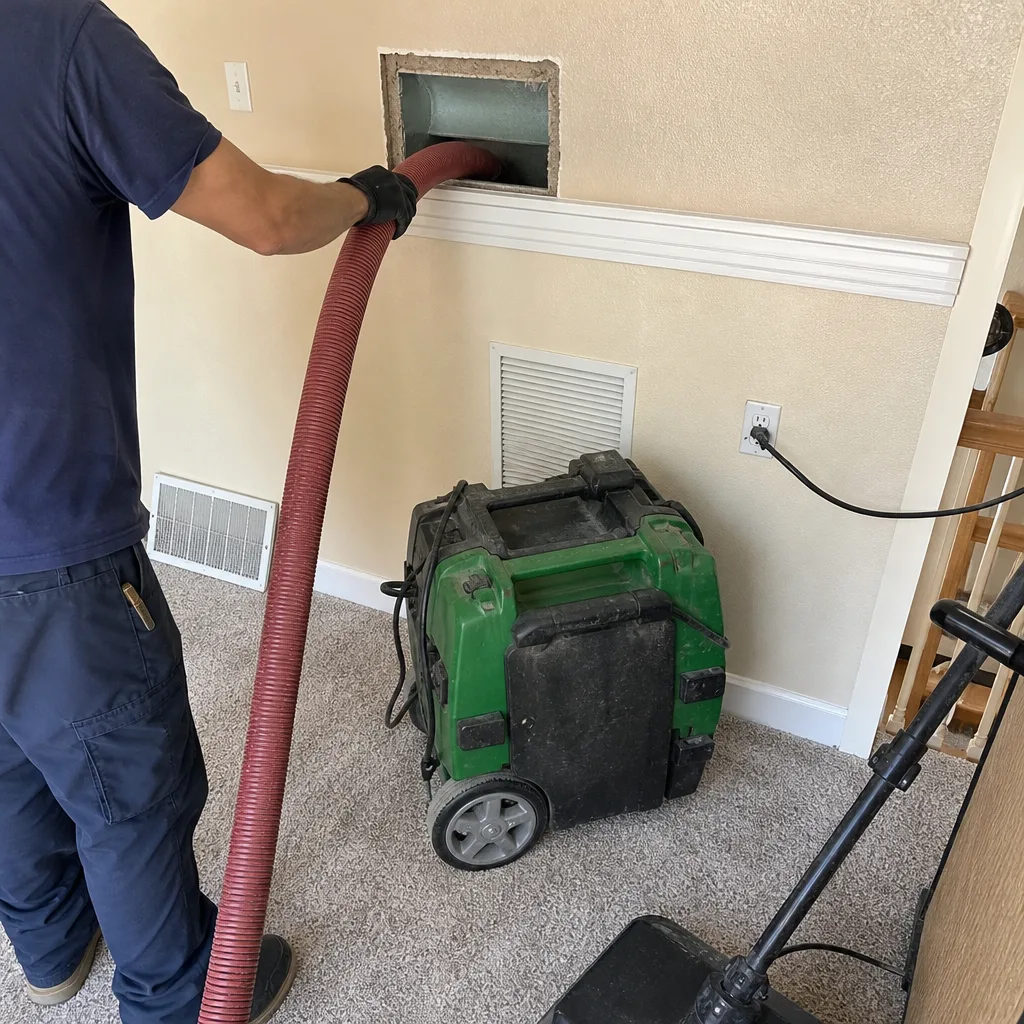
The approach we use in Yorba Linda homes is different in a mechanical way. Our Rotobrush system is a rotary brush-and-vacuum platform that physically scrubs the duct walls while simultaneously extracting the dislodged debris through a sealed vacuum path. The brush makes contact with the surface. The vacuum captures at the source. It’s the same mechanical agitation principle used in commercial and industrial duct cleaning, sized for residential systems.
For containment and filtration during the cleaning, we run Nikro and Abatement Technologies HEPA-filtered negative air units. Those units create negative pressure in the home while the cleaning is underway, so that any particulate released during agitation is pulled through HEPA filtration instead of escaping into the living space. The alternative, which we see too often, is a contractor running a portable vacuum with no containment, filling the home with a fine dust that settles on furniture by morning. That’s not cleaning. That’s relocation.
The equipment matters for a specific code-adjacent reason. California’s Title 24 ventilation requirements and the SCAQMD’s air quality mandates both assume that air moving through a home is being conditioned and delivered through a clean system. When a cleaning is performed with inadequate containment, the home’s indoor air quality can be measurably worse the week after the cleaning than the week before. In our view, that’s a failed job regardless of what the duct walls look like. Our separation-filter units, using Guardsman filtration media, hold the fine particulate instead of exhausting it into the home.
If you’re evaluating contractors in Yorba Linda, ask them to name their equipment. Not generically. Specifically. What’s the make of your negative air machine? What filtration standard does your vacuum system meet? What’s your process for protecting the living space during agitation? A contractor who can’t answer in specifics is a contractor who doesn’t own serious equipment. That should be a disqualifier.
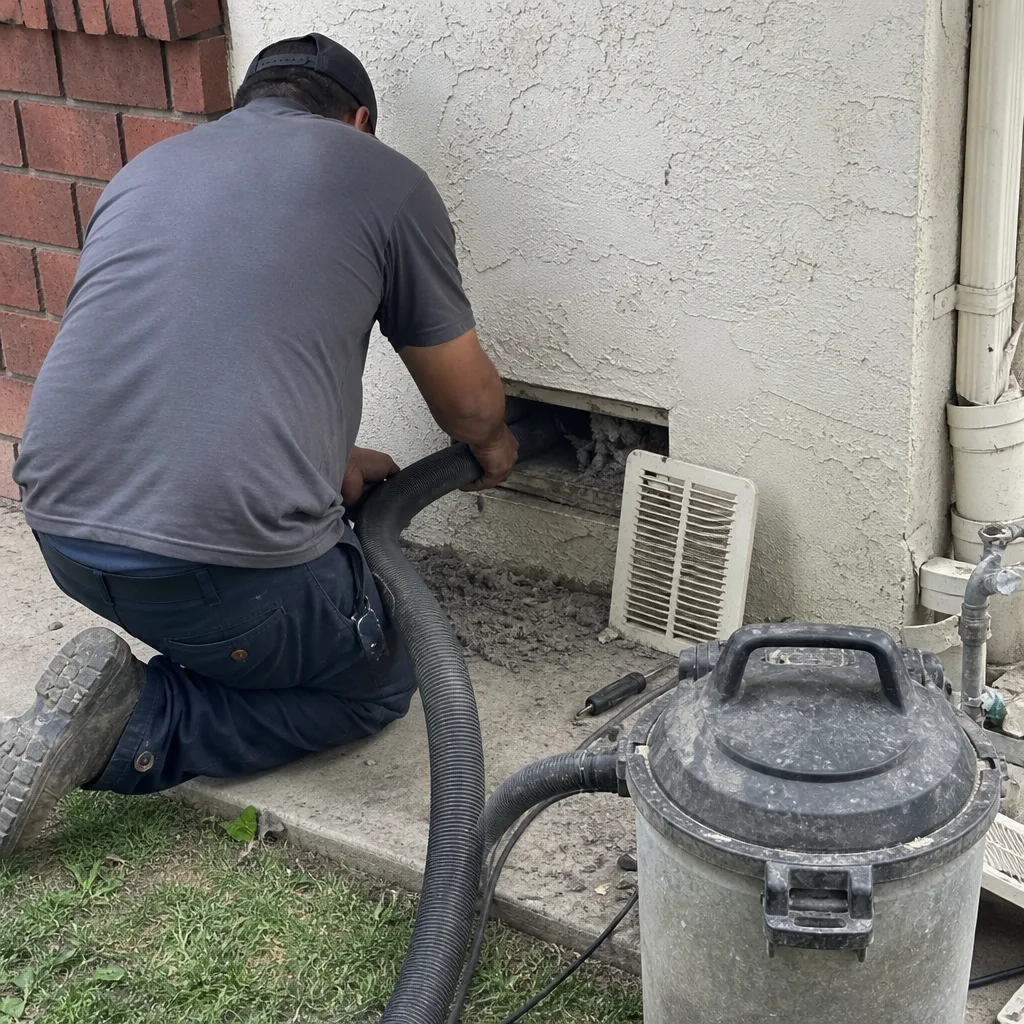
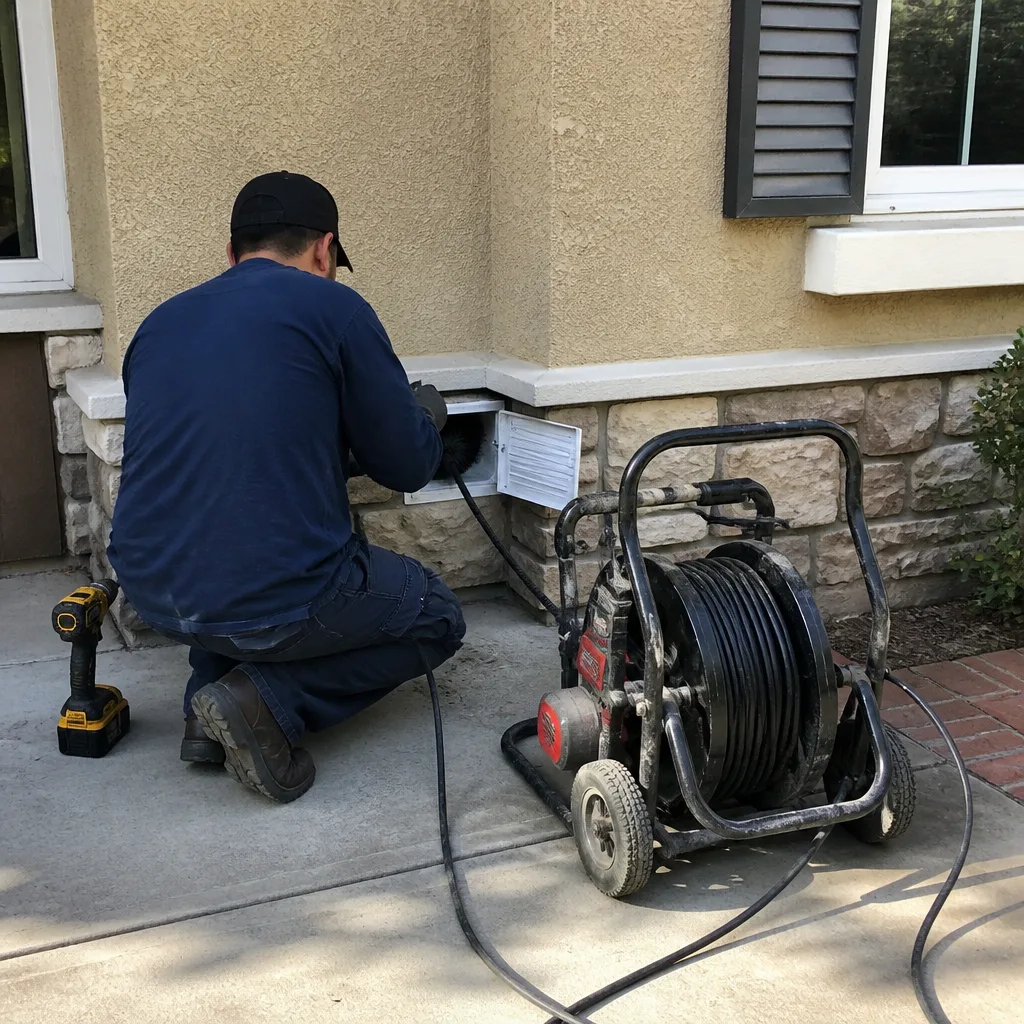
One more point on dryer vent cleaning in Yorba Linda, because it’s adjacent to the same conversation and gets bundled with duct cleaning in a lot of companies’ pricing. Dryer vent cleaning is a fire-safety service. The National Fire Protection Association reports mechanical failure and lint accumulation as the leading causes of residential dryer fires, and California’s own fire code requires that dryer exhaust systems be maintained clear of obstruction. When we clean a dryer vent, we’re pulling the lint pack out of the entire run from the dryer connection to the exterior termination. It’s not an add-on to a duct cleaning; it’s a separate safety task with its own set of standards. A company that treats it as a quick upsell is not doing the work with fire prevention in mind.
Common Mistakes to Avoid
- Assuming a low attic-imposed quote is saving you money. A low whole-house price almost always means airflow-only cleaning, no containment, no photo documentation. What you save upfront you spend a second time in twelve months when the system is just as dirty as it was before, and you may have introduced fine particulate into the living space along the way.
- Signing off on a repair discovered mid-job without a written change order. This is the moment when a $600 cleaning turns into a $6,000 surprise. A change order should state the scope, price, and whether a permit is required. If the contractor starts cutting into your attic ductwork before you’ve signed anything, tell them to stop.
- Ignoring the Title 24 implications of duct replacement in a pre-2008 Yorba Linda home. If you replace ductwork and fail the HERS verification, you’ll be chasing that paperwork when you sell the home. Do it correctly the first time.
- Treating mold in ducts as a cleaning problem. Mold is a moisture problem. Cleaning moldy ducts without fixing the moisture source is like repainting a rotted window frame. In Yorba Linda’s coastal climate, condensation is common in under-insulated attics. Find the moisture source, fix that, then address the contamination.
- Scheduling a cleaning during a SCAQMD air quality advisory. You’ll be pulling compromised outdoor air into the home the entire time. Wait until the advisory lifts and the AQI in Yorba Linda drops below 100.
- Hiring a contractor who can’t produce an insurance certificate. They’re in your attic, above your head, next to your electrical, surrounded by insulation. No insurance, no job. It’s that simple.
- Not requesting before-and-after photos in writing. Photos are the only reasonable proof that the work was actually done. A contractor who won’t commit to photo documentation is a contractor you will have a hard time holding accountable.
When to Call a Professional
You should call a professional duct cleaning company when you can see debris at your supply registers, when your home fills with dust within days of cleaning, when you’ve completed a remodel that generated drywall or tile dust, when you’ve moved into a pre-owned home with no maintenance records, or when you or a family member notices increased allergy symptoms indoors. You should also call after a wildfire event, after a rodent infestation in the attic, or when a musty odor comes from the registers at system startup.
Duct Cleaning Yorba Linda offers free estimates in Yorba Linda. We use Rotobrush mechanical agitation combined with Nikro and Abatement Technologies HEPA containment, and we provide before-and-after photo documentation as a standard part of every cleaning and air duct repair job. Call (877) 600-3906 for a free estimate.
Frequently Asked Questions
No, a standard residential air duct cleaning does not require a permit anywhere in California, including Yorba Linda. The cleaning is classified as maintenance under the California Mechanical Code. However, if the cleaning reveals disconnected duct sections, collapsed runs, or other conditions requiring repair or replacement, those repair activities may require a mechanical permit. Call (877) 600-3906 if you want an honest assessment of what your system actually needs.
In Yorba Linda, a mechanical permit is typically required when you replace more than a short section of ductwork, add new supply or return branches, modify the air handler or plenum, or reroute existing duct runs. The city’s Building Division enforces the California Mechanical Code directly. Minor reconnection of a separated duct section usually does not require a permit, but replacing a six-foot or longer run does.
Title 24, Part 6 is California’s Building Energy Efficiency Standards. It matters for duct cleaning because any duct replacement or substantial modification triggered by a cleaning discovery places you inside the Title 24 compliance system, which requires HERS verification of duct leakage and insulation levels. We see this frequently in older Yorba Linda homes where attic ducts have crushed insulation and failed mastic seals.
Ask them to name their equipment on the written estimate. Specifically: what mechanical agitation system they use (we use Rotobrush), what brand of HEPA filtration they deploy (we use Nikro and Abatement Technologies), and what containment protocol they follow. If the estimate says “commercial-grade equipment” without model numbers, that’s a red flag. Call (877) 600-3906 and we’ll tell you exactly what we run and why.
Mold on the interior of metal ductwork can sometimes be cleaned with HEPA-filtration and mechanical agitation if the surface area is small, but mold in porous duct liner or on the air handler surfaces generally requires removal and replacement of the contaminated material, not cleaning in place. The CDPH recommends addressing the moisture source first. If the contamination exceeds 10 square feet, a licensed mold remediation contractor is required. We’ll tell you upfront if your job crosses that line.
For most Yorba Linda homes, every 3 to 5 years is appropriate, depending on occupancy and conditions. Homes with pets, frequent candle use, or residents with respiratory conditions may warrant more frequent cleaning. Homes near the Santa Ana wind corridors that regularly get dusted with airborne particulates also tend to accumulate dust faster. The right frequency is determined by inspecting the actual buildup, not by a calendar.
The Bottom Line
Air duct cleaning in California does not require a permit. That part is simple. What requires care is the line between cleaning and the things that surround it: duct repair, duct replacement, air handler modification, and mold remediation. Each of those has its own regulatory fingerprint in the California Building Code, Title 24, and CDPH guidance. The homeowner who understands this distinction, and who demands a written scope of work before the job begins, is the homeowner who doesn’t get surprised. Explore more guides & resources to stay informed. In Yorba Linda, with its mix of older and newer construction and its Santa Ana wind events, that distinction matters more than most homeowners realize.
Written by the team at Duct Cleaning Yorba Linda, serving Yorba Linda since 2011.
See the difference
 Before
 After
 Before
 After
 Before
 After