
Last updated November 2, 2026
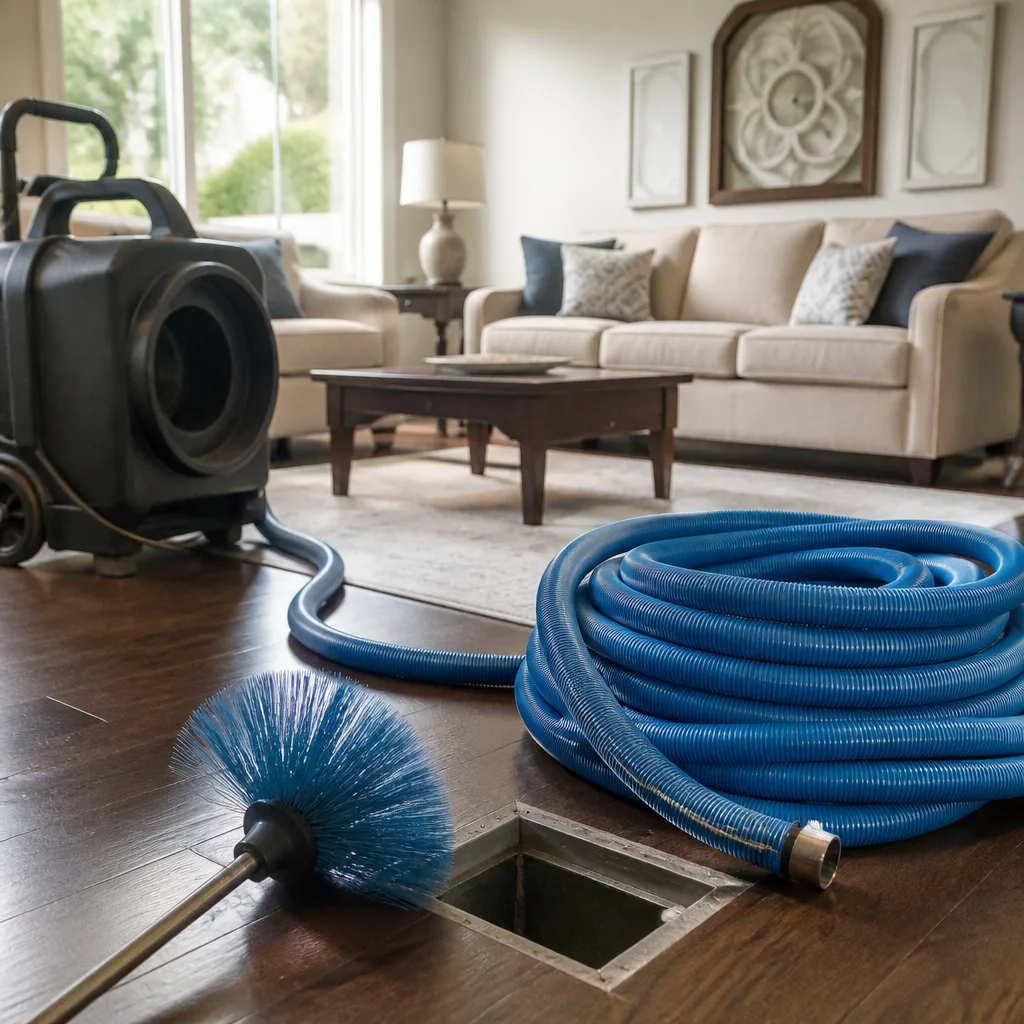 Whole-home duct cleaning
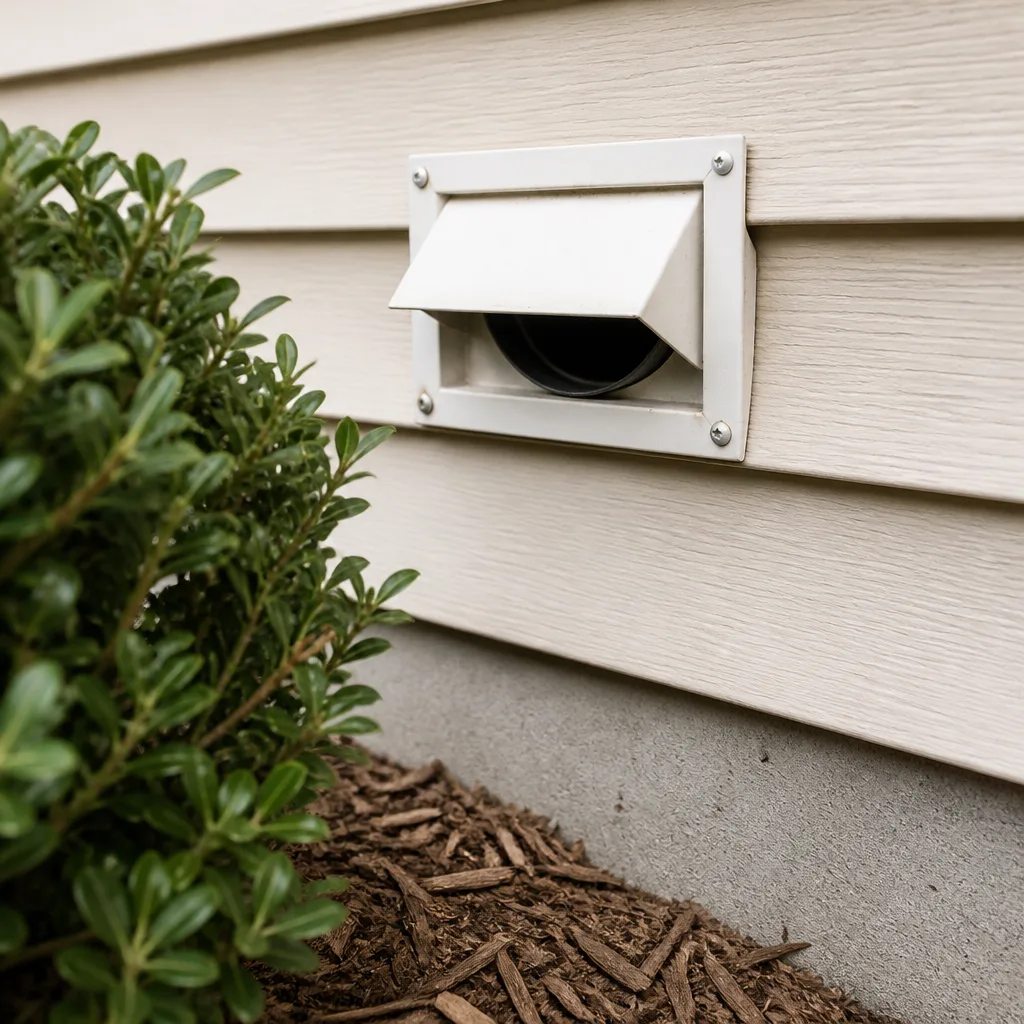 Dryer vent cleaning
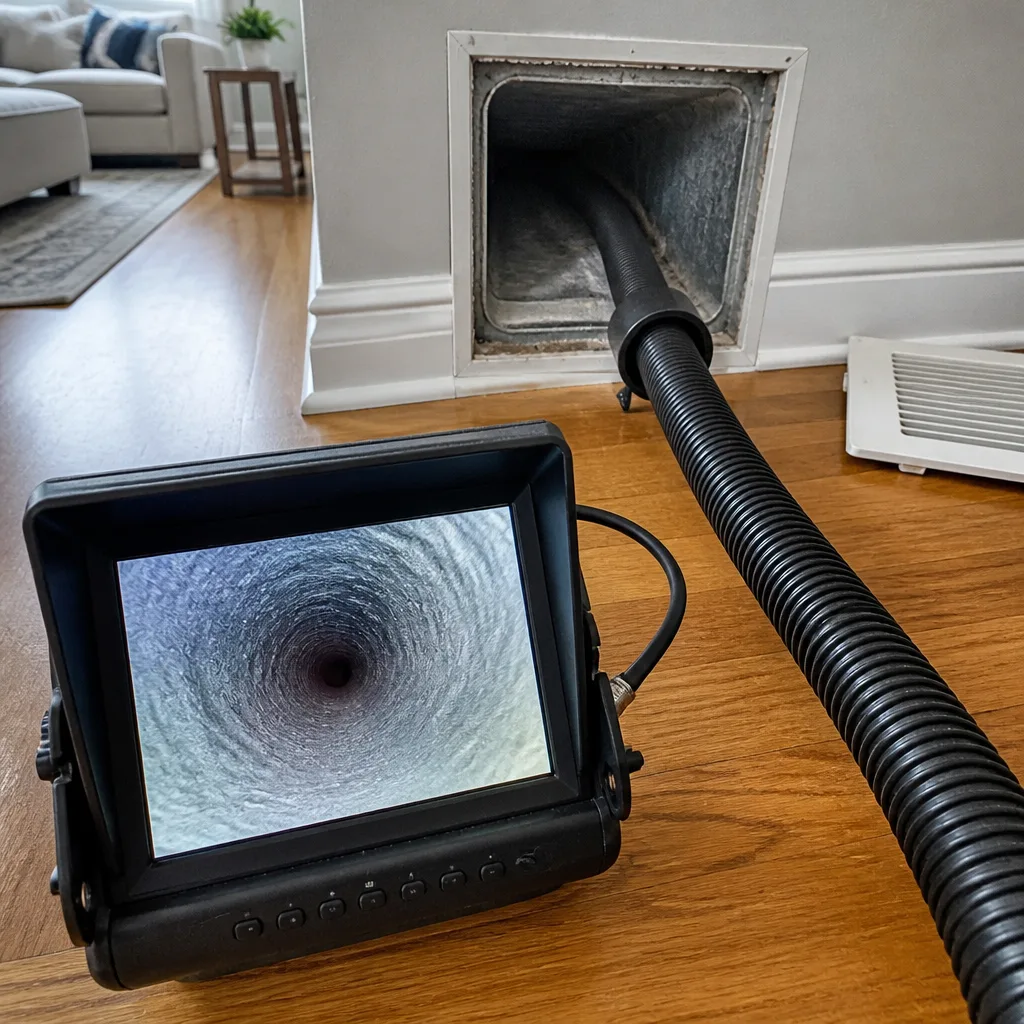 Camera inspection
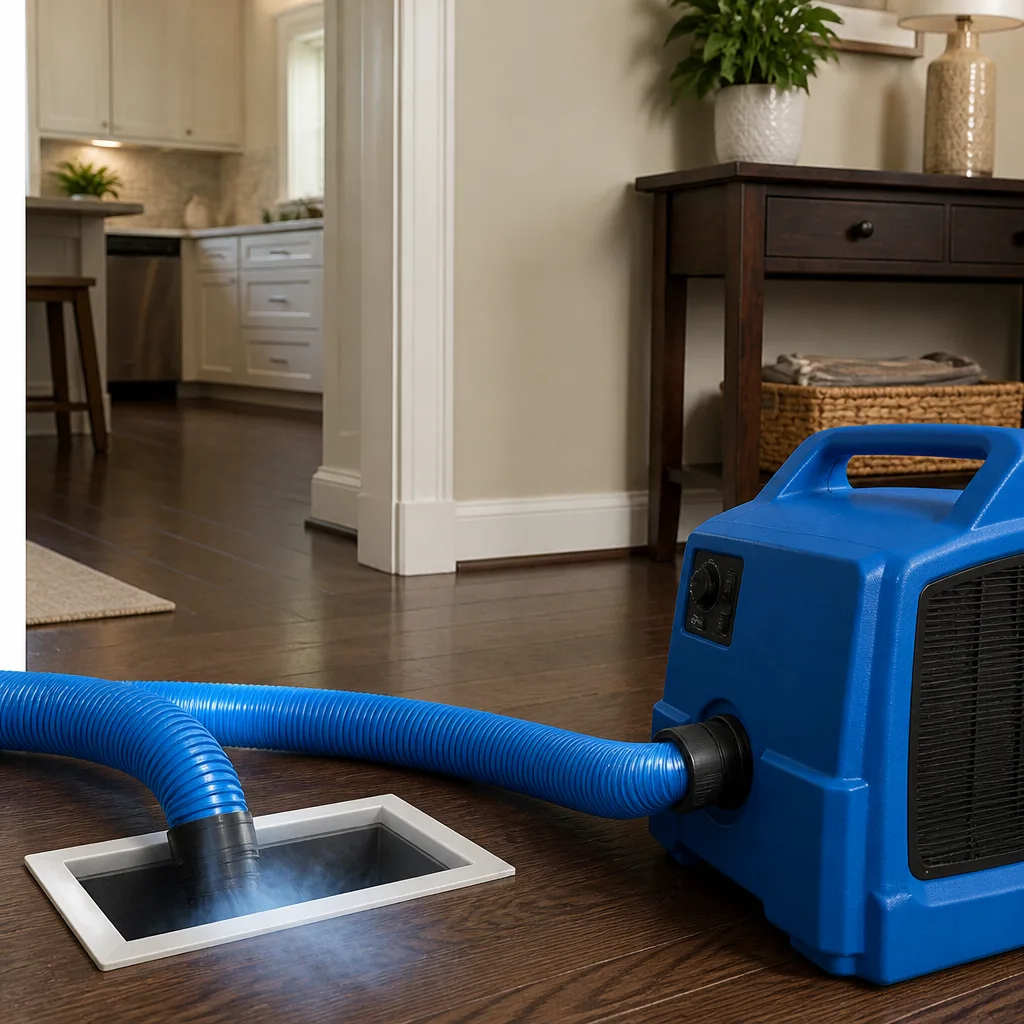 Sanitizing & deodorizing
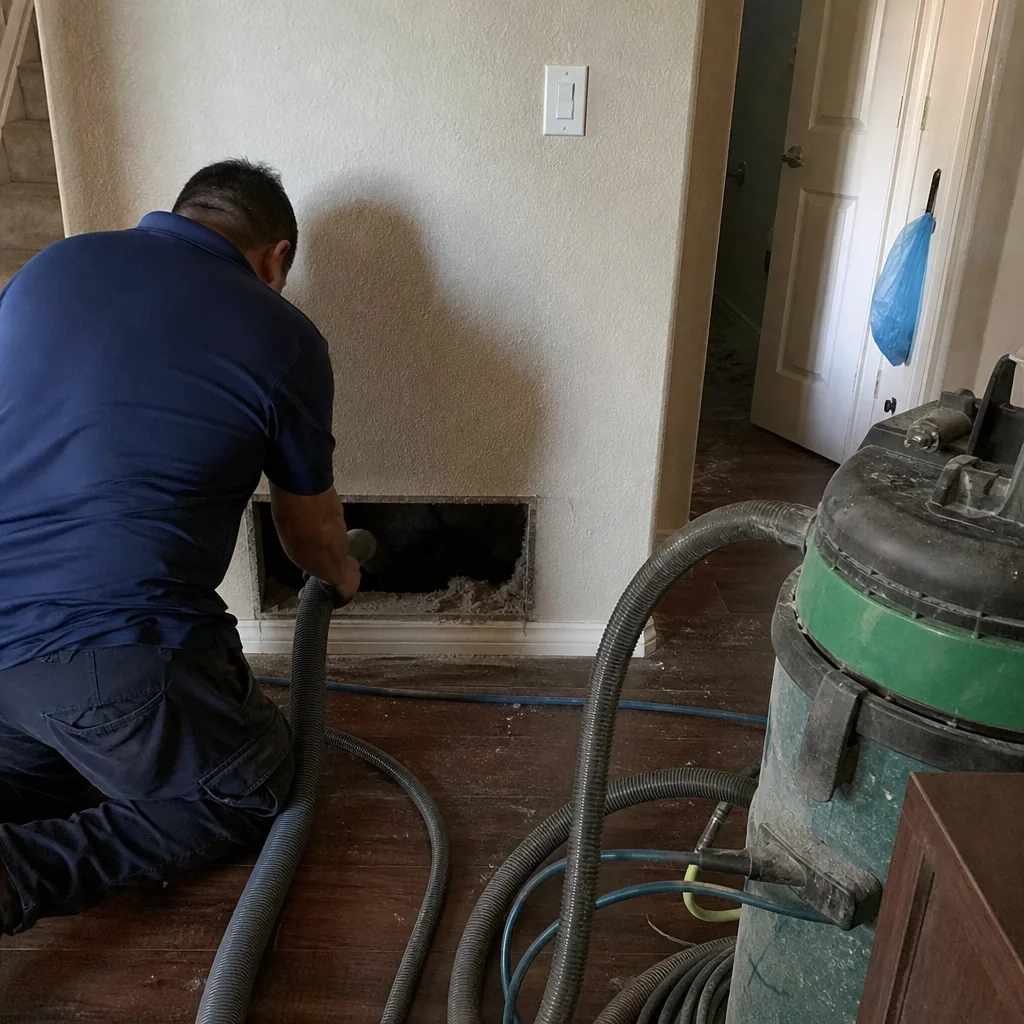
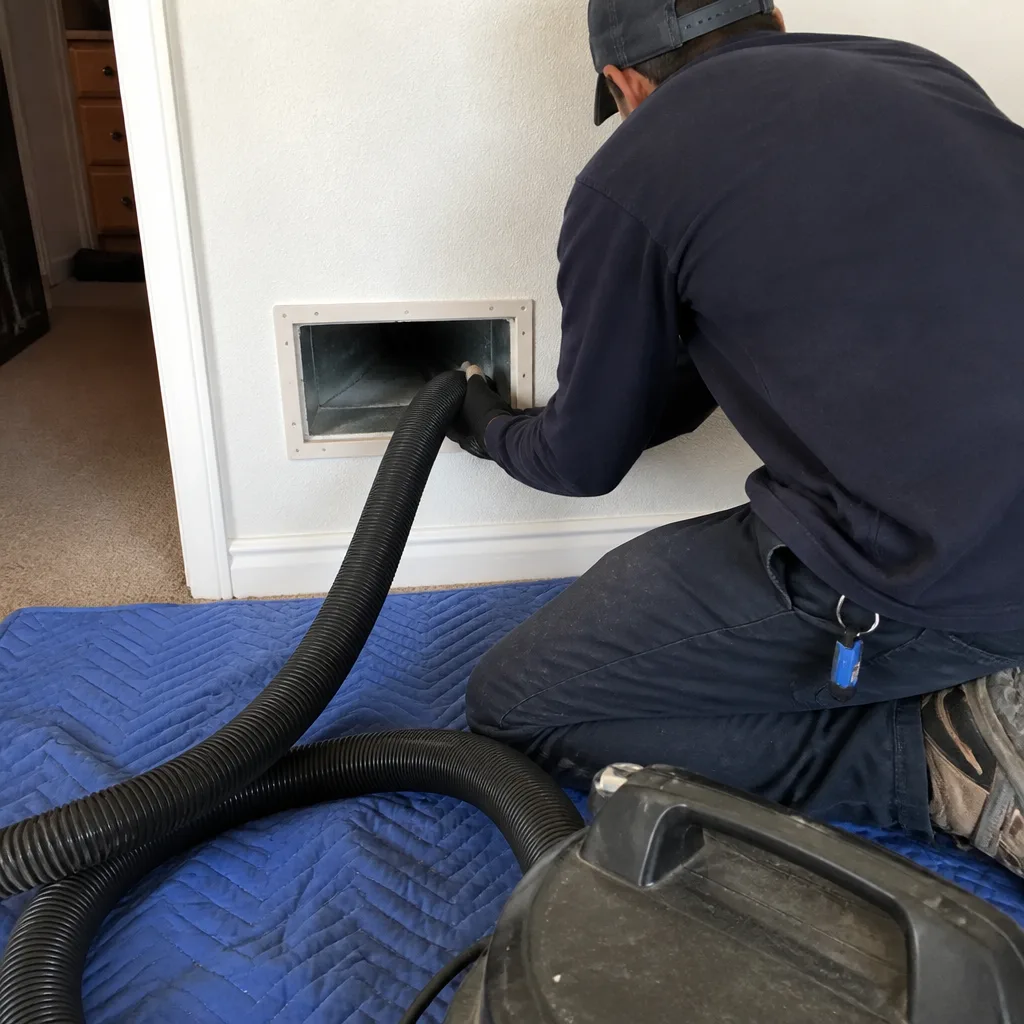
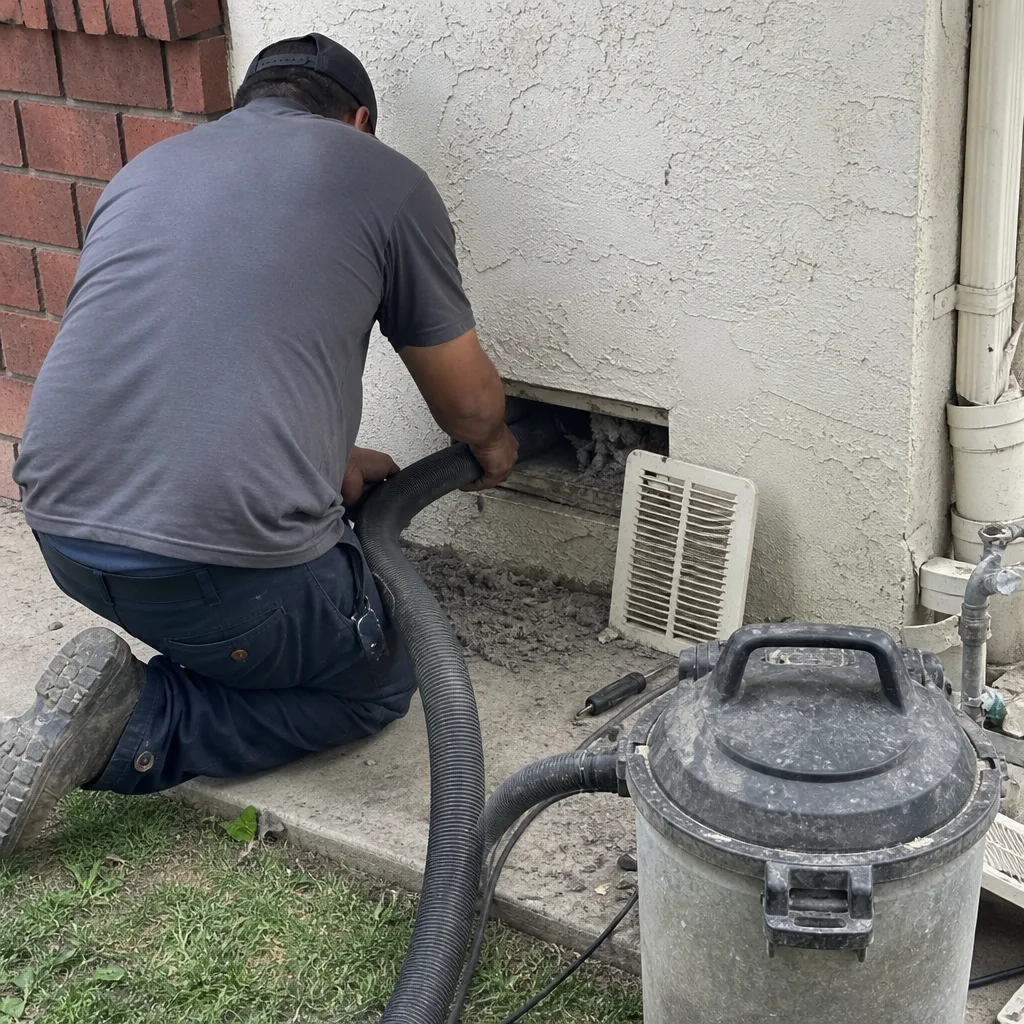
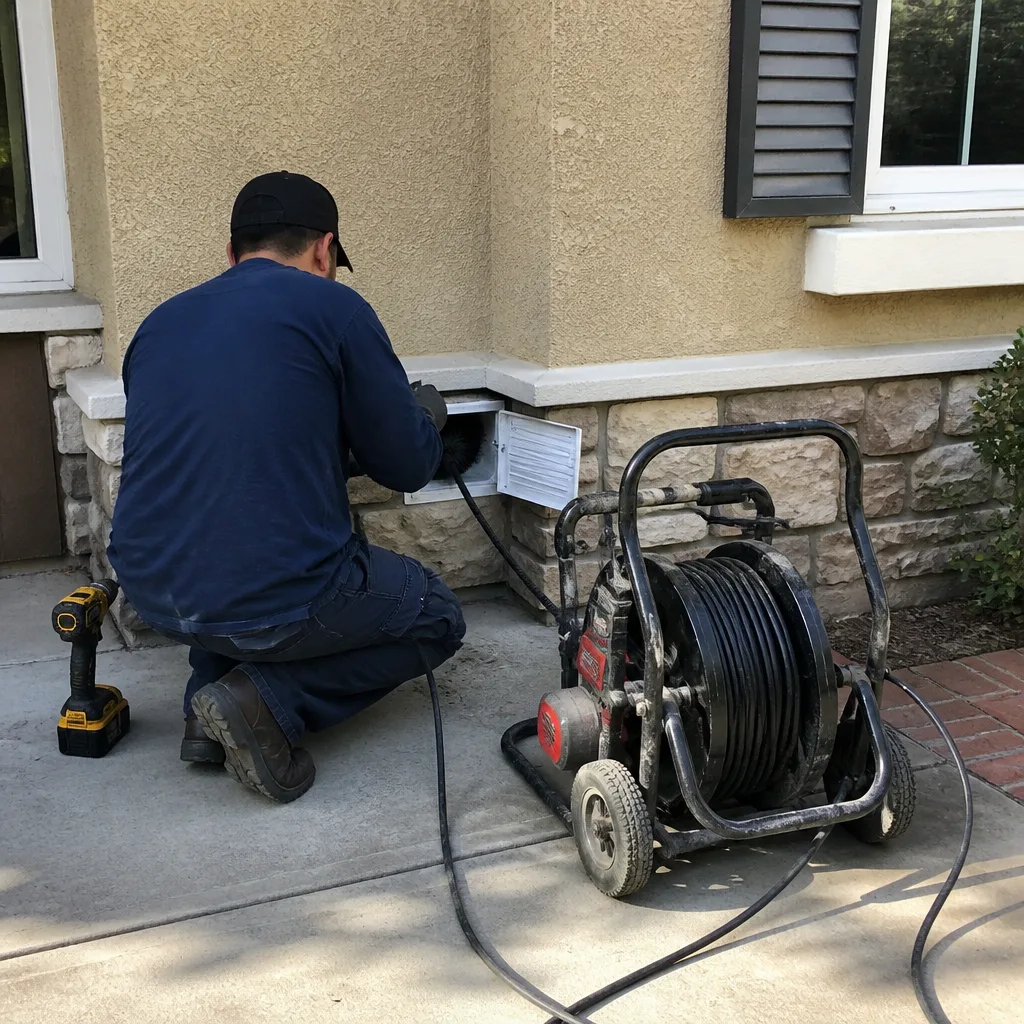
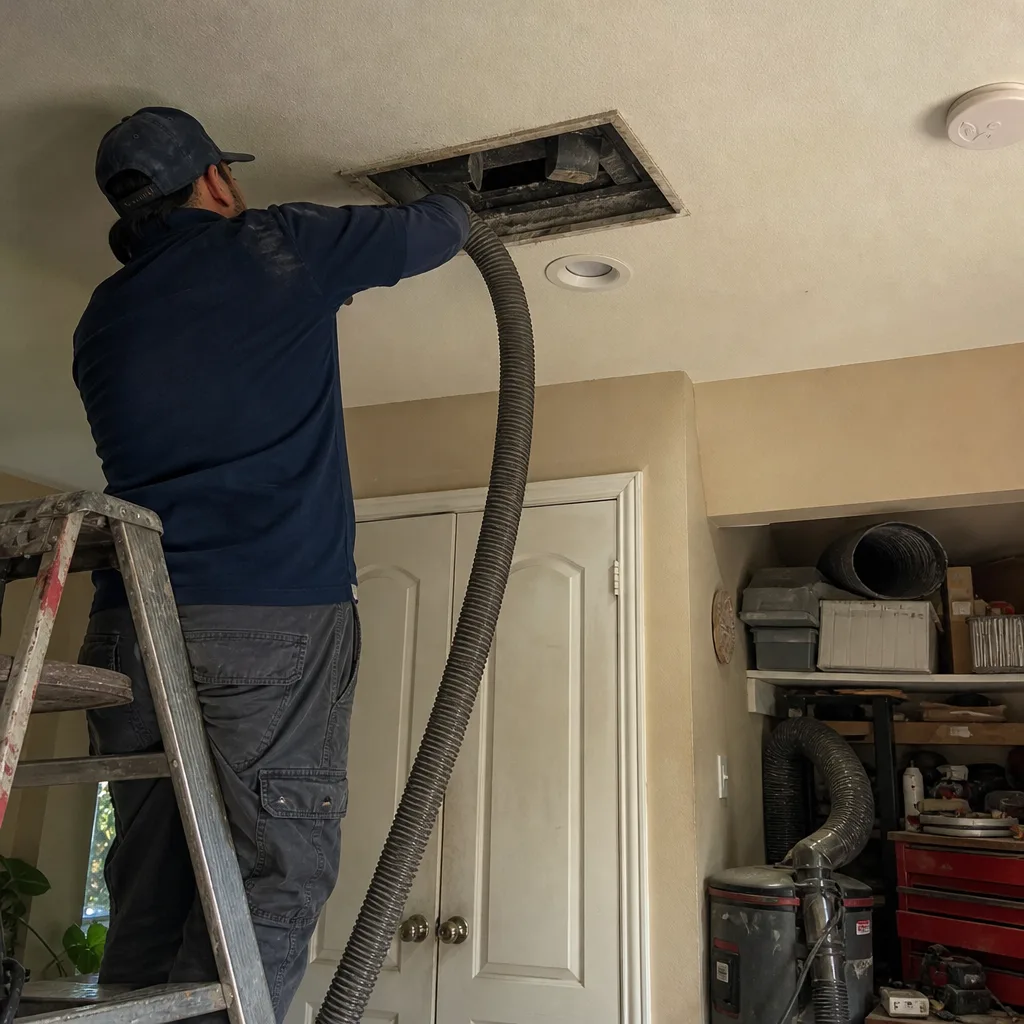
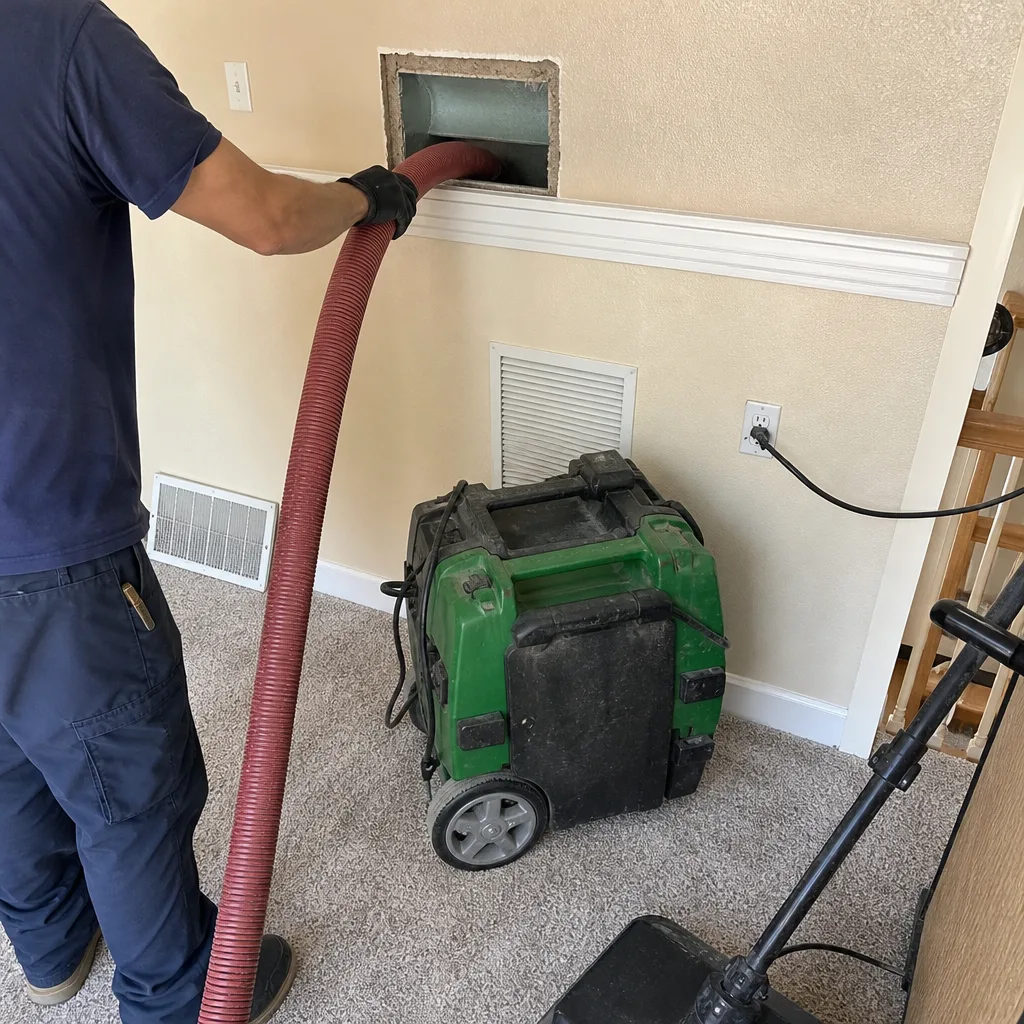
Whole-system duct and dryer vent check with before-and-after photos - you see exactly what came out of your vents
That "$99 whole-house special" is a bait ad - the real number appears once they are in your hallway, or the "clean" is a shop-vac at the register. We photograph the inside of your ducts before and after instead.
Air Duct Cleaning Warning Signs: A Yorba Linda Homeowner’s Reference Guide
Visible dust puffing from a register is not the start of a duct problem. It is the moment a problem that has been building for months, sometimes years, finally becomes obvious. Hidden inside the walls of Yorba Linda homes is an air system most homeowners never see, and the earliest signs of trouble are subtle: a room that warms slower than it used to, a filter that loads up faster than before, a faint smell that does not match any obvious source. This guide is written for homeowners who want to catch duct issues before they become visible, because by the time you can see the dust, you are already breathing the worst of it. For a deeper dive, see The Complete Air Duct Cleaning Guide for Yorba Linda Homeowners.
We are Duct Cleaning Yorba Linda home specialists, and we work in the specific conditions Yorba Linda’s mature housing stock and hillside climate create. What follows is the same reference we use when we walk into a home for an inspection, organized by the warning signs that surface earliest and the ones that mean the most.
Styles & brands we work with
- Whole-home duct cleaning
- Dryer vent cleaning
- Camera inspection
- Sanitizing & deodorizing
Quick Answer
The early warning signs of dirty or failing ductwork in a Yorba Linda home are airflow asymmetry between rooms (especially bedrooms that share one trunk line), accelerating filter loading, register streaking or speckling, and a faint biological smell that appears only when the blower runs. Any one of these on its own warrants an inspection. Two or more signal that the duct system is already affecting air quality and airflow, even if visible dust has not appeared yet.
Table of Contents
- Airflow Asymmetry: The Earliest Physical Indicator
- Reading Smell Profiles: Three Distinct Odors and What They Mean
- Register Discoloration: Gray Streaks vs. Black Speckling
- Filter Degradation Rate: Your Fastest Diagnostic Tool
- Post-Renovation Duct Loading: Why Construction Is an Automatic Trigger
- Noise and Vibration Changes: What Your Ducts Are Saying
- Moisture Signals in a Dry Climate: What Suggests a Condensate Issue
- Common Mistakes to Avoid
- When to Call a Professional
- Frequently Asked Questions
- The Bottom Line
Airflow Asymmetry: The Earliest Physical Indicator
Restricted ducts do not announce themselves by sending less air to every room at once. They restrict unevenly, and the pattern is predictable once you understand how a residential duct system is built. Most Yorba Linda homes run a single main trunk line off the air handler, with branch lines feeding individual rooms. When debris builds up inside a branch line, the first rooms to lose measurable airflow are the ones closest to the air handler, not the farthest ones. That sounds backwards, but the reason is pressure. The farthest branch runs have the longest effective resistance, so the blower has to work against them from day one. The near branches get the most air volume early in the system’s life, which means they also accumulate the most debris per linear foot over time. When restriction begins, the branches with the highest historical airflow are the ones where the most debris exists to restrict them. In practice, we regularly see bedrooms that share the first takeoff off the main trunk lose airflow while the back bedroom, the classic complaint room in a two-story Yorba Linda home, stays relatively stable.
The diagnostic test costs nothing and takes five minutes. On a mild day with the system running, stand in each room and hold your hand at the register. Note which register moves the most air and which moves the least. Then compare that to what you remember from previous years. Most homeowners have an intuitive sense of which rooms have always warmed or cooled fastest. When the pattern flips, or when the gap between strongest and weakest register widens noticeably, the duct system is restricting. It is almost never a damper accidentally closed. Duct restriction from debris is gradual and progressive, and asymmetry is its earliest measurable signature. The fix starts with Air Duct Cleaning in Yorba Linda to remove the mechanical buildup, followed by a pressure check across the system to identify whether a repair is also needed.
Reading Smell Profiles: Three Distinct Odors and What They Mean
Not every smell from a register means the same thing. Three distinct odor profiles show up in ductwork, and each one points to a different source and a different remedy. Learning to tell them apart will save you from replacing equipment that does not need replacing, or worse, ignoring a biological issue that will only grow.
Profile one: heated dust, or the “furnace smell.” This is the smell of fine particulate matter accumulating on the heat exchanger or coil, burning off when the unit fires up. It smells like burnt toast without the toast, slightly acrid, and it fades after a few minutes of runtime. It is common at the start of the heating season in Yorba Linda homes that run the air conditioner most of the year and then fire the furnace for the first time in November. A mild version at seasonal start-up is normal in any home. The problem is when it persists past the first week. Persistent heated-dust smell means the coil or heat exchanger is coated in debris that re-burns on every cycle. That layer of debris also restricts heat transfer, which means you are paying to heat it and then smell it. The debris itself is largely organic material that has accumulated inside a system that has not been cleaned in years.
Profile two: musty or earthy biological growth. This one is frequently misdiagnosed. Biological growth inside ducts rarely smells like a damp basement. It smells faint, slightly sweet, and closer to dried leaves or old books than to moldy drywall. The critical diagnostic is timing: it appears when the blower starts and disappears within minutes of the blower stopping. If the smell is always present in a room, the source is the room: carpet, drywall, a window frame. If the smell comes and goes with system operation, it is in the air stream. In Yorba Linda, where ambient humidity is low, biological growth in ducts almost always traces back to a condensation event, not chronic dampness. A condensate drain that is partially clogged, a coil that freezes and thaws, a bathroom vent tied incorrectly into the return. The growth is real, but it will not resolve on its own, and air fresheners or UV lights will not remove the root source. The source is the moisture, and the biological material inside the ductwork needs to be physically removed.
Profile three: stale cooking oil or a persistent greasy smell. This is one we see regularly in Yorba Linda kitchens with older range hoods. Cooking aerosols get pulled into the return air stream, cool inside the ductwork, and condense onto duct walls as a sticky film. Dust then adheres to that film, and over years the combination builds a layer that only smells when it is warm. If your kitchen range hood recirculates air through a charcoal filter, it is putting that air back into the kitchen, and your return is pulling it into the system. This film layer is also what causes some ducts to feel “sticky” during cleaning, and airflow-only methods will not touch it. You need agitation, which is why we run Rotobrush rotary brush systems through our residential work, not just for commercial jobs. The brush physically contacts the duct walls and breaks that film free.
Register Discoloration: Gray Streaks vs. Black Speckling
Take the register cover off and look at the back side of it. The pattern of discoloration tells you what is in the air stream before you put a camera in the duct. Two patterns show up in Yorba Linda homes with enough regularity that we can identify them at a glance.
Gray streaking around the register face. This is the classic signature of long-term particulate loading. Air traveling through the duct picks up fine dust, and as it exits through the register, electrostatic charge and turbulence cause some of that dust to deposit on the register face and on the wall around it. Gray streaks are not black mold. They are not a health emergency. They tell you that the duct system has been moving dirty air long enough to paint its own exit points, and that means the duct walls are likely coated as well. The gray streak pattern often looks like a shadow above the register, following the direction of the airflow plume. If the streaking is heavier on the return registers than the supply ones, the return side is pulling unfiltered air from somewhere: a loose return duct fitting, an unsealed return box, or a filter bypass gap.
Black speckling on the register or the surrounding wall. This pattern is different, and it deserves a closer look. Black specks concentrated directly on the register are usually a combination of dark dust particles, carbon from a pilot light or combustion appliance, and sometimes candle soot. Black speckling that extends outward onto the wall in a radial pattern around the register is more specific: it indicates fine particulate matter that is heavy enough to drop out of the airstream quickly. Soot from candles, from a fireplace, or from a gas appliance that is running rich will do this. In Yorba Linda homes with gas fireplaces that see winter use, register speckling near the fireplace room is a common finding. The speckling is evidence the system is circulating particles that are dense enough to deposit quickly. That same particle load is being inhaled. A system inspection will usually find heavy buildup at the coil and on the first few feet of the supply runs. The register is just showing you what is inside.
Filter Degradation Rate: Your Fastest Diagnostic Tool
The air filter is the only part of your duct system you see every month, and most people do not notice that it is telling them something. The rate at which a filter loads up is a direct read on how much particulate matter is circulating in the air stream. When that rate changes without a corresponding change in how you live, the duct system is the most likely source.
Here is the baseline. A standard one-inch fiberglass filter in a typical Yorba Linda home, occupied by two people with no pets and no active construction, will usually show visible discoloration after about 30 days and should be replaced at 60 to 90 days. A pleated filter with more surface area will run 60 to 90 days before it looks loaded. If your previous cycle was consistent, and then suddenly the filter looks dark at two weeks, something changed. Dusty conditions outside are one variable, but Yorba Linda does not have the agricultural particulate load that areas to the east in Riverside County deal with. The more common cause of a sudden acceleration is the duct system itself: a return leak pulling unfiltered attic air, a break in a return duct, or a large amount of accumulated debris that is now becoming mobile. What has happened is the duct system reached a critical load threshold, and the air stream is now picking up and recirculating old debris faster than it can settle out.
Start logging your filter changes. Photograph the filter before you swap it. Date the photo. If the next filter loads to the same visual level in half the time, you have a measurable trend, not a vague impression. That trend is the single best justification for bringing in a professional to inspect the system. Filters also load differently by media. If you have switched to a high-MERV pleated filter recently, you may notice faster surface loading because the tighter media catches more particles. That is not necessarily a duct problem. But if the filter type has not changed and the load rate doubles, the change is in the air system, and it almost always traces back to the ducts.
Post-Renovation Duct Loading: Why Construction Is an Automatic Trigger
Any renovation in a Yorba Linda home, even in a room on the opposite side of the house from the air handler, is a reason to inspect the duct system afterward. The common assumption is that if the contractor hung plastic sheeting and closed doors, the dust stayed in the work area. The reality is that the return side of your HVAC system is running a negative pressure on the whole house whenever the blower is on. That negative pressure pulls dust from every room that is not sealed at the return registers, including the work area, into the duct system. Plastic sheeting reduces the spread of visible dust onto furniture. It does almost nothing to prevent fine particulate from being drawn into the return.
The sequence matters. Construction dust is heavy: drywall compound dust, sawdust from cutting, concrete dust from tile removal. Much of it is fine enough to stay suspended in air for hours. The HVAC system during a renovation is typically running, because the crew wants climate control. The return is pulling room air the entire time. A portion of that dust enters the ducts, and because the air velocity inside the return drops suddenly at the filter, a percentage of the particulate settles out in the return ductwork before it ever reaches the filter. It sits there. Once construction ends and the system keeps running, that settled dust gradually becomes entrained and recirculates. This is why homeowners often notice more dust in the house a month after renovation than during the work itself. The filter can only catch what enters it. The dust that settled upstream of the filter is now in the air stream.
The practical rule: any renovation that produces dust, which is all of them, should be followed by a duct inspection and, in most cases, a full cleaning before the family resumes normal living patterns. Waiting for the dust to “settle out” means waiting for it to get into your lungs. We also recommend sealing the supply registers and the return in the work area during construction, with the system off, because the negative pressure issue applies to both sides. If you are planning a remodel in Yorba Linda, call Air Duct Repair in Yorba Linda before construction starts, not after it ends. We can assess the current state of the system and seal what needs sealing so construction dust stays out of the air stream in the first place.
Noise and Vibration Changes: What Your Ducts Are Saying
Duct systems make noise, but they make the same noise day after day. When the character of that noise changes, the ductwork has physically changed. Two specific changes are worth paying attention to in Yorba Linda homes.
A new popping or oil-canning sound when the blower starts or stops. This is the sound of sheet metal flexing under pressure. Ductwork is installed as a sealed system. When the blower starts, it creates a pressure differential, and the duct walls move slightly. Normally that movement is small and quiet. When the ductwork is loaded with debris, the internal cross-section shrinks, which increases the static pressure inside the duct. That higher pressure pushes harder against the duct walls, and you hear it as a pop or a thump. If the popping has worsened over time, the most likely cause is internal restriction. The system is working against itself.
A rhythmic thumping or ticking in one wall or ceiling. This is typically a loose hanger or a branch duct that has shifted. It does not necessarily indicate debris, but it is a mechanical warning that the duct system needs attention. A duct that is hanging loose can develop a low spot where moisture and debris collect. The repair is straightforward, but it lives inside a wall or attic, and most homeowners will not find it without an inspection camera. The thump is also sometimes caused by a dirty blower wheel that is out of balance. That is a different repair, but the diagnostic path starts with the same inspection.
Noise changes are not something to live with. They are a physical signal from a mechanical system. In our experience, Yorba Linda homes built before the 1990s often have original sheet metal ductwork that is reaching the age where hangers fail and seals deteriorate. A noise change is the first audible sign that something in that system has moved. Ignoring it costs more later, because a sagging duct accumulates debris and moisture faster than a properly sloped one.
Moisture Signals in a Dry Climate: What Suggests a Condensate Issue
Yorba Linda sits in a Mediterranean climate. Ambient humidity is low most of the year, especially compared to coastal Orange County cities like Newport Beach or Huntington Beach. That low humidity is part of why duct systems in Yorba Linda tend to experience fewer chronic moisture problems than systems in more humid climates. But every air conditioner produces condensate by design, and when that condensate does not drain, moisture ends up where it does not belong. The warning signs of a drain issue are specific and should be treated as an immediate inspection trigger, because standing moisture in a duct system becomes a biological problem quickly, even in a dry climate.
Water stains on ceiling drywall below the air handler. This is the most direct sign of a failing condensate drain or pan. The stain is usually yellowish brown and grows slowly. In a two-story Yorba Linda home, the air handler is often in the attic or in a second-floor closet, and any overflow finds the ceiling below. A stain that appears during air conditioning season and stabilizes during winter is almost certainly condensate, not a roof leak.
The smell profile changes from dusty to musty only during the cooling season. This is the same biological growth indicator described earlier, but the seasonal pattern confirms the source. If the musty smell is absent during winter heating months and appears when the AC runs, the moisture source is the cooling process itself: the coil, the drain pan, or the duct sections immediately downstream of the coil. The condensate system is designed to carry that water away. When it does not, the duct system is running wet, and wet ducts grow things. The fix is not just replacing the filter or cleaning the drain. The biological material inside the ductwork needs to be physically removed, and the drain system needs to be corrected so it does not return.
We use Nikro and Abatement Technologies HEPA filtration during our cleaning work specifically for this scenario. When you agitate biological material out of a duct system, that material becomes airborne inside the home unless the equipment captures it at the point of collection. The HEPA units pull from inside the duct, and that is the difference between removing contamination and redistributing it. A homeowner dealing with a moisture-loaded system should ask any cleaning company how they handle containment, because the answer separates professional work from a shop-vac job.
Common Mistakes to Avoid
- Waiting for visible dust to act. By the time dust is visibly exiting the registers, the duct system has been loaded for a long time. The early indicators are airflow changes, filter load rate, and register staining. Acting on those saves money and keeps the air cleaner than treating visible dust as the first symptom.
- Assuming the smell is from the attic or the crawl space. This is the most common misdiagnosis we hear. If a smell appears and disappears with the blower, it is in the air stream, not in the structure. Isolating the source saves an expensive attic remediation for a problem that lives in the ducts.
- Replacing the filter and calling it fixed. A filter catches what enters it. Debris downstream of the filter is already past the point of capture. A dirty filter is a symptom of a dirty system, not the whole problem.
- Hiring based on a coupon price. In Yorba Linda, duct cleaning prices that look too low usually mean the company is not doing the job the way the equipment manufacturers intend. Agitation and HEPA capture cost more than a shop-vac through the vent. The price difference reflects the process difference.
- Skipping duct inspection after renovation. Construction dust settles in the return ductwork and becomes a long-term recirculating irritant. A post-renovation inspection is cheap compared to re-cleaning a house full of drywall dust.
- Ignoring a condensate stain because it is small. The stain is an overflow indicator. The water that caused it has been accumulating somewhere, and that somewhere is likely inside your duct system. The time to address it is the first time it appears.
- Assuming newer homes do not need duct attention. New construction in Yorba Linda produces an enormous amount of debris inside the walls during the build. Builders do not typically clean duct systems before homeowners move in. A five-year-old home can have a duct system that has never been cleaned since the day it was framed.
When to Call a Professional
Call for a duct inspection if you notice any two of the signs described in this guide showing up at the same time: airflow asymmetry plus faster filter loading, a seasonal smell plus register streaking, a noise change plus a condensate stain. A single sign can be a false alarm. Two signs together rarely are. Also call immediately if you have completed any renovation work in the last six months and the system has not been professionally inspected since, or if you smell a biological odor that tracks with blower operation, regardless of the other variables. Duct Cleaning Yorba Linda offers free estimates in Yorba Linda, and we will tell you honestly whether your system needs attention or not. Call (877) 600-3906 to schedule.
Frequently Asked Questions
The most reliable early indicators are airflow asymmetry between rooms, a filter that loads visibly faster than your historical baseline, register streaking or speckling, and a smell that appears only when the blower runs. Any two of these together warrant a professional inspection. Visible dust from the registers is a late-stage sign, not the first one.
Whole-system air duct cleaning in Yorba Linda typically runs between $450 and $900 depending on the number of vents, the size of the home, and the level of contamination. That range assumes professional equipment including agitation and HEPA capture, not airflow-only methods. Budget offers below that range usually mean the company is skipping the mechanical cleaning step, which is the step that actually removes debris from the duct walls. Call (877) 600-3906 for an exact quote, free and without pressure.
Three factors control how fast a duct system loads: the age and seal quality of the ductwork, the number of occupants and pets, and whether the home has undergone renovation. Older Yorba Linda homes with original sheet metal ducts and return leaks pull attic air into the system continuously, which loads the ducts much faster. Homes near the hillsides also see more fine particulate matter from wildfire season and prevailing winds.
Dirty duct systems do not create allergens, but they can continuously recirculate particulate matter that irritates the respiratory system: dust, pet dander, pollen, and fragments of biological material from inside the ducts. When a system has not been cleaned in years, that material cycles through the living space every time the blower runs. Cleaning removes the reservoir, and the air stream stops carrying that load.
The National Air Duct Cleaners Association recommends cleaning every three to five years for most homes. Homes with pets, recent renovation, or household members with respiratory sensitivities should shorten that to every two to three years. A system that has never been cleaned in a ten-plus-year-old Yorba Linda home should be inspected before setting any schedule, because the first cleaning may need to address years of accumulated material.
Yes, and the reason is that visible dust is not the right indicator. The debris inside a duct system includes fine particulate matter too small to see individually, plus biological material that releases odor compounds. Much of what builds up on duct walls never becomes visible to the naked eye. The right question is not whether you see dust, but whether the system is moving air efficiently and whether the filter is loading at a normal rate. If either answer is no, the system needs attention regardless of visible dust.
An airflow-only method pulls air through the system but does not physically dislodge debris that has adhered to the duct walls. A Rotobrush rotary system, which is what we run, uses a motorized brush that contacts the duct walls and mechanically removes the debris so the vacuum can extract it. The difference is real and measurable. Homes that have been cleaned airflow-only often still have a gray film inside the ductwork when we inspect them.
For homeowners in Yorba Linda, Dryer Vent Cleaning in Yorba Linda is a separate service we handle with the same process discipline, and it is part of the same whole-system conversation about air quality and fire safety in a home’s exhaust pathways.
The Bottom Line
The duct system in a Yorba Linda home is a mechanical component, not just a pathway for air. It loads, it restricts, it changes the quality of the air you breathe, and it sends warning signs long before it sends visible dust. Learn the early indicators: airflow asymmetry, filter rate, register staining, smell profile, post-renovation loading, and moisture signals. Watch them together, not in isolation. When two show up, call for an inspection before the problem becomes something you can see. The air in your home is either moving through a clean system or a loaded one. The difference is measurable, and the signs are there if you know what to look for.
Written by the team at Duct Cleaning Yorba Linda, serving Yorba Linda since 2011.
See the difference
 Before
 After
 Before
 After
 Before
 After