
Last updated November 2, 2026
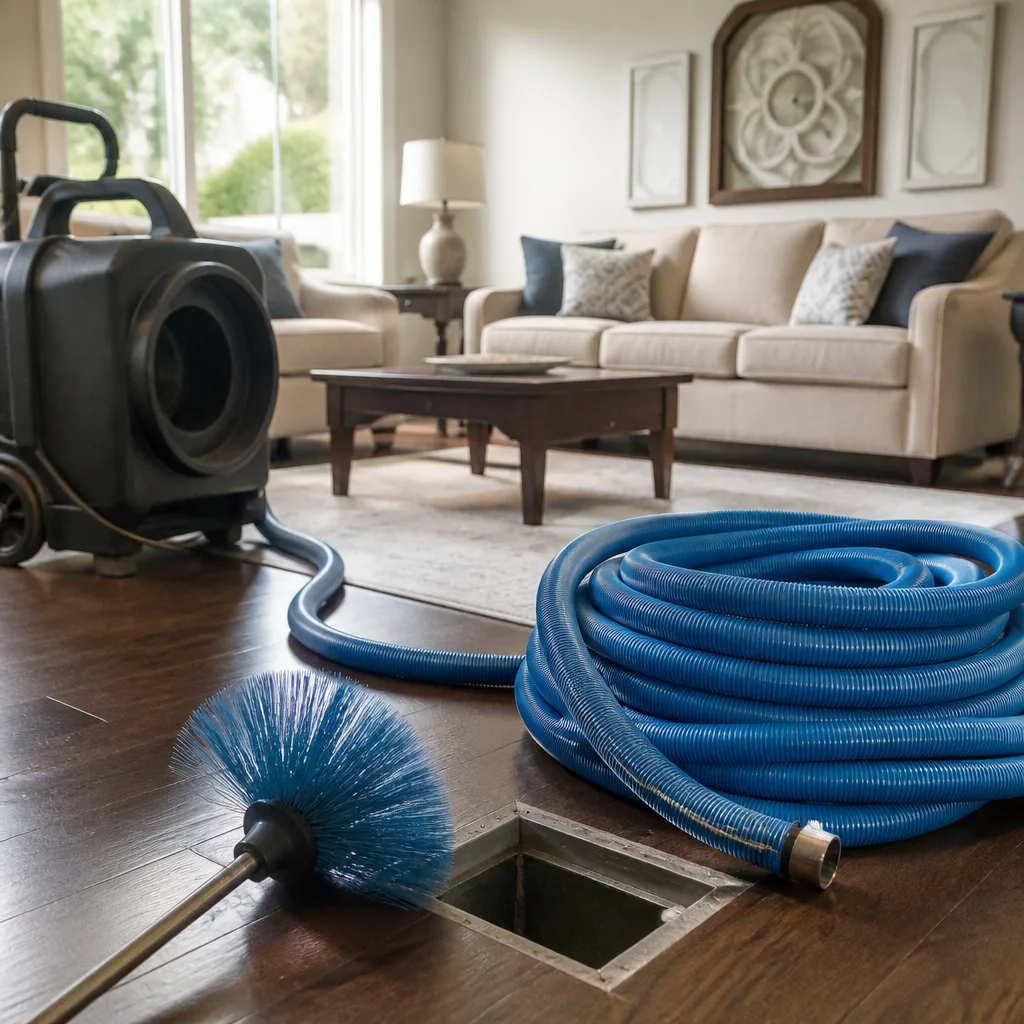 Whole-home duct cleaning
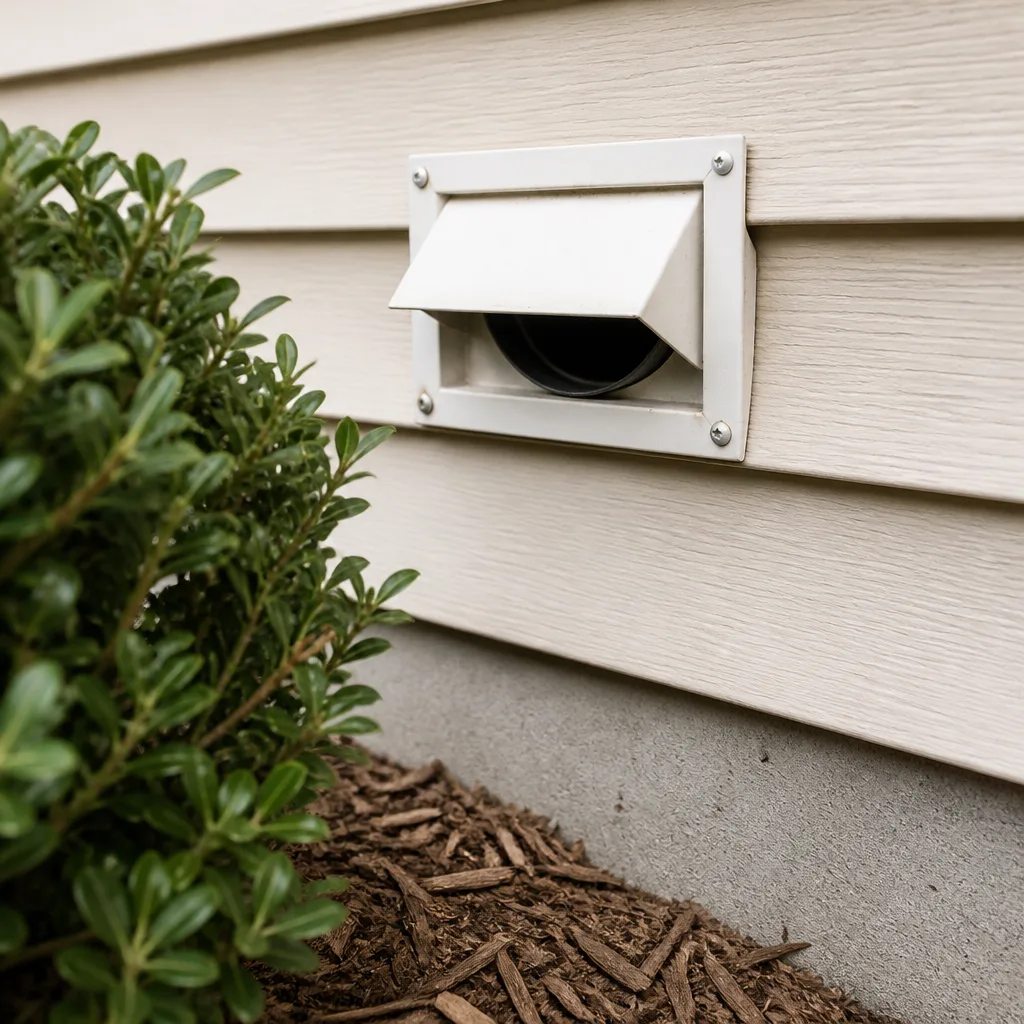 Dryer vent cleaning
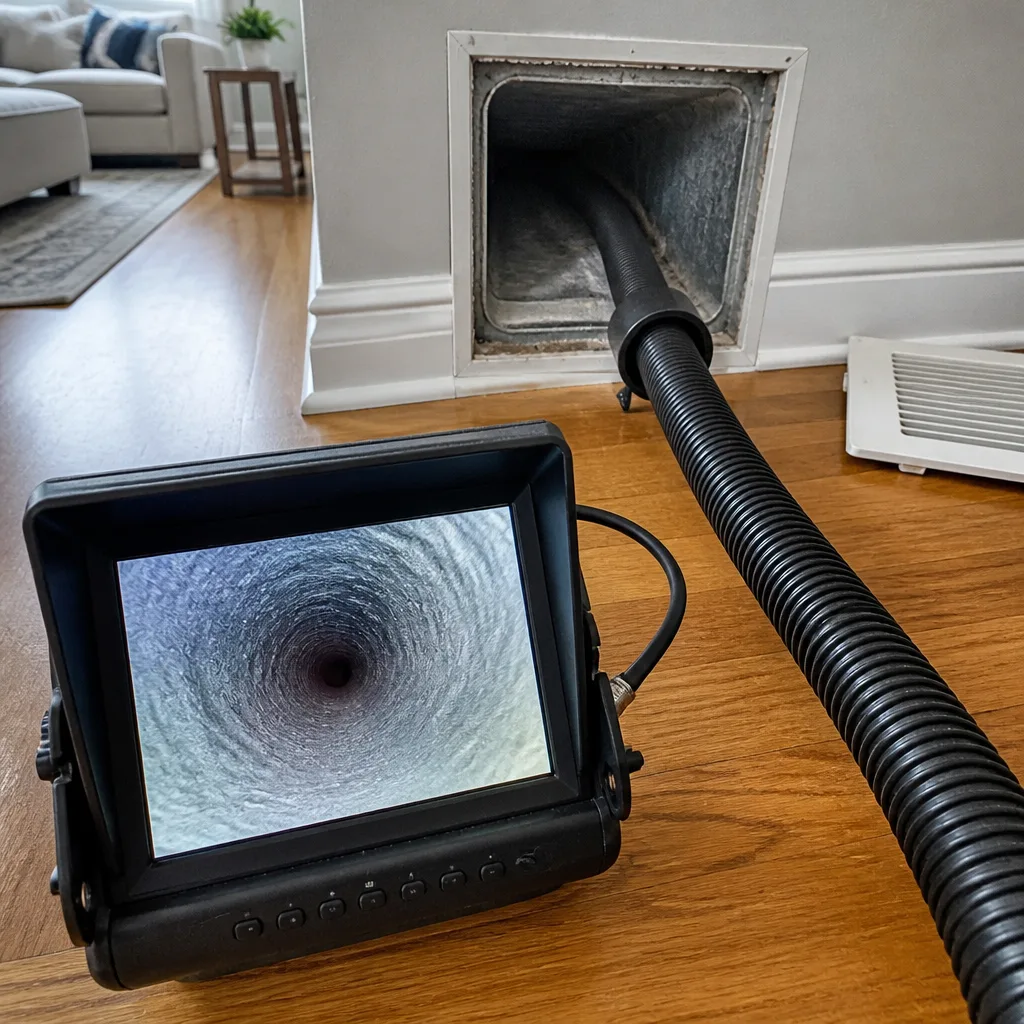 Camera inspection
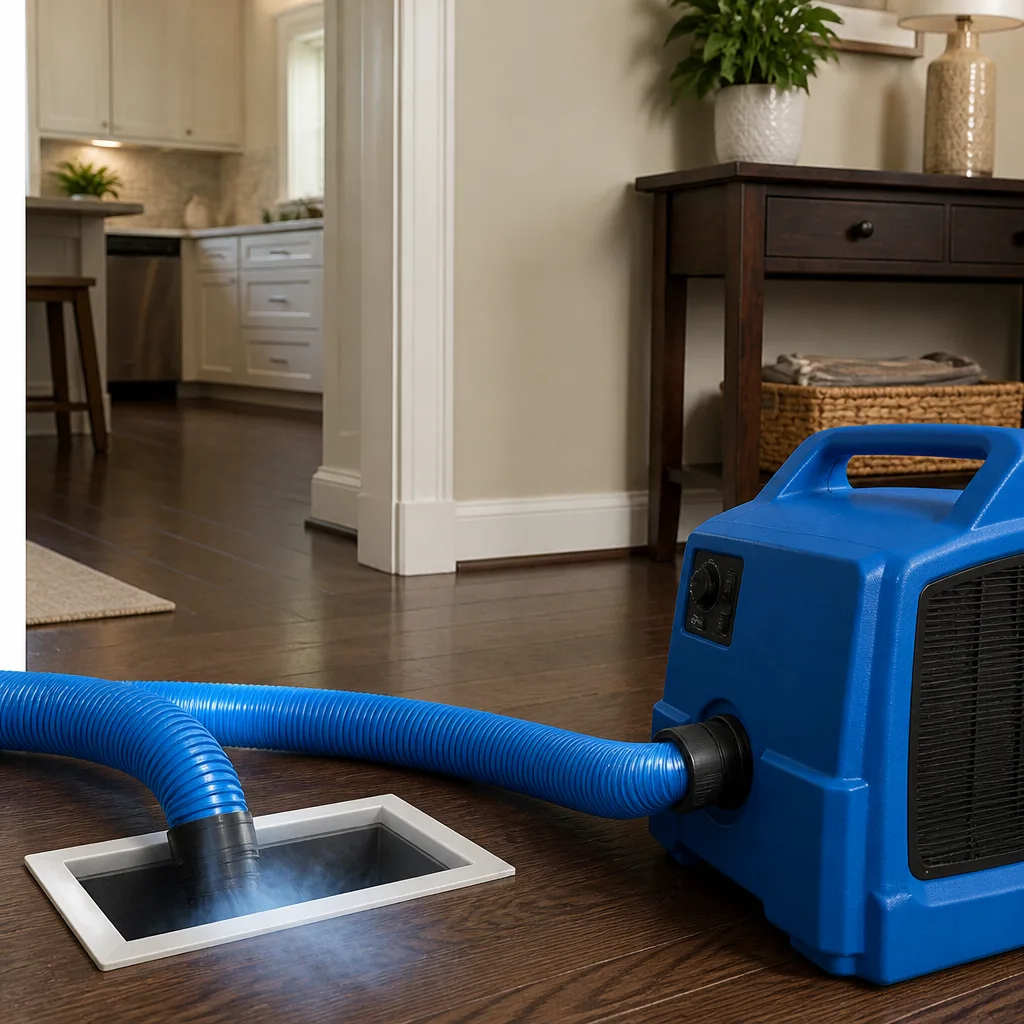 Sanitizing & deodorizing
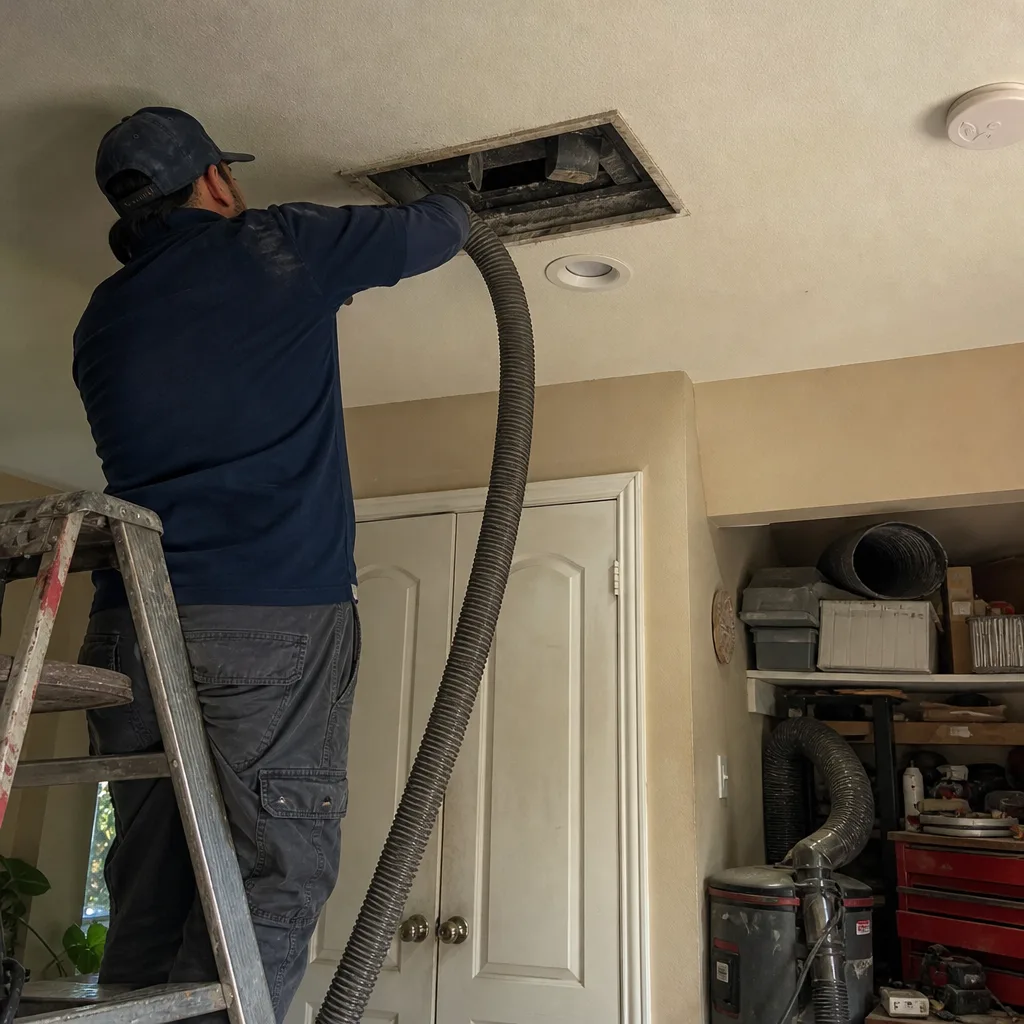
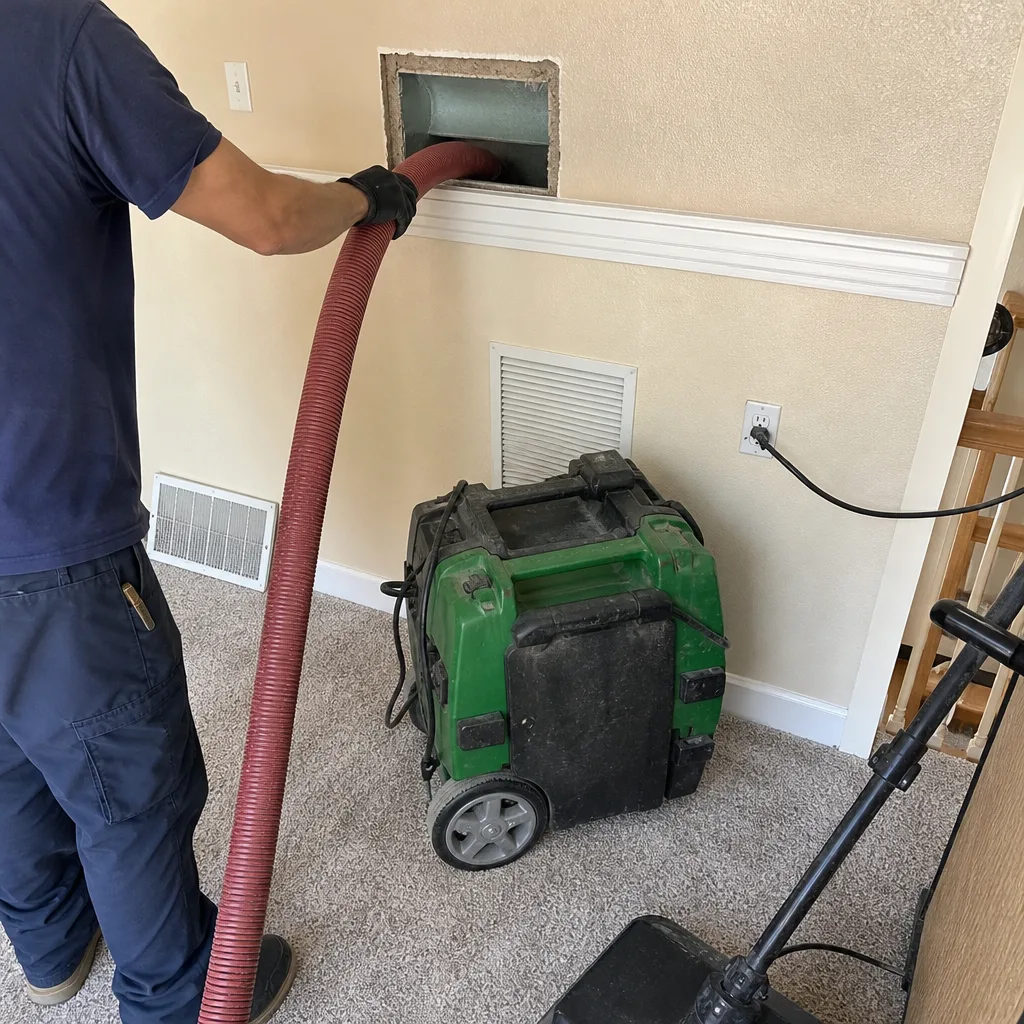
Whole-system duct and dryer vent check with before-and-after photos - you see exactly what came out of your vents
That "$99 whole-house special" is a bait ad - the real number appears once they are in your hallway, or the "clean" is a shop-vac at the register. We photograph the inside of your ducts before and after instead.
Air Duct Cleaning Maintenance Checklist for Yorba Linda Homeowners
Replacing your filter every 90 days doesn’t tell you anything about what’s happening past the filter. In Yorba Linda homes with original 1970s and 1980s ductwork, the buildup behind that filter can be substantial before any obvious symptom appears. Dust, pet dander, construction debris from decades of remodels, and the fine particulate that Santa Ana winds push through every gap in the building envelope all settle inside the duct walls. This guide gives you a diagnostic framework: specific, observable checks you can perform between professional cleanings to know exactly what condition your air system is in, not just whether it’s time to swap a filter. You’ll learn how to identify filter bypass, read debris patterns on registers, track airflow room-by-room, and document changes so you can spot degradation trends before they become expensive problems.
Styles & brands we work with
- Whole-home duct cleaning
- Dryer vent cleaning
- Camera inspection
- Sanitizing & deodorizing
Quick Answer
A proper air duct cleaning maintenance checklist for Yorba Linda homeowners involves six core checks: filter bypass inspection, register grille examination, room-by-room airflow comparison using a tissue test, seasonal post-Santa Ana and post-wildfire inspections, supply vs. return register pattern tracking, and a written filter-change log. These checks reveal what’s accumulating inside your ducts between professional cleanings and tell you when service is actually warranted, rather than relying on arbitrary calendar intervals.
Table of Contents
- The Filter Bypass Check No One Tells You About
- Visual Register Inspection: Reading What Your Grilles Tell You
- The Room-by-Room Airflow Balance Test
- Yorba Linda Seasonal Triggers: Santa Ana Winds and Wildfire Smoke
- The Filter Log: Making Degradation Trends Visible
- How to Know When Cleaning Is Actually Due
- Common Mistakes to Avoid
- When to Call a Professional
- Frequently Asked Questions
- The Bottom Line
The Filter Bypass Check No One Tells You About
Most homeowners assume that if a filter is in place, air is going through it. That assumption fails in a significant number of Yorba Linda tract homes built in the 1970s and 1980s, where filter slots were often sized for filters that no longer exist or installed with gaps around the frame. When air moves around the filter rather than through it, you’re pulling unfiltered attic or garage air directly into your duct system and across your evaporator coil. The filter looks clean because it’s doing almost nothing.
Here’s the check. It takes under ten minutes.
- Turn the system off at the thermostat.
- Remove the filter and look at the filter slot itself. You’re checking for gaps between the filter frame and the housing. Anything wider than an eighth of an inch is a bypass path.
- Inspect the filter for a clean border around the edges. If the center is dirty but a one-inch margin around all four sides is still bright white, that’s not normal. It means air is flowing around the filter edges, not through the media.
- Check the housing for dust accumulation on the downstream side. Dust beyond the filter means unfiltered air is reaching your coil and ducts.
- Note whether the filter was installed with the correct airflow arrow orientation. A backward filter can bow and create edge gaps under load.
We see this pattern regularly in older Yorba Linda neighborhoods like Bryant Ranch and Travis Ranch, where original filter housings have warped over four decades of thermal cycling. The fix is often simple: a filter frame gasket, a custom-sized filter, or a housing repair. What matters is identifying the problem, because a filter that’s bypassing turns your entire air duct cleaning in Yorba Linda investment into a temporary fix. The ducts will refill with whatever the filter was supposed to catch.
One more thing worth knowing: this bypass condition is a major contributor to evaporator coil fouling. When that coil loads with dust, efficiency drops, and in Yorba Linda’s summer heat, that means longer runtimes and higher SCE bills. The filter bypass check is the highest-value ten minutes on this entire checklist.
Visual Register Inspection: Reading What Your Grilles Tell You
Your supply registers are diagnostic instruments if you know what to look at. The pattern and color of debris accumulating on the grille surface tells you whether what you’re seeing is a filter problem, a duct problem, or a normal accumulation from the room itself.
Here’s the protocol. Walk the house with a flashlight and a white paper towel.
- Turn the system fan on at the thermostat so airflow is active during the inspection.
- Wipe the grille surface with the paper towel and look at what comes off. Light gray, fine particulate is normal household dust. Dark, oily, or chunky debris is not.
- Examine the grille vanes. Dust collects on the face of the vanes from room air. Dust on the back side of the vanes, where you can’t see it without removing the register, comes from inside the duct. If the back side is coated while the front is clean, the contamination is upstream.
- Remove the register (most are held by two screws) and run your finger along the inside of the duct boot. A thin film is normal. A thick, felt-like coating means significant buildup has already occurred.
- Repeat at the return register. Returns run negative pressure and will show room-air dust on the grille face. What you’re looking for at the return is dust drawn into the grille from distant rooms, which indicates airflow imbalance.
What separates a duct issue from a filter issue is location. If every supply register shows the same dark, even coating, the contamination is likely coming from upstream, past the filter, and moving through the entire system. If one or two registers are noticeably worse than others, that points to a localized duct problem: a disconnected joint, a crushed section, or a breach pulling in attic air. We’ve found return duct disconnections in Yorba Linda homes where Sheetrock dust from a remodel conducted years earlier was still entering the system through a separated seam nobody had looked for.
The Room-by-Room Airflow Balance Test
Airflow balance is the most overlooked maintenance signal in residential systems. Most Yorba Linda homes have a single central return, which means the system relies on door undercuts and open interior doors to pull air back. When airflow balance degrades, some rooms starve while others over-deliver, and the starved rooms are the ones where occupants close doors and complain about temperature. The tissue test quantifies what you already feel but haven’t measured.
Here’s the procedure.
- Set the thermostat fan to ON, not AUTO. You want continuous airflow for consistent measurements.
- Close all exterior doors and windows.
- Open all interior doors fully.
- Hold a single-ply tissue by one corner, about four inches below each supply register.
- Note the angle the tissue hangs at. A strong register will push the tissue to nearly horizontal. A weak register will barely move it.
- Walk every room and record the results: strong, moderate, weak, or none.
- Repeat with interior doors closed as they would be at night. Compare the change at each register.
What you’re looking for is asymmetry. A well-balanced system will show moderate to strong airflow at every register, with some reduction at the rooms furthest from the air handler. That’s physics. What’s not normal is a room at the end of the run blowing strong while a room directly off the supply plenum blows weak, or a room that drops from moderate to nothing when the door closes. Those patterns point to collapsed flex duct, a disconnected takeoff, a crushed section under attic storage, or a damper that’s been closed and forgotten.
In our experience with Yorba Linda’s two-story homes, the upstairs front bedrooms are the usual suspects. Long flex runs through hot attics, kinked at the drop into the wall, starved by a single undersized return. The owners have lived with it for so long they assume it’s normal. It isn’t. And it’s usually correctable with air duct repair in Yorba Linda rather than a system replacement.
Yorba Linda Seasonal Triggers: Santa Ana Winds and Wildfire Smoke
Yorba Linda has two seasonal events that should automatically trigger specific maintenance checks because they introduce contaminants most climates never see. The first is the Santa Ana wind season, typically October through March, when dry air pushes down through the canyons at 40 to 60 miles per hour. The second is wildfire smoke season, which now overlaps with Santa Ana events and can linger for weeks.
After a significant Santa Ana event, here’s what to check.
- Remove the filter and hold it up to a light source. Santa Ana events load filters with fine red-brown dust from the high desert and local construction sites. If the filter is visibly clogged after a single wind event, your home’s filtration was insufficient for the conditions.
- Check the condensate drain line outside the house. Dry, dusty air pulls more particulate through the coil. Combined with low humidity, the dust cakes on the coil and washes into the drain pan during the next cooling cycle. A slow drip that recently sped up is a sign of coil loading.
- Inspect exterior door and window weatherstripping. The negative pressure your system creates will pull dusty outside air through any gap. Feel around outlet plates on exterior walls. Air movement at an outlet plate during a windy day means the wall cavity is leaking into the living space.
During and after wildfire smoke events, the checklist changes.
- Visually inspect the filter every three days during an active smoke advisory. Smoke particulate loads filters far faster than household dust. A filter that would last 90 days under normal conditions can load in a week.
- Pay attention to the smell of the air coming from your registers when the system fan runs. If you smell smoke indoors with the system running and windows closed, your duct system is ingesting exterior air somewhere. That’s a breach, not a filter problem.
- After the advisory lifts, inspect return grilles for a fine gray film. Smoke particulate settles differently than household dust. It’s finer, stickier, and concentrates on the return side. If it’s present on the returns, assume it’s present inside the entire duct system.
Wildfire smoke exposure isn’t a cosmetic issue. The particulate penetrates deep into the respiratory system, and homes with leaky ductwork end up with indoor particulate levels that can exceed outdoor levels when the HVAC system runs. A professional duct cleaning with HEPA filtration after a prolonged smoke season is not overkill. It’s the difference between breathing the event for a week or for a year.
The Filter Log: Making Degradation Trends Visible
A filter change is a data point, not an event. The problem is that most homeowners throw the old filter away, install a new one, and immediately forget what the old one looked like. Three months later, they repeat the process with no memory of whether the new filter is dirtier or cleaner than the last one was at the same interval. The trend is invisible, and the trend is the diagnostic information.
Here’s what to record. It takes ninety seconds.
- Date of change
- Filter brand and MERV rating
- Condition of the old filter on a 1-to-5 scale (1 = looks new, 5 = fully loaded)
- Color of the dust on the filter (gray, brown, black, red-brown)
- Any odors noticed in the last week of service
- Presence of large debris on the filter surface (pet hair, construction dust, plant material)
- Notable events since the last change (Santa Ana event, remodel, wildfire smoke, new pet)
Keep this log in a notes app or taped to the side of the air handler. Over six to twelve months, the trends will tell you things that no one-time inspection can. A filter loading from a 2 to a 4 in the same 90-day interval means something changed: a new pet, more occupancy, a breach in the return duct, or construction nearby. A filter that stays at a 1 or 2 for months means your home is either exceptionally clean or, more likely in an older Yorba Linda tract home, air is bypassing the filter entirely and shooting unfiltered air into the duct system. A color shift from gray to red-brown tracks a specific source, like a landscaping project or deteriorated deck sanding nearby.
Documentation also protects you when you call for professional service. A technician who sees your filter log knows immediately whether the system has been maintained, what the loading rate has been, and whether the duct contamination they’re seeing is consistent with that history. It converts a service call from guesswork into diagnosis, and it means our Duct Cleaning Yorba Linda home service can target the actual problem rather than performing a generic cleaning and walking away.
How to Know When Cleaning Is Actually Due
Every duct cleaning company in Orange County has an opinion on how often you should schedule service. Most of those opinions align suspiciously well with their revenue goals. The honest answer, based on what we’ve seen removing years of accumulated debris from Yorba Linda homes, is that there’s no universal calendar interval. There are condition triggers, and they’re observable.
Here are the triggers that indicate cleaning is warranted now, not in six months.
- Visible dust accumulation on the back side of supply register vanes that you can’t remove with a vacuum from the room side
- Airflow balance test showing significant asymmetry that persists after filter replacement
- Filter loading from 1 to 4+ within a 30-day period during normal conditions
- Post-remodel conditions where drywall dust, paint overspray, or flooring debris was generated while the system ran
- Post-wildfire smoke season with a gray film visible on return grilles
- Black particulate accumulating on the register faces in a pattern that returns after cleaning the grille itself
- Any sign of rodent activity in the attic (droppings, nesting material) near duct runs
- A musty odor that appears when the system fan runs but not when it’s off
One of the most useful things you can do is track how quickly your registers re-accumulate after you clean the grille surfaces yourself. Clean the register faces thoroughly, run the system for two weeks, and check again. If the register faces are already coated, the contamination is being delivered from inside the ducts, not from room air. A room-air dust film takes months to build. A duct-delivered film takes weeks. The rate of re-accumulation is a direct read on how loaded the duct interior is.
Common Mistakes to Avoid
- Assuming the filter is doing its job because it’s dirty. A dirty filter might be doing its job, or it might be dirty on one half while air bypasses the other. Check the evenness of the loading pattern before you assume filtration is working.
- Using the highest MERV filter available. A MERV 13 filter in a system designed for MERV 8 creates static pressure that reduces airflow and can strain the blower motor. In older Yorba Linda systems, increased filter efficiency without increased filter surface area usually makes airflow worse, not air quality better.
- Cleaning the register grilles and calling it done. Register grille cleaning is cosmetic. It removes what’s visible on the face of the grille. It does nothing about what’s coating the inside of the duct run, which is where the actual contamination lives.
- Waiting for a smell to appear. Duct contamination doesn’t always announce itself with odor. Significant buildup can exist for years as a particulate problem, not a smell problem. By the time a musty odor is noticeable, moisture has been present long enough for biological growth.
- Closing interior doors to save energy in unused rooms. In a house with a single central return, closing doors starves those rooms of return air and creates negative pressure. That negative pressure pulls air from wherever it can: wall cavities, attic penetrations, fireplace flues. You’re not saving energy. You’re drawing contaminants in.
- Running the system during a remodel without sealing the registers. Drywall dust, paint overspray, and flooring debris will enter the duct system and stay there. Contractors rarely protect the duct system unless the homeowner asks. Seal the supplies and returns or turn the system off until the dusty phase is complete.
- Assuming a newer home means clean ducts. Yorba Linda has plenty of homes built in the 1960s and 1970s, but even homes built in the 2000s have duct systems that were never sealed properly at installation. Fiberglass duct board, flex duct, and open returns in the attic all collect contaminants regardless of home age.
When to Call a Professional
Some findings on this checklist point to conditions you can monitor. Others point to conditions that need professional intervention. If your filter bypass check reveals significant edge gaps or a warped housing, that’s a repair issue, not a monitoring issue. If your tissue test shows a register with zero airflow, the problem is structural, a crush, a kink, or a disconnection somewhere in the run. If you’ve documented filter loading that’s accelerated without explanation, or if you’re seeing gray film on register faces after a smoke season, the contamination is inside the duct walls and no amount of register cleaning will touch it.
Duct Cleaning Yorba Linda offers air duct repair in Yorba Linda as a standalone service alongside professional cleaning, so a structural issue doesn’t require you to pay for a cleaning you don’t need just to get a breach sealed. Our technicians use Rotobrush rotary systems for mechanical debris removal from duct walls and Nikro HEPA units to prevent cross-contamination during the job. We also handle dryer vent cleaning in Yorba Linda as a fire-prevention service, since a clogged dryer vent is the most direct fire-risk maintenance item in most homes. Free estimates in Yorba Linda are available, call (877) 600-3906 to schedule an inspection.
Frequently Asked Questions
Air duct cleaning in Yorba Linda typically runs between $400 and $900 for a whole-home system, depending on the number of supplies and returns, the accessibility of the air handler, and the amount of contamination present. Homes with original 1970s ductwork and decades of accumulation will land on the higher end. We quote one flat price per system after an inspection, not a per-vent price that can grow once the technician arrives. Call (877) 600-3906 for an exact quote for your home.
Ask for before-and-after photos of the interior of your ducts taken during the cleaning, which is standard practice with our Rotobrush equipment. A reputable service should be able to show you the duct walls before agitation and after extraction. If a company refuses to provide photos or cannot show you the inside of your ducts, that’s a legitimate reason to be suspicious. You should also be able to see visible improvement on the register vanes and register boots when you perform your next visual inspection.
Cheaper quotes usually mean airflow-only cleaning, where a blower pushes air through the system without mechanically agitating the duct walls. Debris that’s adhered to the duct interior stays in place, and the service is effectively a filter change with a vacuum attached. Rotobrush rotary systems physically scrub the duct walls, which is why the results are different and why the price is different. A shop-vac and a coupon can’t remove what’s adhered to duct surfaces.
There’s no fixed interval that applies to every home. A home with well-sealed ducts, a properly sized filter housing, and no pets or smokers might go five to seven years between cleanings. A Yorba Linda home with leaky return ducts, a golden retriever, and a wildfire season in the rearview mirror might need service in two to three years. Use the condition triggers in the checklist above, not the calendar. Your filter log will tell you when cleaning is actually due. Call (877) 600-3906 if you’re unsure whether your system warrants service.
No, and the reason has to do with what you can’t reach. A shop vacuum attached to a register can clean a few feet of the duct run near the opening. It cannot reach the middle of a 20-foot flex run, and it cannot access the supply plenum or the return drop at all. What’s more, a household vacuum without HEPA filtration simply redistributes fine particulate into the room air. Professional equipment like Nikro HEPA units capture the debris at the source. The difference is not effort. It’s reach and filtration.
They’re separate systems, but they share a maintenance principle: both carry contaminants that build up over time and both become problems when ignored. A clogged dryer vent is a fire hazard, which is why we treat dryer vent cleaning in Yorba Linda as a fire-safety service rather than an add-on. A clogged air duct is an air quality and efficiency problem. Many Yorba Linda homes have both systems running through the same attic space, and a compromised dryer vent can release lint into the attic air that the return ducts then pull in.
The Bottom Line
The maintenance checklist in this guide is built on the principle that you can’t manage what you don’t measure. Filter bypass, register patterns, airflow balance, seasonal contamination events, and documentation are all observable, testable conditions that tell you exactly what’s happening inside your duct system between professional visits. The homeowner who tracks these conditions knows when cleaning is genuinely warranted and when it isn’t. The homeowner who doesn’t is guessing, and guessing is expensive. In Yorba Linda, where original ductwork dates to the Nixon administration and the Santa Ana winds deliver a fresh load of airborne particulate every fall, a systematic approach to duct maintenance isn’t optional. It’s the difference between a system that works for decades and one that quietly degrades until the problem becomes impossible to ignore.
Written by the team at Duct Cleaning Yorba Linda, serving Yorba Linda since 2011.
See the difference
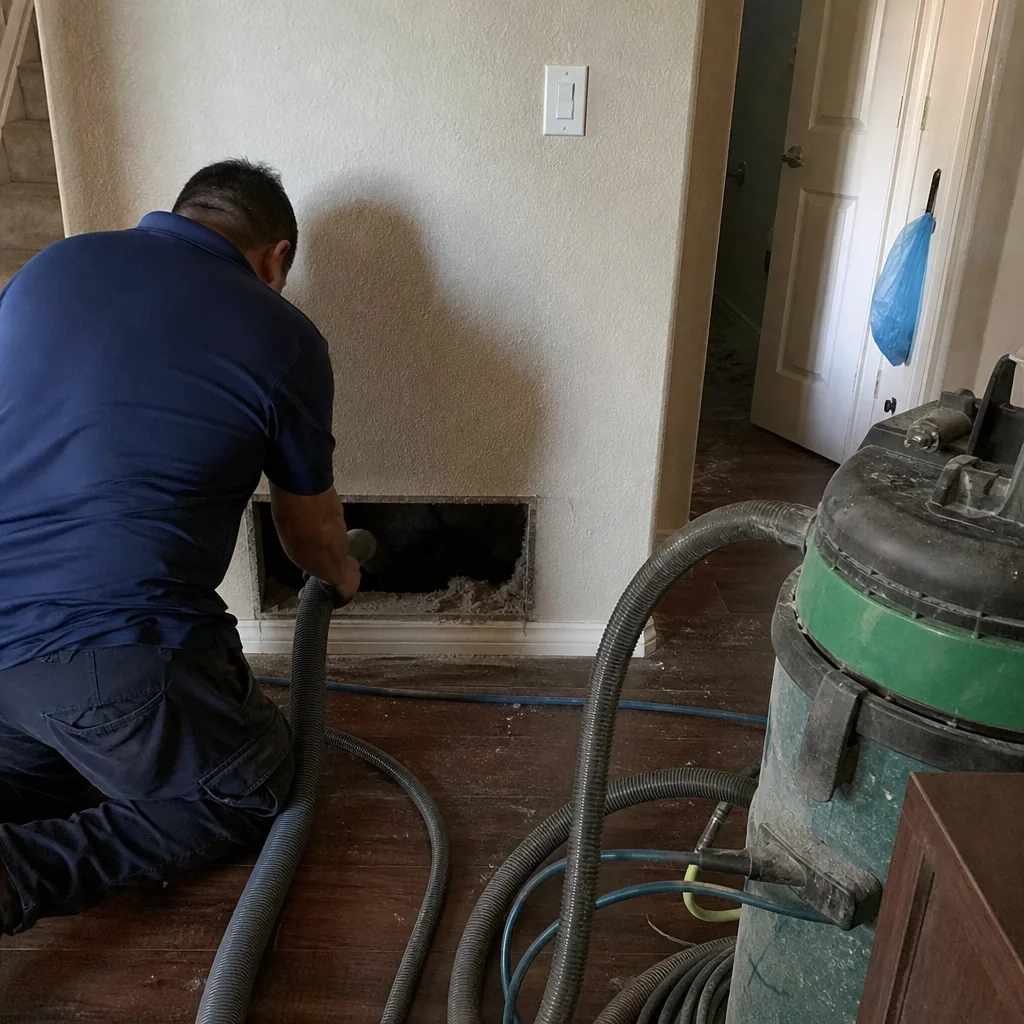 Before
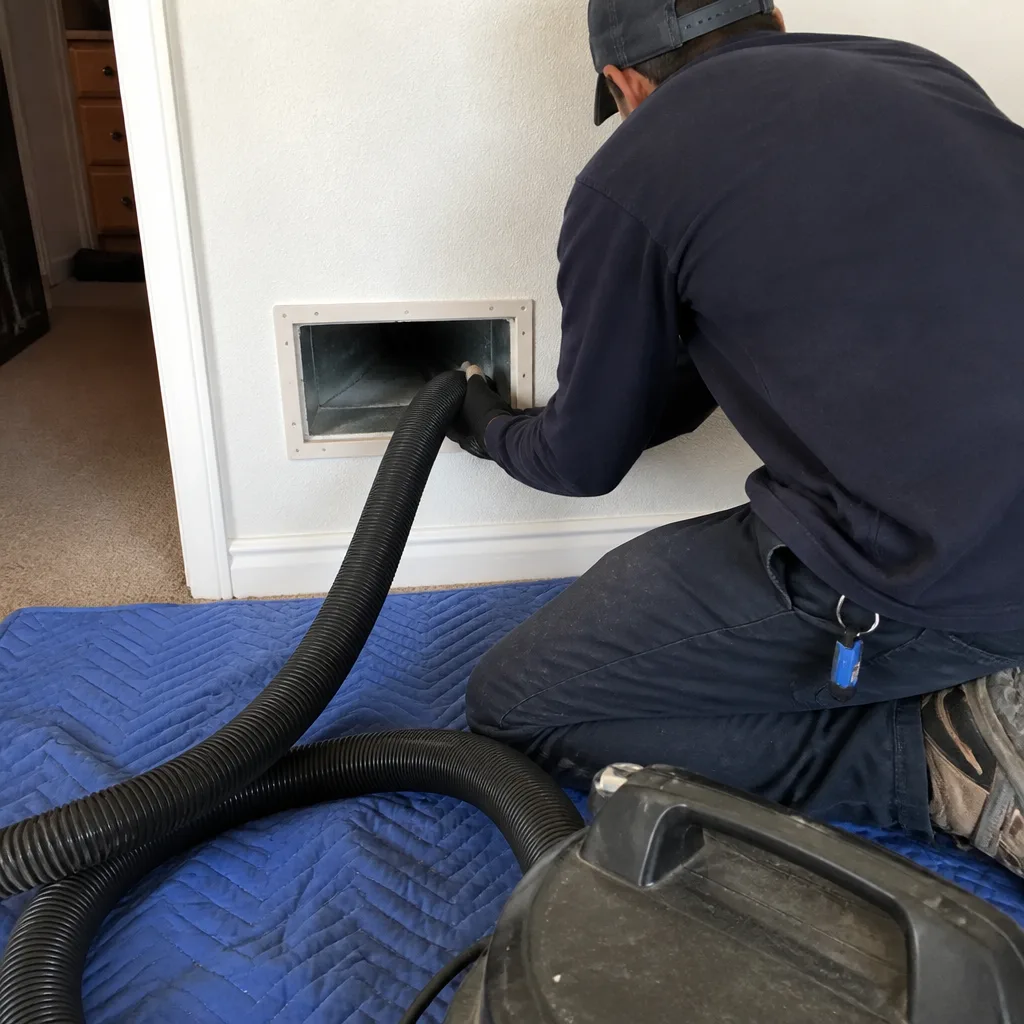 After
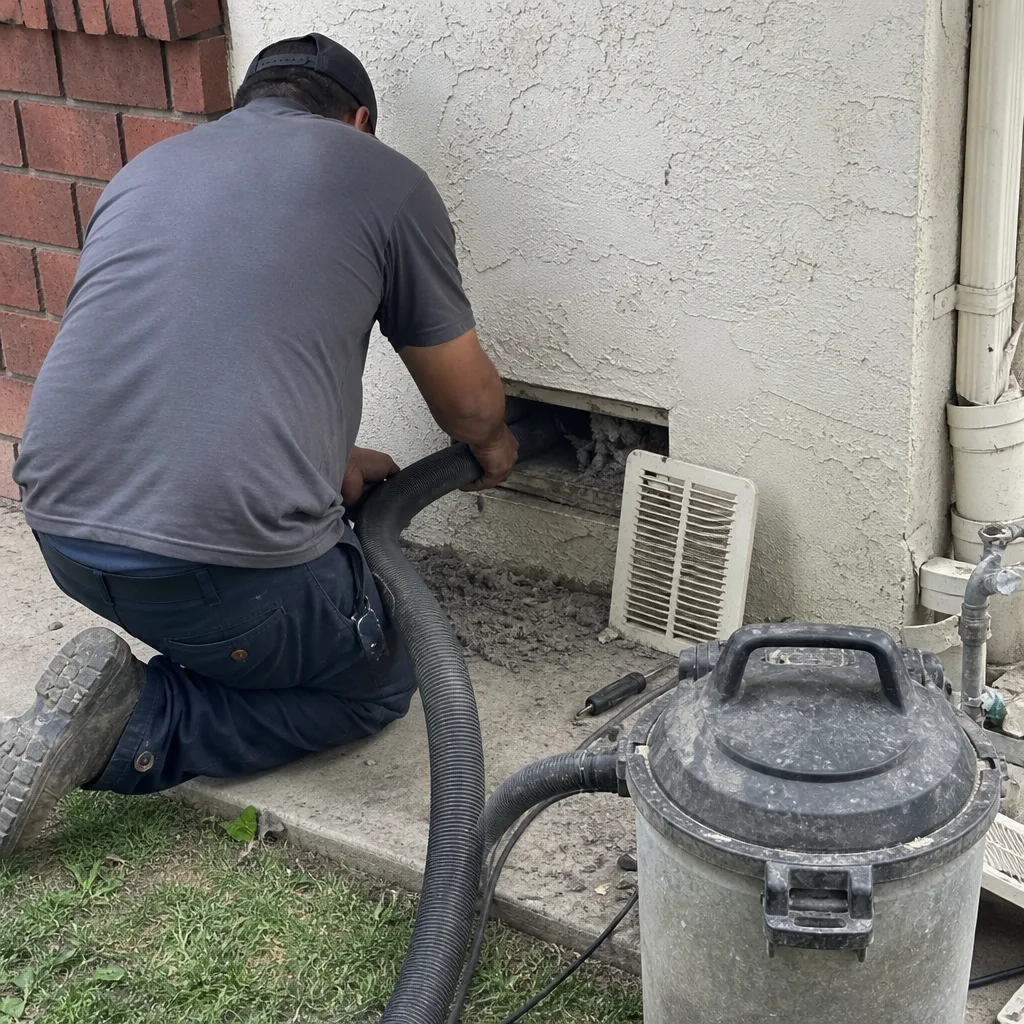 Before
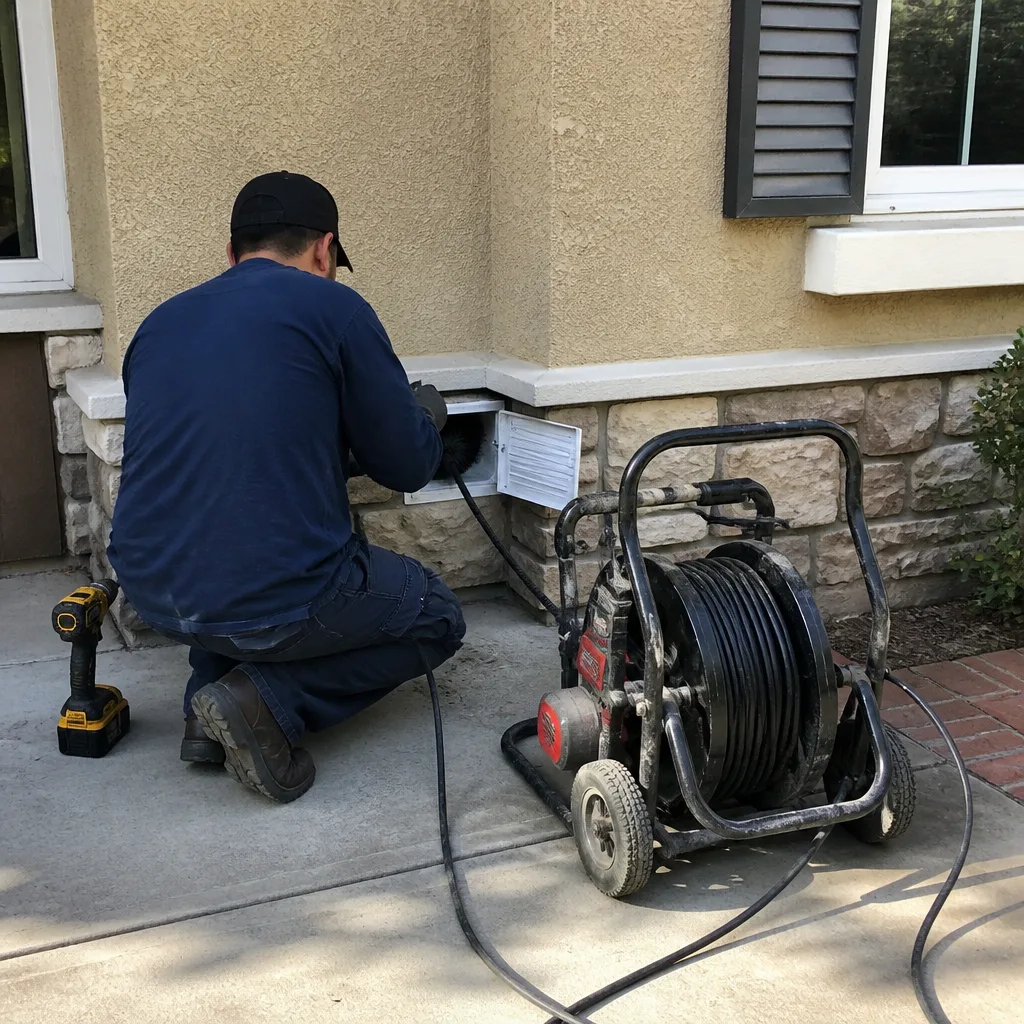 After
 Before
 After