
Last updated November 2, 2026
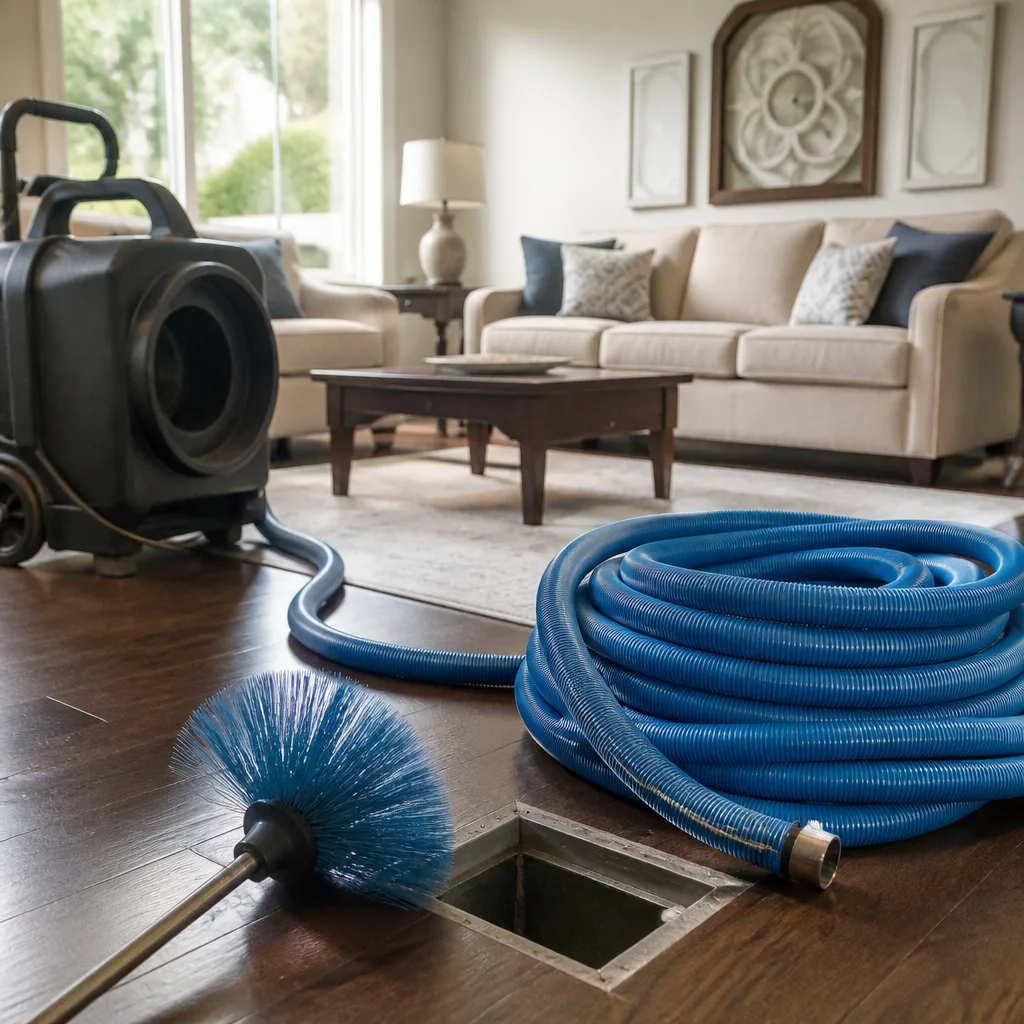 Whole-home duct cleaning
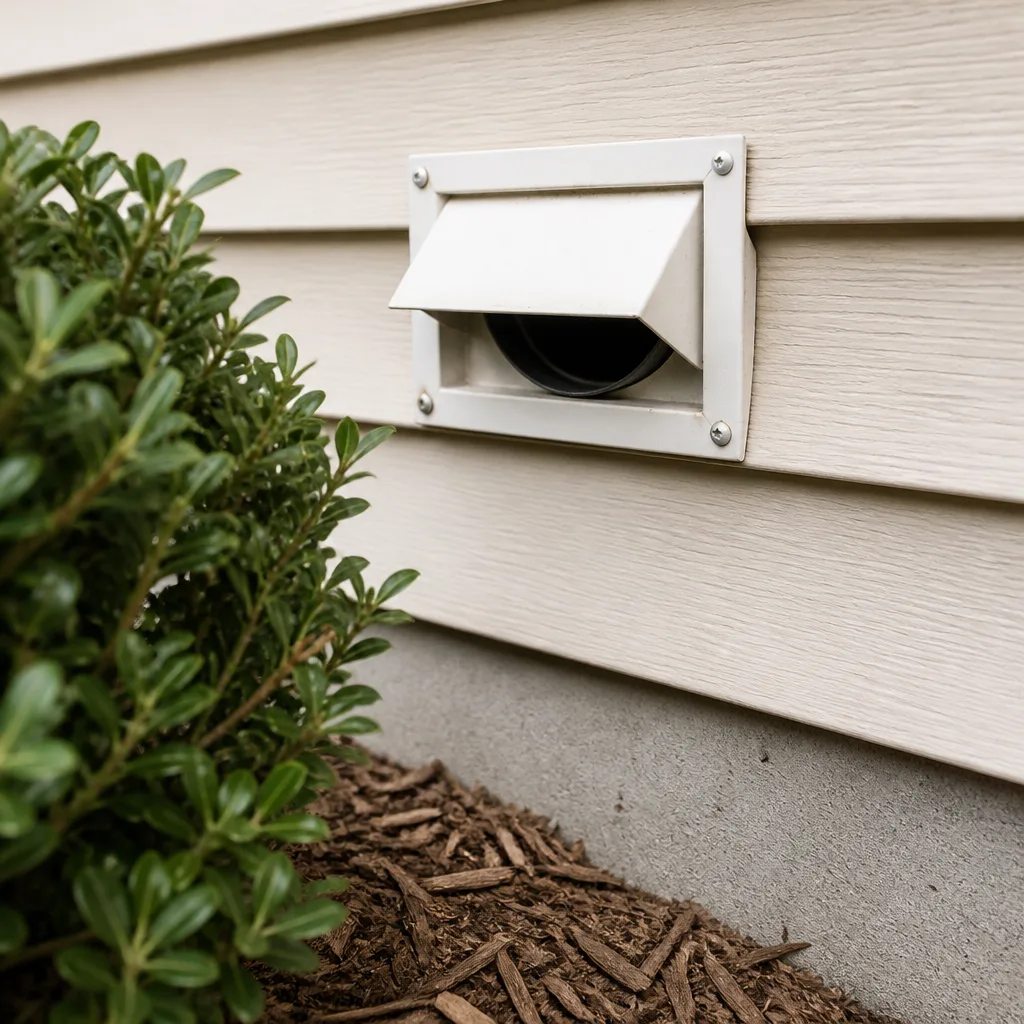 Dryer vent cleaning
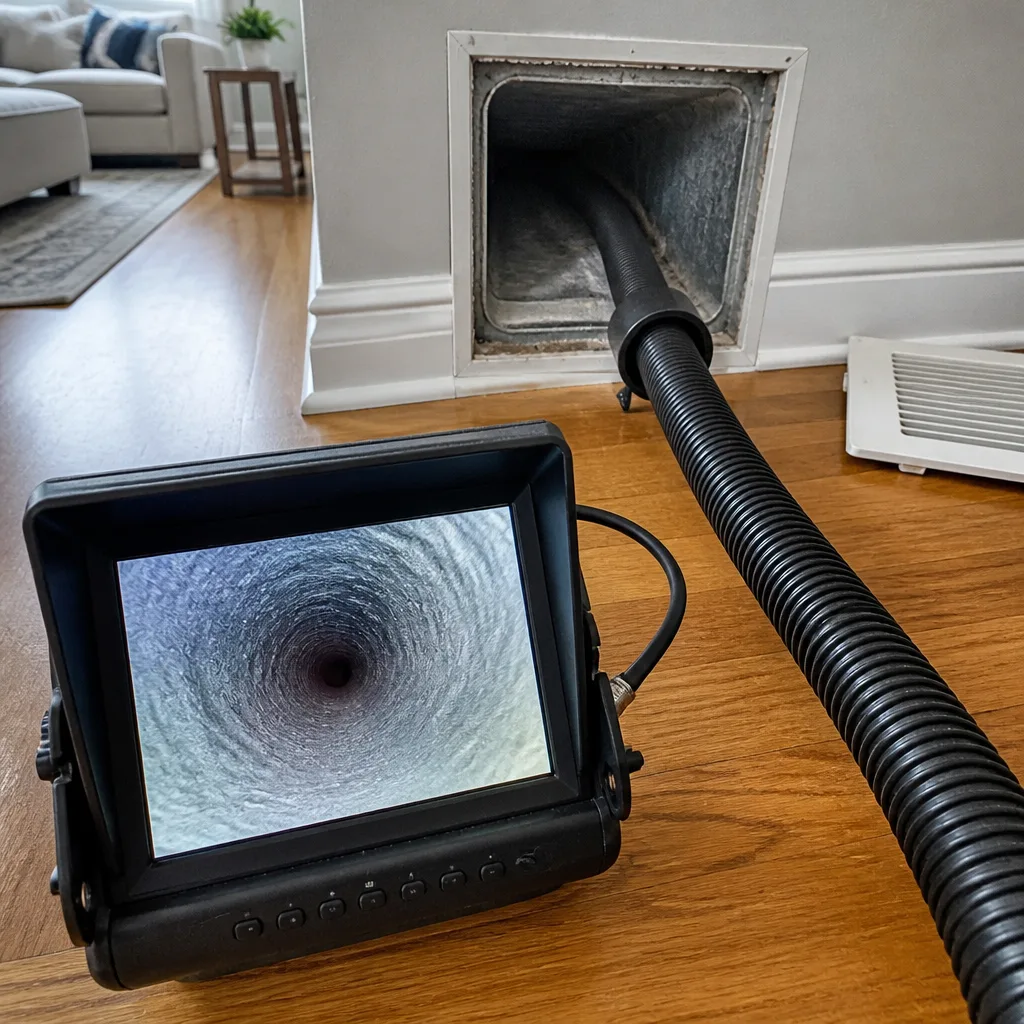 Camera inspection
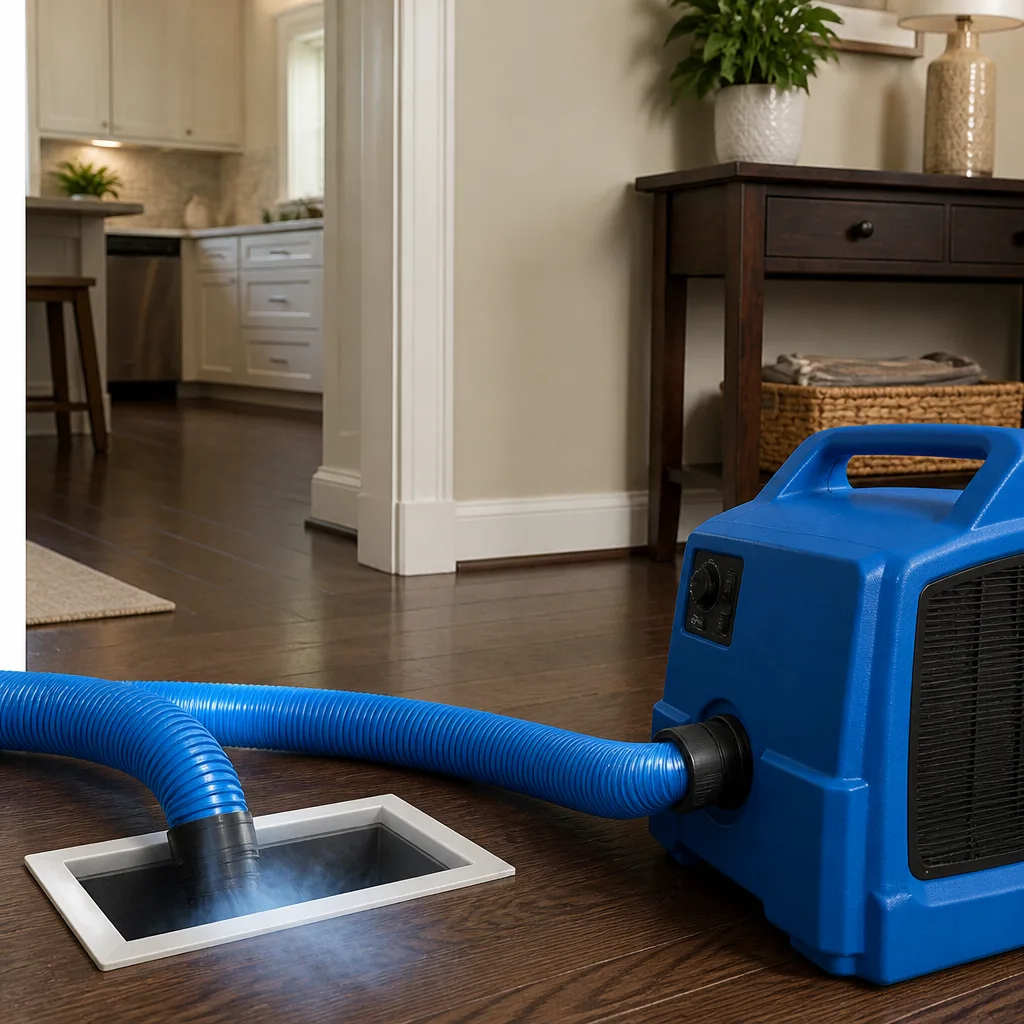 Sanitizing & deodorizing
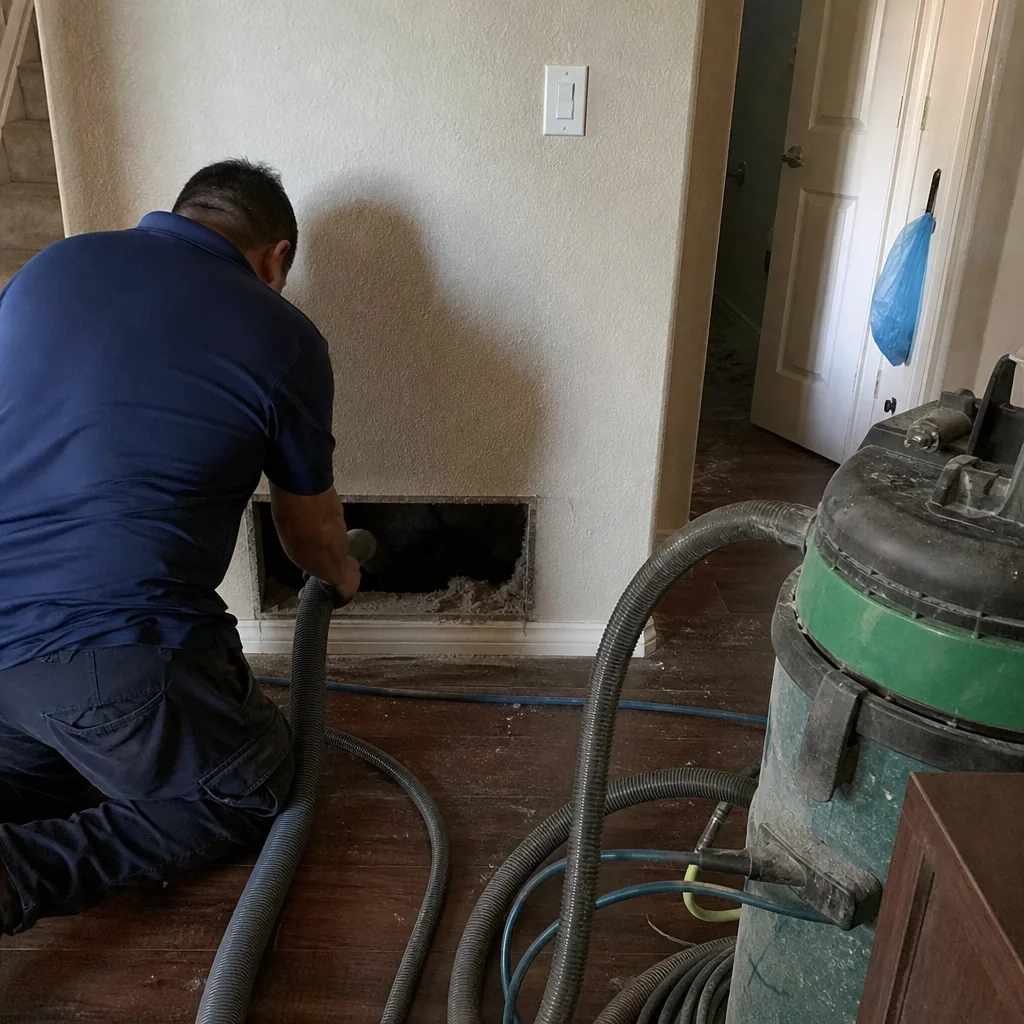
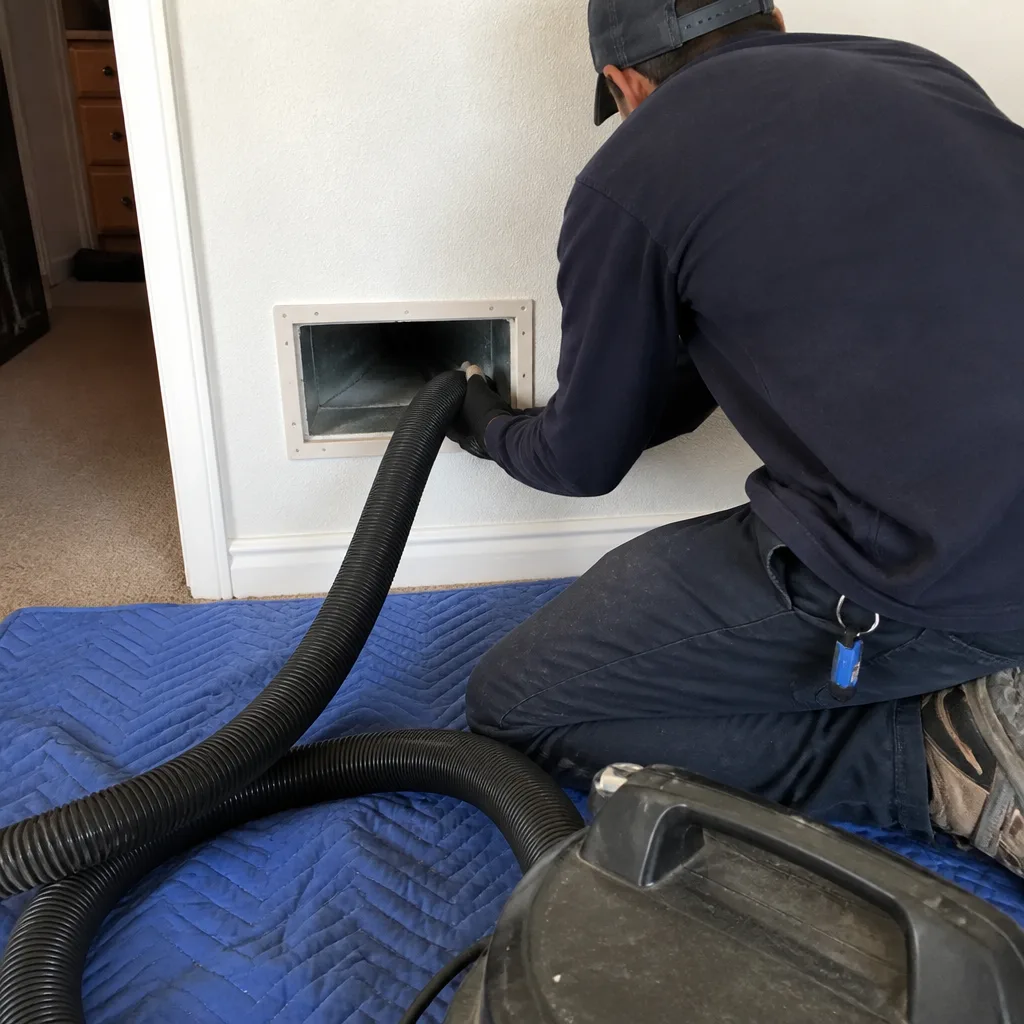
Whole-system duct and dryer vent check with before-and-after photos - you see exactly what came out of your vents
That "$99 whole-house special" is a bait ad - the real number appears once they are in your hallway, or the "clean" is a shop-vac at the register. We photograph the inside of your ducts before and after instead.
DIY vs Professional Air Duct Cleaning: The Yorba Linda Homeowner’s Decision Guide
Here’s a fact most duct-cleaning articles won’t tell you: the average shop-vac produces roughly 100 to 150 cubic feet per minute (CFM) of airflow. A professional-grade negative air machine, the kind specified by NADCA standards for duct cleaning, generates 2,000 CFM or more. That’s not a slight edge. That’s the difference between moving a loose dust bunny and pulling years of compacted debris out of a 150-foot trunk line running through a Yorba Linda attic. This guide explains why the DIY-versus-professional question isn’t really about effort or skill. It’s about physics, and the equipment gap is wider than most homeowners realize.
Styles & brands we work with
- Whole-home duct cleaning
- Dryer vent cleaning
- Camera inspection
- Sanitizing & deodorizing
Quick Answer
For cleaning visible register boots and wiping vent covers, DIY works fine. For cleaning the actual duct system in a Yorba Linda home, professional equipment is required because consumer-grade tools cannot generate the negative pressure or mechanical agitation needed to dislodge compacted debris from duct walls. A professional Air Duct Cleaning service using Rotobrush rotary systems and HEPA filtration does in hours what no amount of DIY effort can accomplish, and it does it without blowing contaminants back into your living space.
Table of Contents
- The Physics Problem: Why Your Shop-Vac Can’t Do This Job
- What Consumer Tools Actually Do vs. What They Claim
- What Homeowners Can Legitimately Do Themselves
- The Yorba Linda Flex Duct Risk Most Guides Ignore
- When Professional Cleaning Is Non-Negotiable
- Cost-Benefit: DIY Maintenance vs. Professional Service
- What Professional Equipment Actually Does Differently
- Common Mistakes to Avoid
- When to Call a Professional
- Frequently Asked Questions
- The Bottom Line
The Physics Problem: Why Your Shop-Vac Can’t Do This Job
Effective air duct cleaning requires two things happening simultaneously. First, debris must be physically dislodged from duct walls. Second, that loosened debris must be captured and removed from the system before it enters the living space. Both of these tasks are governed by airflow physics, and the numbers are not kind to consumer equipment.
NADCA, the National Air Duct Cleaners Association, specifies that professional duct cleaning equipment should operate within a negative pressure range that allows for proper debris extraction while the system is being agitated. In practice, professional portable units from manufacturers like Nikro and Abatement Technologies generate between 2,000 and 4,000 CFM depending on the configuration. These units connect directly to the duct system and create a sustained vacuum that pulls loosened debris backward through the system and into a containment filter.
A consumer shop-vac generates roughly 100 to 150 CFM through a two-inch hose. That’s an order of magnitude below what’s needed to create meaningful negative pressure in a typical residential duct system. When you factor in the diameter of the duct trunk lines in most Yorba Linda homes, typically 10 to 16 inches, the air velocity a shop-vac achieves drops dramatically. Air velocity decreases as the cross-sectional area of the duct increases. A shop-vac moving 130 CFM through a 14-inch duct creates an air velocity of roughly 1.2 feet per second. Professional equipment moving 2,500 CFM through the same duct creates over 23 feet per second.
At 1.2 feet per second, you’re not pulling debris. You’re barely moving air. The dust, dander, and construction debris compacted against the duct walls stays right where it is.
This is why we tell homeowners in Yorba Linda the same thing every time: it’s not that DIY duct cleaning is done wrong. It’s that the tool cannot do the job. The pressure differential is off by an order of magnitude, and no technique fixes that.
What the CFM Numbers Mean in Practice
- 100-150 CFM (shop-vac): Sufficient for surface dust removal in a confined space like a register boot. Useless for trunk line cleaning.
- 500-800 CFM (entry-level professional portable): Marginal for small residential systems with short duct runs. Often insufficient for homes over 2,000 square feet.
- 2,000-4,000 CFM (Nikro, Abatement Technologies units): The range specified for proper residential duct cleaning. Creates enough negative pressure to pull dislodged debris from runs exceeding 100 feet.
- 5,000+ CFM (truck-mounted systems): Commercial-grade power used on large systems or heavily contaminated ductwork. Overkill for most residences but sometimes necessary after major renovation.
What Consumer Tools Actually Do vs. What They Claim
The home improvement aisle sells a lot of duct-cleaning tools. Dryer-vent brush kits, flexible extension poles with scrub heads, inspection cameras that pair with a smartphone. Each of these has a legitimate use, but none of them are duct-cleaning systems. Understanding what they’re actually designed for prevents wasted weekends and, in some cases, damaged ductwork.
What a Dryer-Vent Brush Kit Does
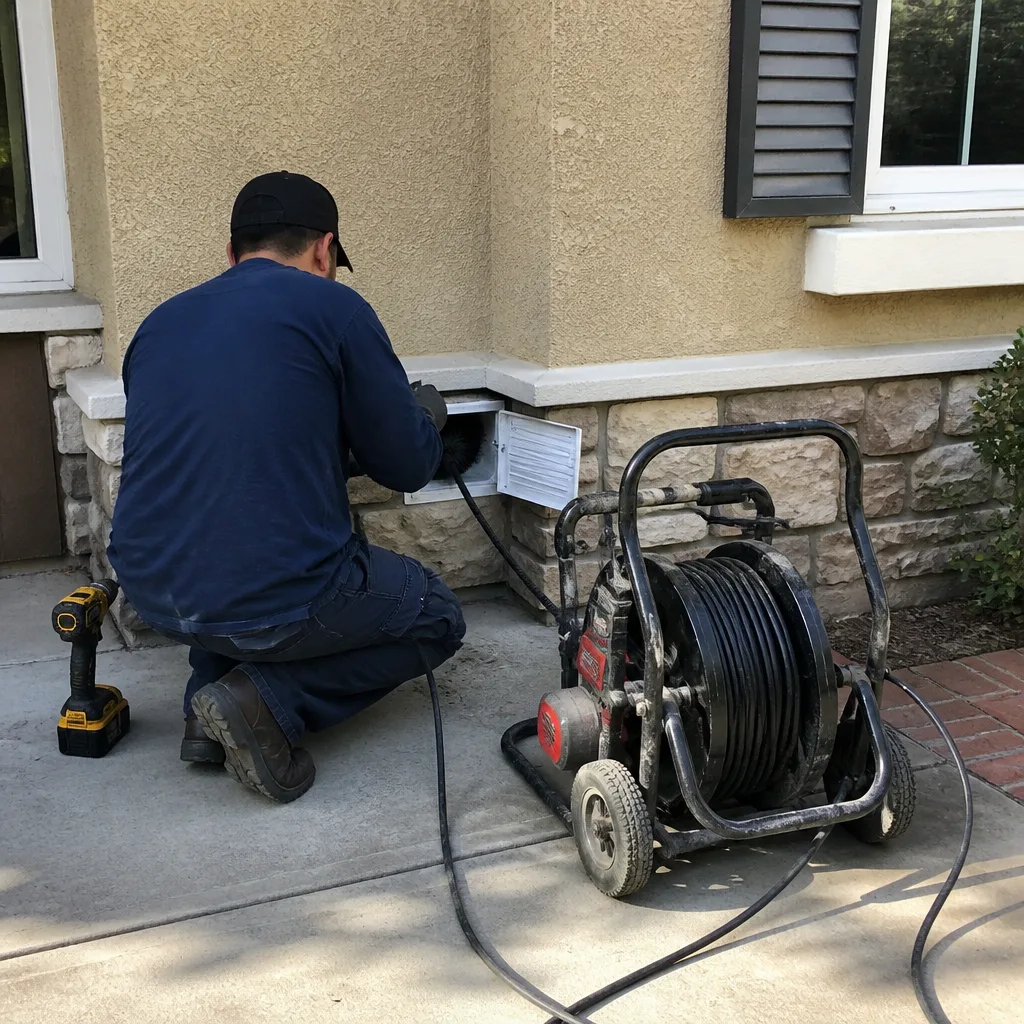
These kits, typically a flexible rod with a round brush head that attaches to a power drill, are designed for dryer vents. A dryer vent is a 4-inch round metal or foil tube, usually 6 to 15 feet long. The brush spins inside the tube, knocks lint loose, and the homeowner then vacuums from one end or uses a leaf blower to push the debris out. In this application, the tool works because the duct is small in diameter, short in length, and the debris is uniform lint that breaks loose easily. This same tool applied to a 14-inch HVAC trunk line does nothing. The brush head reaches maybe 18 inches inside the duct, agitates a small fraction of the surface area, and leaves the loosened debris sitting inside the system until airflow pushes it into the house.
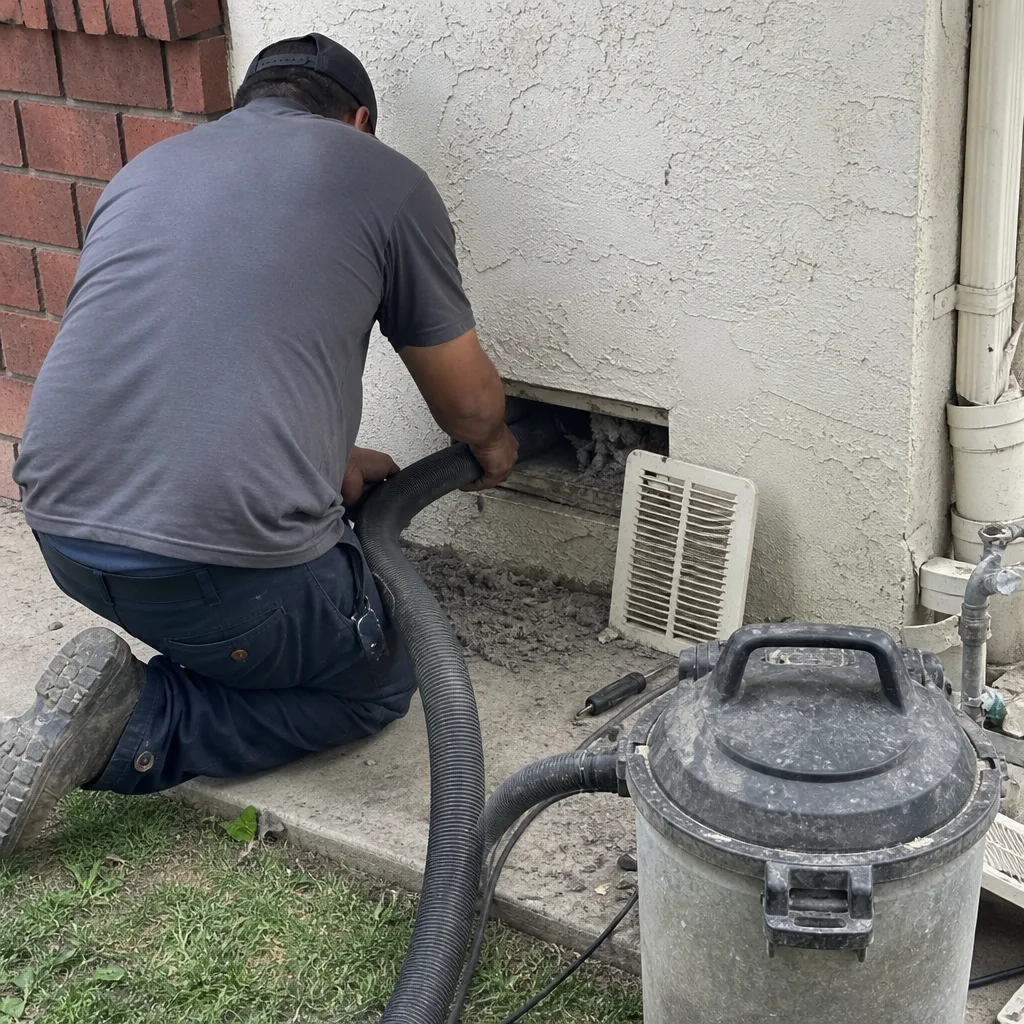
Worth noting: dryer vent cleaning in Yorba Linda is a fire-safety issue, not an air-quality convenience. Lint buildup in dryer vents causes roughly 2,900 home fires in the United States each year according to FEMA data. If you’re going to DIY anything, this is a reasonable task, provided the vent run is short and accessible. For longer runs, or any vent that exits through the roof, a professional Dryer Vent Cleaning in Yorba Linda service with proper inspection equipment is the safer route.
What Flexible Extension Poles with Scrub Heads Do
These tools, sold as “duct cleaning brushes,” consist of a segmented pole with a brush on the end. You push them into a duct from a register opening and scrub. The problem is twofold. First, reach is limited to a few feet, meaning you can only clean the duct section immediately adjacent to each register. Most residential systems have 80 to 150 feet of ductwork running through walls, ceilings, and attics. You cannot access the majority of that from any register opening. Second, you’re scrubbing without extraction. Debris falls off the duct walls and settles elsewhere in the system. The first time the blower cycles, that loosened debris is distributed through the home. We’ve walked into Yorba Linda homes after a weekend of DIY duct scrubbing and found the clients worse off than before they started. The dust that was compacted in the ducts is now on every surface in the living room.
What Inspection Cameras Do
These are actually useful tools, and we recommend them to detail-oriented homeowners. A camera on a flexible cable lets you see what’s actually inside your ducts before and after any service, whether DIY or professional. The limitation is that the camera only shows you the problem. It doesn’t fix it. If you put a camera in your duct and see an inch of gray matting on the walls, you now know professional cleaning is warranted. But you still can’t remove it with a shop-vac.
What Homeowners Can Legitimately Do Themselves
Reasonable DIY maintenance between professional cleanings keeps your system healthier and extends the time between service visits. For Seasonal Air Duct Cleaning Care for Yorba Linda: Year-Round Homeowner’s Guide, check our seasonal maintenance tips. None of these tasks require special equipment, and all of them are safe for the homeowner and the duct system. We tell our Yorba Linda clients to do these things without hesitation.
1. Register and Grille Cleaning
Remove the register covers from floors, walls, and ceilings. Soak them in warm soapy water, scrub with a stiff brush, dry thoroughly, and reinstall. While the register is off, wipe the visible interior of the register boot, the metal or plastic transition piece that connects the register to the duct, with a damp cloth. This is the one part of the system where DIY cleaning genuinely works. The register boot is accessible, you can see the entire surface you’re cleaning, and the dust sitting there is loose and easy to remove.
2. Filter Replacement
Replace your HVAC filter every 60 to 90 days, more frequently if you have pets or if wildfire season in Southern California is creating heavy particulate loads. Use the highest MERV rating your system can handle without restricting airflow. For most residential systems, that’s MERV 11 to MERV 13. Filters above MERV 13 can create too much static pressure for standard blower motors. If you’re uncertain about your system’s tolerance, a technician can assess it during a routine service call. Filter replacement is the highest-impact, lowest-effort maintenance task a homeowner can perform, and it reduces the amount of debris entering the duct system in the first place.
3. Condensate Drain Maintenance
The condensate drain line on your air handler removes moisture produced during cooling. When it clogs, water backs up and creates conditions for biological growth inside the air handler and nearby ductwork. Pour a cup of distilled white vinegar into the condensate drain line every three to six months. This dissolves mineral deposits and kills surface-level microbial growth. If the line is already clogged, a wet-dry vac applied to the drain line’s exterior outlet can sometimes clear it. This is a simple maintenance task that prevents the kind of moisture problems that eventually require professional attention.
4. Visible Boot Wiping
Beyond the register boot, you can wipe the first few inches of accessible ductwork at each register opening. Use a damp microfiber cloth. Do not push cleaning tools deeper into the duct. This removes the surface dust you can see without risking damage to the portions of the system you cannot see.
5. Visual Inspection
Homeowners who learn what to look for catch problems early. When you change your filter, inspect the accessible ductwork near the air handler. Look for disconnected joints, visible dust accumulation, moisture staining, or rodent droppings. In Yorba Linda’s climate, dry and warm most of the year, dust accumulation is the primary issue. After heavy rains or decades of thermal cycling, duct joints in attics can separate. Catching this early means a simple repair call rather than months of conditioned air leaking into the attic. If you spot an issue and want the full system assessed, the Air Duct Repair in Yorba Linda service we offer addresses structural problems directly, not just the symptoms.
The Yorba Linda Flex Duct Risk Most Guides Ignore
Most DIY duct-cleaning guides are written by people who have never worked in a Southern California attic. The reality of ductwork in Yorba Linda is this: a large percentage of the housing stock was built between 1970 and 2005, and the predominant duct material in homes from that era is flexible duct, or “flex duct.” Flex duct consists of a wire coil covered by insulation and an outer vapor barrier. It’s lightweight, inexpensive to install, and it degrades.
After 20 to 30 years in a Yorba Linda attic, where summer temperatures routinely exceed 130 degrees, the outer vapor barrier becomes brittle. The inner liner, a thin layer of plastic over the wire coil, separates in places. The wire coil itself remains intact, but the surface a cleaning brush would contact is no longer smooth and durable. It’s fragile.
Here’s the risk: a DIY brush tool pushed into a degraded flex duct from a register opening can catch on the inner liner, tear it, or push a section of the duct off its connection at a joint. When that happens, the system is now delivering conditioned air into the attic instead of the living space. The homeowner doesn’t notice immediately because the register still blows air, just less of it. Energy bills climb. Dust from the attic gets pulled into the system through the breach and distributed through the house. Within a few months, the air quality problem is worse than it was before the attempted cleaning.
Professional duct cleaning equipment is designed to avoid this. Rotobrush rotary systems use a brush head sized to the duct’s interior diameter, spinning at a controlled speed while a vacuum simultaneously extracts debris. The brush agitates the duct walls gently enough to knock debris loose without tearing the liner. The system is designed for exactly the kind of aging flex duct found in Yorba Linda homes. We’ve seen homeowners create breaches that required professional repair. We’ve never seen a Rotobrush create one. The engineering difference is real, and it’s why the right equipment matters more than the right technique.
This is also why air duct repair works hand-in-hand with cleaning. You cannot effectively clean a duct system that has disconnected sections, torn liners, or crushed runs. The vacuum loses negative pressure through any breach, which means debris in other parts of the system never gets pulled out. When we encounter a compromised system, the recommendation is repair first, then clean. Homeowners can find full details on our approach on the Duct Cleaning Yorba Linda home page.
When Professional Cleaning Is Non-Negotiable
There are situations where DIY maintenance is not just insufficient but inappropriate. These scenarios involve contamination that requires specialized handling, or conditions that put the homeowner or the home at risk if disturbed improperly. In these cases, a professional service is not a preference. It’s the only responsible option.
Post-Renovation Debris
If you’ve completed drywall work, flooring replacement, or any renovation that generated dust, fine particulate has entered the system. Drywall dust is especially problematic because it’s fine enough to pass through standard filters and abrasive enough to wear blower motor bearings. Construction dust also packs tightly inside ductwork when it settles, forming a compacted layer that will not come out without mechanical agitation and proper negative pressure extraction. If you did a major renovation in a Yorba Linda home and did not have the ducts sealed during construction, assume the system needs professional cleaning.
Post-Rodent Activity
Rodents in attics are a fact of life in Southern California. When rats or mice nest in or near ductwork, they leave behind droppings, urine, and nesting material. Some of this material ends up inside the ducts. Attempting to clean this yourself means disturbing dried fecal matter, which can aerosolize pathogens. Professional cleaning uses HEPA filtration to capture the debris at the source, and if the ducts are severely contaminated, sections may need replacement rather than cleaning. Rodent activity in flex duct often involves gnawing through the vapor barrier, which means repair is necessary regardless of cleaning.
Post-Wildfire Smoke Events
Yorba Linda sits in a region that experiences wildfire smoke events with some regularity. When smoke infiltrates a home, fine particulate settles inside the duct system. This particulate includes not just ash but the chemical byproducts of burned structures and vegetation. If a wildfire smoke event produced visible ash inside the home, or if the home smelled of smoke for more than a few days, the ducts should be professionally assessed. A HEPA-filtered cleaning removes the settled particulate. Running the system without cleaning simply recirculates it.
Post-Mold Remediation
If mold remediation was performed in any part of the home, mold spores have almost certainly dispersed into the HVAC system. The remediation company may have cleaned the affected room thoroughly, but the duct system is a distribution network. Professional duct cleaning with HEPA filtration should follow any significant mold remediation. This is a health issue, and half-measures are not appropriate. Note that duct cleaning is not mold remediation. If active mold growth is present on duct surfaces, the duct material itself may need replacement.
Cost-Benefit: DIY Maintenance vs. Professional Service
The financial question homeowners actually need answered is not “what does professional duct cleaning cost?” but rather “what does it cost me to skip it, or to substitute DIY for it?” The answer depends on what you’re comparing.
Professional air duct cleaning in Yorba Linda typically ranges from $350 to $600 for a single-system home, depending on system size, accessibility, and contamination level. Homes with two HVAC systems, or homes with particularly long duct runs, trend higher. This is a whole-system price, not a per-vent price, and a reputable company agrees on the number before the work begins. When the duct system has structural problems, repair costs are additional and are quoted separately.
Against that, DIY maintenance costs roughly $40 to $100 per year for high-quality filters and basic supplies. But DIY maintenance does not clean the ducts. It reduces the rate at which they get dirty. These are different line items, and treating them as substitutes is the core misunderstanding that leads to bad decisions.
What DIY Maintenance Between Professional Visits Earns You
- Extended service intervals: Homes with clean filters and clean registers accumulate duct debris more slowly. A system that might need professional cleaning every 3 to 4 years in a home with no maintenance can often go 5 to 7 years with consistent DIY maintenance.
- Lower energy bills: Clean filters reduce blower motor strain and allow the system to move air more efficiently. A dirty filter can increase energy consumption by up to 15 percent according to ENERGY STAR.
- Fewer repairs: A blower motor pushing against a clogged filter works harder and runs hotter. Regular filter replacement is cheap insurance against a $1,500 blower motor replacement.
- Better day-to-day air quality: The air quality improvement from clean filters is modest but real, particularly for homes with shedding pets.
What Substituting DIY for Professional Cleaning Costs You
- Wasted time: A full weekend of DIY duct cleaning effort, with the kind of partial results described above, is a weekend that produced no meaningful improvement in the system.
- Potential duct damage: In aging flex duct systems, the kind common in Yorba Linda, a brush tool in the wrong place means a repair call that eclipses the cost of the cleaning you were trying to avoid.
- Worse air quality: Loosened debris without extraction means the blower distributes whatever the homeowner dislodged. The air gets dustier, not cleaner.
- Delayed detection: A homeowner cleaning registers is not inspecting the trunk lines. Problems like disconnected ducts, crushed runs, or rodent entry go undetected because no one with proper equipment is looking.
The honest cost-benefit conclusion: DIY maintenance is financially sound. DIY substitution for professional cleaning is not. The first saves you money. The second doesn’t accomplish the task and can create new expenses. For homeowners weighing the decision, the Air Duct Cleaning in Yorba Linda page walks through what a full professional service includes and what it costs in this market.
What Professional Equipment Actually Does Differently
We’ve written a lot on this page about negative pressure and CFM ratings. It’s worth grounding those numbers in what specific equipment does, because the brands matter less than the principle: dislodge, extract, contain. A professional service that does all three properly is cleaning the system. A service that does one or two is just moving debris around.
Dislodge: Mechanical Agitation
Debris that has been in a duct for years does not come out with airflow alone. The dust that settles and compacts through hundreds of heating and cooling cycles forms a mat on the duct walls. Removing it requires physical contact. Rotobrush rotary systems use a spinning brush head that travels through the duct, scrubbing the walls while the vacuum runs simultaneously. The brush dislodges. The vacuum captures. The two actions happen in the same moment, which is the difference between cleaning and resuspension.
Airflow-only cleaning methods, the kind that consist of blowing high-pressure air into the system, leave the compacted mat in place. Some of the loose surface dust gets blown out. The rest stays. We’ve inspected systems in Yorba Linda that were “cleaned” by blow-and-go operations six months prior and found significant debris still lining the ducts. The invoice said cleaned. The duct walls said otherwise.
Extract: Negative Pressure the Right Way
Professional extraction relies on a controlled vacuum system connected to the ductwork, usually at the air handler or at a cut-in access point. Nikro and Abatement Technologies manufacture portable units that generate the 2,000-plus CFM needed to pull loosened debris from the full length of the duct runs. These units connect to the system and run for the entire duration of the cleaning, maintaining constant negative pressure. Debris dislodged at any point in the system gets pulled backward toward the extraction point and into the containment filter. It does not enter the home.
This is the step no shop-vac can replicate. It is a matter of fundamental airflow capacity, not technique or effort. The homeowner who understands this understands why the DIY-versus-professional question is decided before the first tool is picked up.
Contain: HEPA Filtration at the Source
Once debris is extracted from the duct system, it has to be contained. Nikro and Abatement Technologies units use HEPA filtration that captures 99.97 percent of particles at 0.3 microns. This means the air exhausted from the vacuum unit back into the home is cleaner than the air that entered it. The contaminants removed from the ducts are trapped in the filter, not redistributed. Budget operations that skip HEPA filtration may extract debris from the ducts, but they exhaust the filtered air, and whatever the filter misses, into the living space. For a Yorba Linda homeowner hiring a service because of allergies or respiratory concerns, HEPA filtration is not an option. It’s the point of the service.
Beyond Ducts: Whole-System Thinking
The air system in a home includes the ducts, the air handler, the filter, and for many Yorba Linda homeowners, additional air-quality equipment. Companies that understand the full system can recommend, install, and maintain components from manufacturers like Aprilaire and Honeywell: media filters, humidifiers, dehumidifiers, and UV systems. We bring this up not as a product pitch but as a diagnostic point. If you’re cleaning the ducts but the filter is a $4 fiberglass panel that stops nothing smaller than a pebble, you’re solving one part of the problem and ignoring another. A technician with whole-system knowledge can tell you which upgrades make sense for your home and which ones don’t. The system assessment is part of the value of professional service.
Common Mistakes to Avoid
- Using a leaf blower to “clean” ducts from the register openings. This seems logical and is a popular online tip. It’s also the fastest way to pressurize the system and blow dust, insect debris, and rodent droppings into the living space at high velocity. The mess is immediate and extensive.
- Buying a duct-cleaning brush kit and pushing it deep into flex duct. In older Yorba Linda homes with degraded flex duct, this is a damage risk. A punctured inner liner or a disconnected joint turns a cleaning attempt into a repair job.
- Hiring the cheapest service without asking what equipment they use. A budget operator with a portable shop-vac and a drill brush is a homeowner in a van. The result is what the homeowner would produce on their own, just with more confidence on the invoice.
- Assuming that because a company offers “sanitization” they’re also cleaning the ducts. Fogging a sanitizer into a dirty system does not remove debris. It wets it. Without mechanical cleaning first, sanitization is a chemical smell masking a physical problem.
- Skipping the inspection even though you suspect ducts haven’t been cleaned in decades. A camera inspection before service establishes the baseline. It shows what’s actually in the system. After service, a second inspection verifies the work. Companies that don’t offer photographic documentation of their work are asking for trust they haven’t earned.
- Treating dryer vent cleaning as optional because the dryer still works. Lint compaction in a dryer vent does not stop the dryer from running. It reduces airflow, increases drying time, and raises the temperature inside the vent. The FEMA fire statistics on dryer lint should be enough to make this an annual or biennial service in any Yorba Linda home.
- Cleaning ducts without first understanding whether the system needs repair. A duct system with separated joints, crushed flex runs, or torn insulation cannot be effectively cleaned because negative pressure is lost through the breaches. Repair first, then clean. Skipping the diagnostic step wastes money.
When to Call a Professional
Call a professional duct cleaning service when you see visible dust accumulation around register openings despite regular filter changes, when anyone in the home has unexplained allergy or respiratory symptoms that improve when they leave the house, when you’ve completed a renovation, when you’ve had rodent activity in the attic, when a wildfire smoke event affected the area, or when you’ve owned the home for more than five years and have no record of the ducts ever being cleaned. Duct Cleaning Yorba Linda offers free estimates in Yorba Linda. Call (877) 600-3906 to schedule an assessment. We’ll show you what’s in the system before we recommend anything, and you’ll see the result when the work is done.
Frequently Asked Questions
Professional air duct cleaning for a single-system Yorba Linda home typically runs between $350 and $600, with larger homes or dual-system properties trending higher. The price is a flat whole-system rate agreed before work begins, not a per-vent charge. For an exact quote on your system, call (877) 600-3906.
You can clean visible register boots and the first few inches of accessible ductwork with a shop-vac, but you cannot clean the duct system itself. A shop-vac produces roughly 100 to 150 CFM, while professional extraction requires 2,000 CFM or more to pull compacted debris from full-length trunk lines. The pressure differential makes the task physically impossible, not just impractical.
NADCA recommends cleaning every 3 to 5 years under normal conditions. Homes with pets, high dust loads, recent renovations, or wildfire smoke exposure may warrant more frequent service. Homes with consistent filter replacement and register cleaning can sometimes extend the interval to 5 to 7 years. The condition of the system, visible during a camera inspection, is the best determinant.
Yes, when done correctly with mechanical agitation and HEPA-filtered extraction. Cleaning removes accumulated dust, pet dander, and particulate that recirculates through the home every time the blower runs. Homes with allergy-sensitive residents typically notice the biggest difference. Cleaning that lacks true extraction does not improve air quality, which is why equipment matters.
DIY duct cleaning is not dangerous in the way electrical work or roof work is dangerous. The risk is damage to the duct system rather than injury to the homeowner. In older Yorba Linda homes with aging flex duct, a brush tool pushed into attic duct runs can tear liners or disconnect joints. The financial repair from that mistake exceeds the cost of professional cleaning.
Cleaning removes accumulated debris from the interior of the duct system. Repair addresses structural problems: separated joints, crushed flex runs, torn insulation, improperly sized connections. The two services are complementary. A compromised system cannot be effectively cleaned until the structural issues are fixed, and a clean system with structural problems still leaks air into the attic.
The Bottom Line
DIY air duct cleaning fails because the tools available to homeowners cannot produce the airflow and agitation required to do the job. A shop-vac at 100 to 150 CFM cannot clean a 150-foot trunk line. A brush on a flexible rod cannot reach the system’s interior. In Yorba Linda, where aging flex duct is the norm, DIY attempts carry the additional risk of damaging a system that’s already fragile. The smart play is what we’ve described throughout this guide: handle the maintenance tasks you can do well, keep the filters fresh, keep the registers clean, and let professional equipment do what professional equipment exists to do. A professional cleaning every 3 to 5 years, with proper maintenance in between, is the most cost-effective and reliable approach to a clean air system in a Yorba Linda home.
Written by the team at Duct Cleaning Yorba Linda, serving Yorba Linda since 2011.
See the difference
 Before
 After
 Before
 After
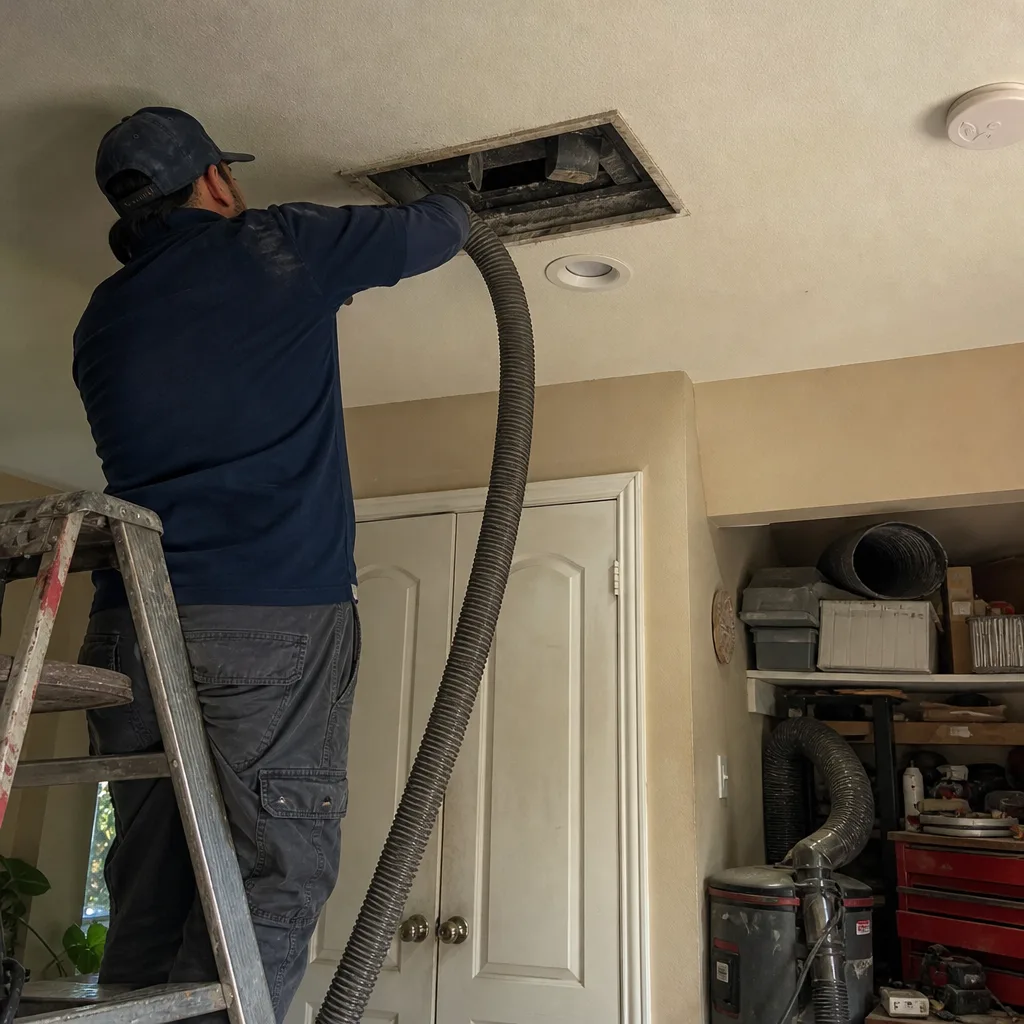 Before
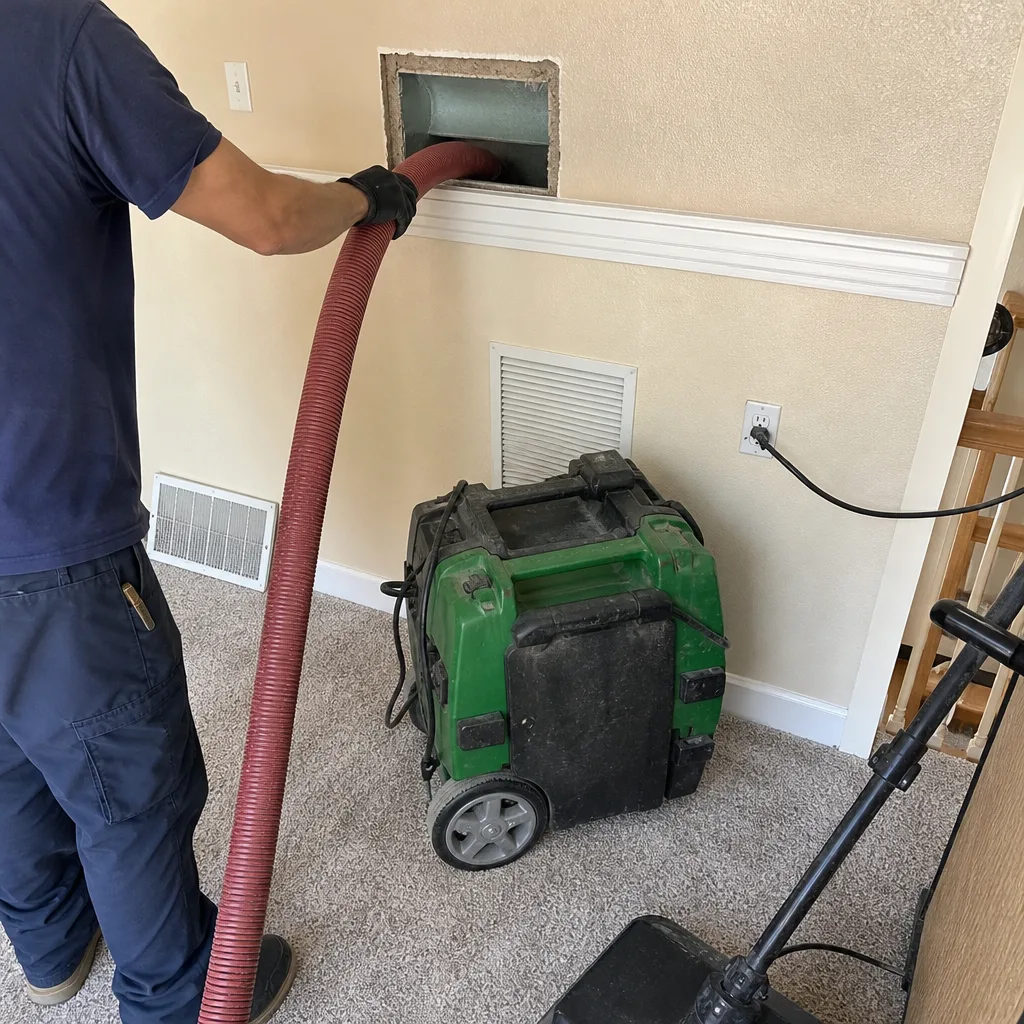 After